
Showers & Tile
Shower Waterproofing and Shower Pans, Explained
Quick answer
Tile and grout aren’t waterproof. The layer behind them is what keeps water out of your walls and floor. That’s either a traditional mortar shower pan with a liner, or a sheet or liquid membrane over the walls and floor, tied into the drain. Most leaks start at seams, corners, niches, the valve and the curb. Before tile goes up, ask what system is used, how the corners and drain are handled, and whether the pan gets a flood test.
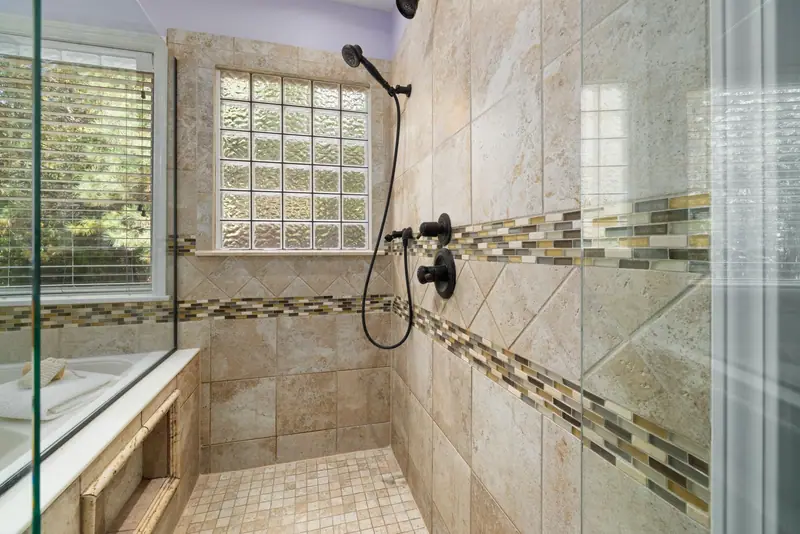
Nobody picks a shower for its waterproofing. You pick the tile, the glass and the valve. But the part you never see decides whether the shower lasts.
This guide covers what’s behind the tile, the two main ways to build a shower floor, and the questions worth asking before anyone starts tiling.
Tile and grout aren’t the waterproofing
This surprises a lot of people. Grout soaks up water, whichever of the grout types you pick. Tile can crack, even dense porcelain. Water gets through both all the time.
What keeps your house dry is the waterproof layer behind the tile. Its job is simple: any water that gets past the tile has to run to the drain, not into the studs, the subfloor or the room below.
When that layer fails, you usually don’t see it in the shower. You see it somewhere else, like a stain on the ceiling under an upstairs bath or loose baseboard in the next room.
What a shower pan is
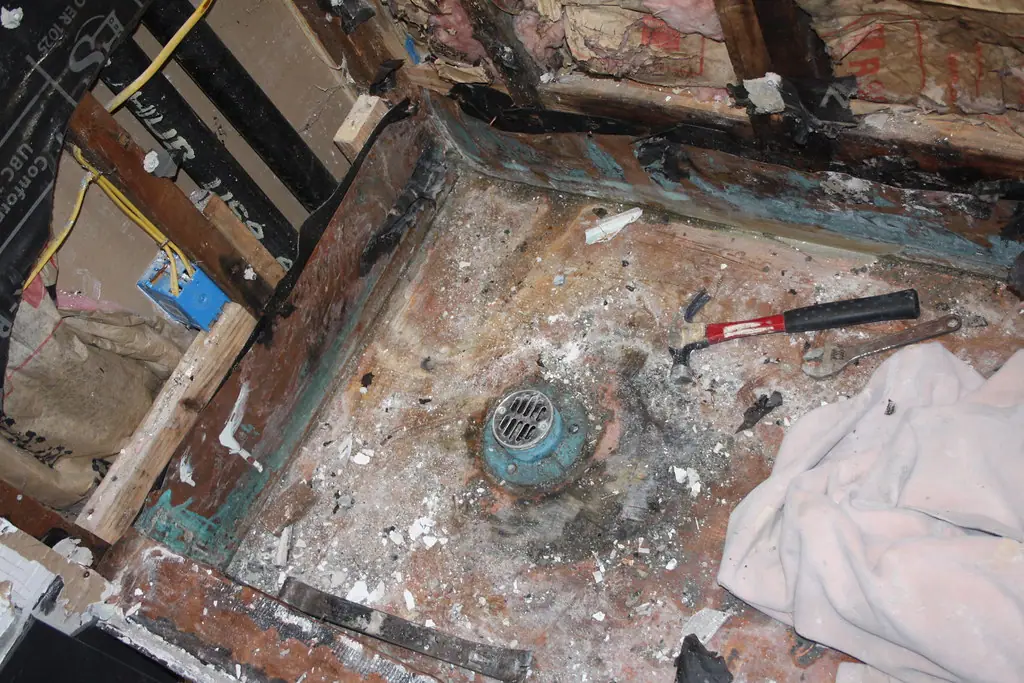
The shower pan is the floor of the shower, everything under the floor tile.
A traditional mortar pan is built in layers. A sloped mortar bed goes down first, then a waterproof liner that runs up the walls, then a second mortar bed that the tile sits on. The liner connects to a two-part drain with small weep holes, so water that soaks into the top layer can still find the drain.
A preformed pan or base is a molded unit, either a fiberglass or acrylic base you stand on directly, or a foam tray that gets tiled over. They’re consistent and simple to set, but they come in set sizes.
“Shower pan replacement” usually means the floor is leaking. Since tile sits on top of the pan, replacing it means taking the shower floor out and often the bottom row of wall tile, too.
What a waterproofing membrane is
A membrane goes right behind the tile, on the walls and the floor. There are two common types:
- Sheet membranes are a fabric-like material set in thinset, with pre-made corners and seam bands.
- Liquid membranes are rolled or brushed on in coats, with fabric pressed into the corners and seams.
Membranes are used with foam boards, cement board and some foam pans. They pair with a drain made to bond to the membrane.
Shower pan vs. membrane: which is better?
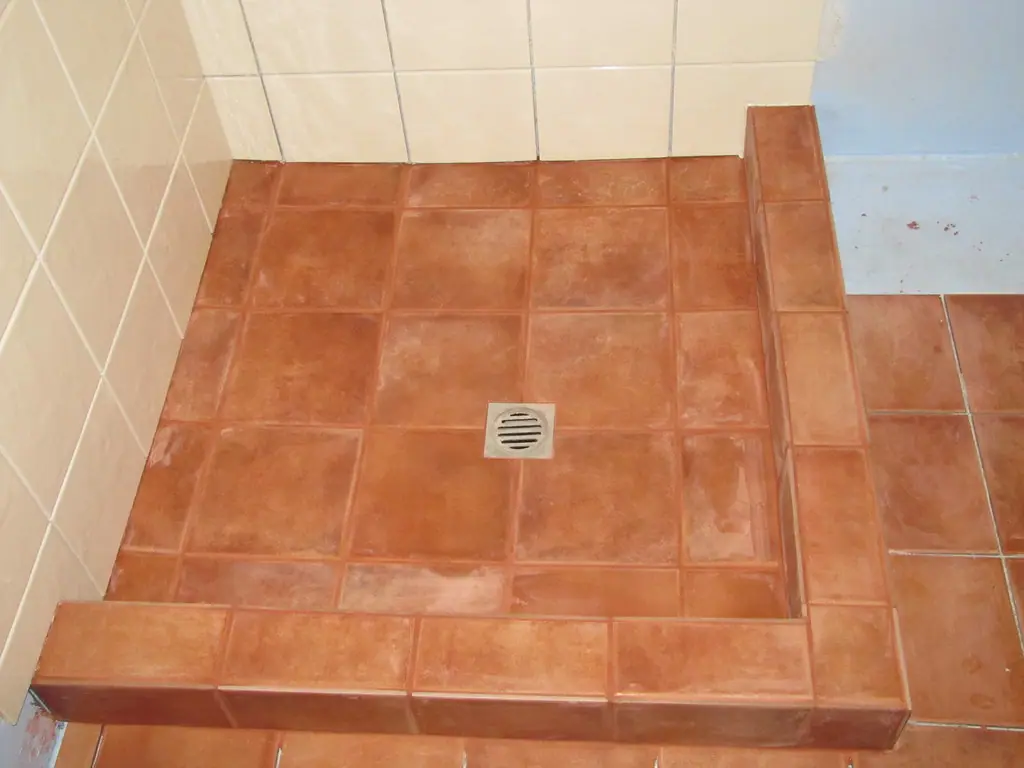
Both work when they’re installed right. The bigger question is how it’s done, not which name is on the box.
- Mortar pans have a long track record and fit any size or shape.
- Membranes keep the waterproofing close to the tile, so less water soaks into the layers underneath.
- Curbless showers usually call for a membrane system and a floor that’s recessed or built up, which is easier on a raised floor than on a slab.
The rule that matters: use one complete system from the same family, follow the maker’s instructions, and don’t mix parts that weren’t designed to work together.
How shower leaks usually start
Most leaks come from the same few spots:
- Corners and seams where the membrane or liner wasn’t lapped or sealed.
- The drain, where the waterproofing isn’t tied in properly or the weep holes are clogged with mortar.
- The curb, where a nail or screw went through the liner.
- Niches and benches, which are boxes cut into a waterproof wall. Every inside corner is a weak spot. Our shower glass and niche guide covers how to plan a niche that stays dry.
- The valve and shower head, where pipes come through the wall.
- Not enough slope, so water sits on the floor instead of draining.
Cracked grout and failed caulk let more water in, but a properly built shower can handle that. When cracked grout turns into a stain somewhere else, the layer behind the tile is the real problem.
What to ask before tile goes up
These are good questions for any contractor, us included:
- What waterproofing system are you using on the floor and walls?
- How are the corners, seams, niche and bench handled?
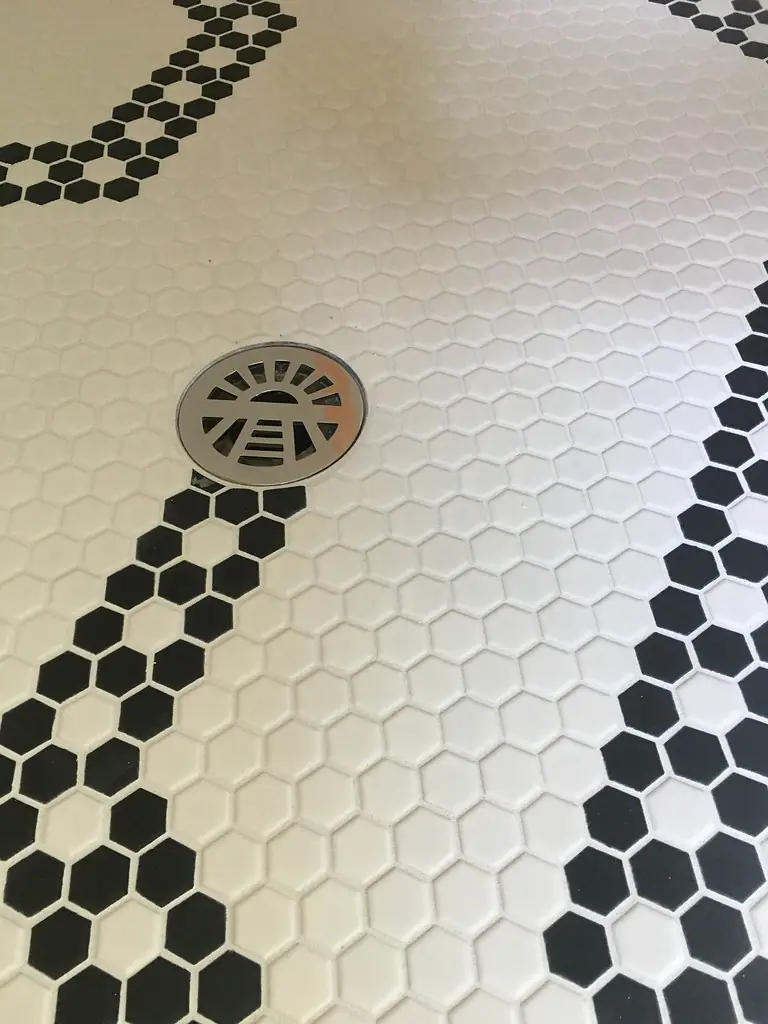
- What kind of drain is it, and how does it connect to the waterproofing?
- Will you flood test the pan, and can I see it?
- How is the floor sloped to the drain?
- How do the curb and the glass attach without cutting through the waterproofing?
Ask about the schedule for your shower at your estimate.
If you’re turning a tub into a shower, the tub-to-shower conversion guide explains drains and curbs. For tile choices that go on top of all this, see our shower tile ideas and choosing bathroom tile.
Build it right the first time
Call (310) 628-9399 for a free in-home estimate. We’ll look at your shower, talk through the waterproofing and give you a written price. More on our bathroom remodeling page.
Planning a bathroom or kitchen project?
We’ll come out, look at the space and give you a written estimate. Call or text (310) 628-9399, Mon–Sat 8:30 AM–7 PM.
Call for a free estimate or request one online