
Both are ceramic
Porcelain is a kind of ceramic tile, not a separate family. Wikipedia describes porcelain tiles as dense, vitrified ceramic tiles with water absorption under 0.5 percent, a standard set out in ISO 13006 and BS EN 14411. The article says porcelain is made to nearly eliminate internal pores through the choice of raw materials, high-pressure shaping and high-temperature firing.
Ordinary ceramic tile is fired at lower heat and stays more porous. That one difference drives most of the practical choices below.
Large tile on a floor
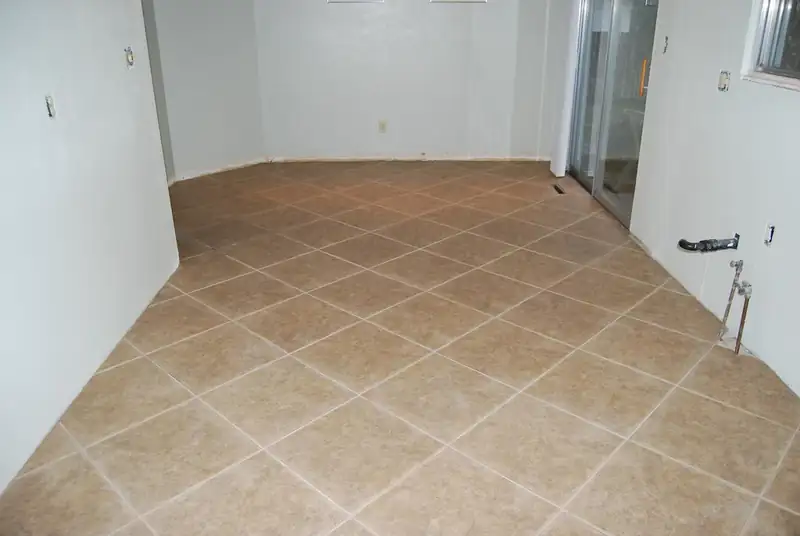
The first photo shows a kitchen floor laid with large beige porcelain tiles set on a diagonal. Big porcelain tiles like these mean fewer grout lines and a calmer floor.
Laying them on a diagonal makes a narrow room look wider, though it adds cuts at the walls.
Where each one works best
Good places for porcelain:
- shower floors and walls
- bathroom floors
- kitchen floors
- entries and laundry rooms
- anywhere that sees water or heavy foot traffic
Good places for ceramic: kitchen backsplashes, bathroom walls outside the shower, fireplace faces and accent walls. It is lighter and easier to cut, which helps on walls and detailed layouts.
Small tile on a wall
The second photo shows small dark square porcelain tiles in a tight grid beside a white door frame. Small tiles bend around corners and trim details more easily than large ones.
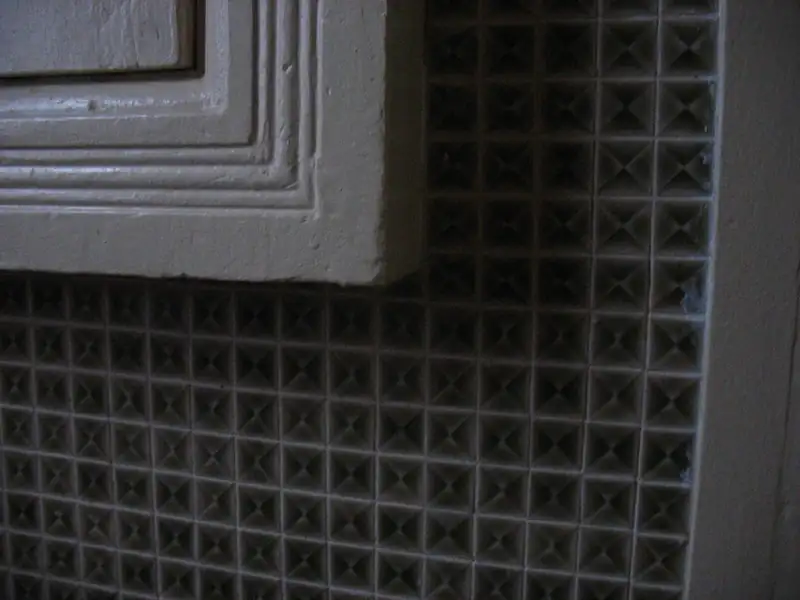
On a shower floor, small tiles also give more grout lines for grip and let the floor slope to the drain.
Water and wear
Because porcelain absorbs so little water, it is the usual choice for wet areas and floors. Glazed ceramic is fine on walls that get splashed, since the glaze sheds water; the body behind it is what stays more porous.
Through-body porcelain carries its color all the way through, so a chip shows less. Glazed tiles, porcelain or ceramic, show a lighter body if the glaze chips.
Glazed ceramic and color
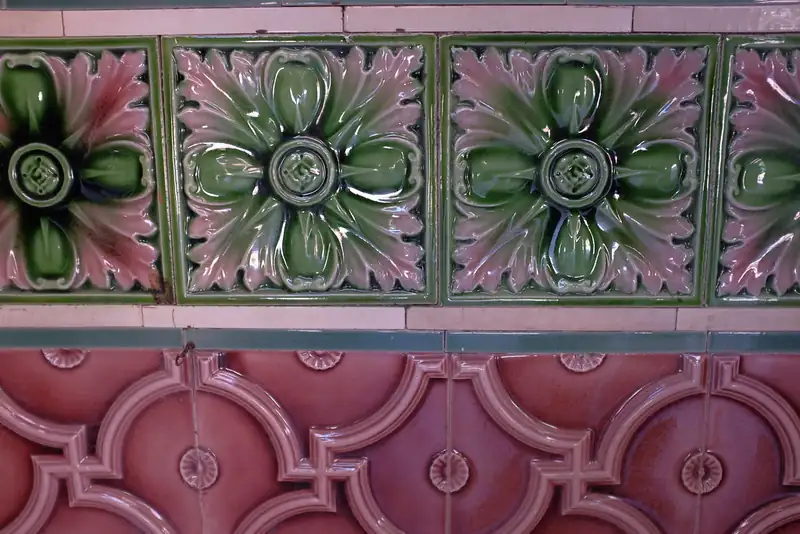
The third photo shows glazed ceramic wall tiles with raised green flowers above pink relief tiles, in a temple in Singapore. Ceramic takes bright glazes and relief well, which is why so much decorative tile is ceramic.
For painted ceramic in a Spanish style, see the Talavera tile page.
Cutting and setting
Porcelain is harder, so it needs sharper blades and more care at cuts and holes. Ceramic cuts easily, which keeps detailed wall layouts quick to plan.
Both need a flat, sound surface and the right setting material for the tile and location. We follow the tile maker for both.
Classic floor patterns
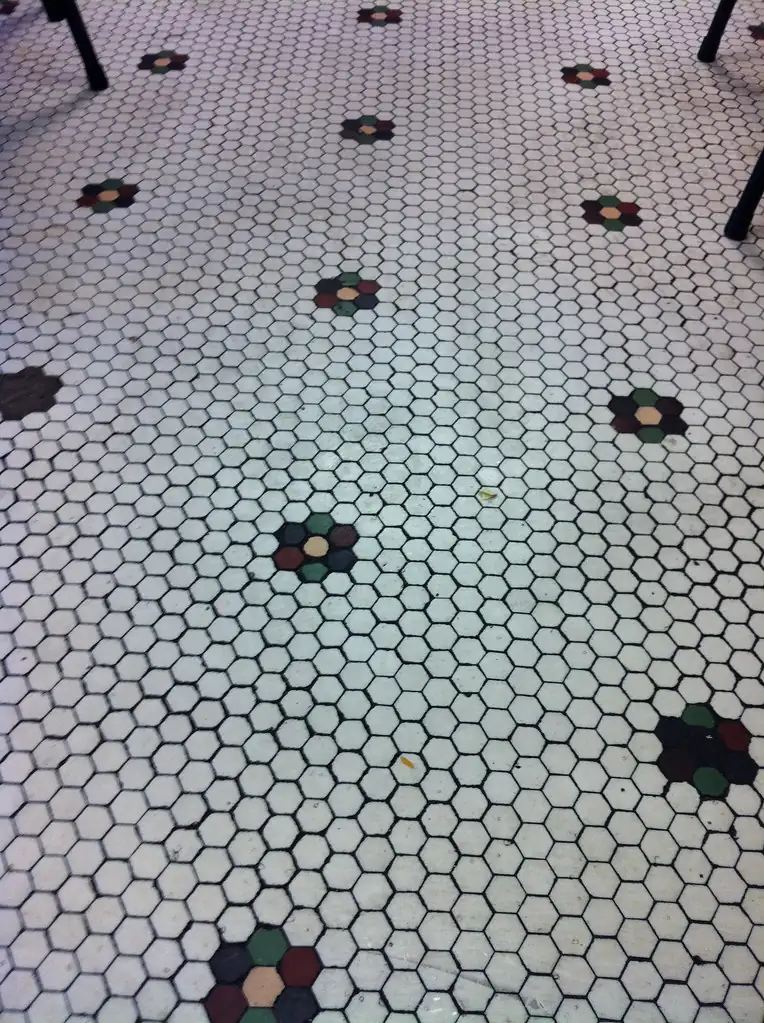
The fourth photo shows an old white hexagon floor with small black flower accents. Hex and small mosaic floors were common in older bathrooms, and both porcelain and ceramic versions are made today.
Wikipedia's tile article lists many layout patterns, among them herringbone, offset, grid, stacked, basket weave and chevron. Any of them can be done in either material.
Large-format tile
Large-format usually means tiles with at least one side around 15 inches or more. Wikipedia notes that modern porcelain tiles can reach about 1,600 by 3,200 mm, slab-size pieces that cover a wall with almost no grout lines.
Big tiles need a very flat floor or wall, since any dip shows as a raised edge between tiles. We check flatness first and level where needed.
They also need full mortar coverage under each tile, and many installers use a leveling clip system to keep edges even. Long rectangles are usually offset by no more than a third to limit edge lift from slight bowing.
Large tiles look clean in showers and on floors, but a shower floor still needs a slope to the drain; that is why many showers pair large wall tiles with a smaller floor tile.
Look-alikes
Porcelain can be printed to look like wood, stone or concrete. See the porcelain wood-look tile page for planks, and subway vs handmade tile for wall tile choices.
Printed porcelain repeats its pattern every few tiles, so we mix tiles from several boxes before laying them out.
Which to pick
A quick rule: porcelain for floors, showers and anything wet or busy; ceramic for walls, backsplashes and decorative work. Many rooms use both, with porcelain underfoot and ceramic on the walls.
Bring samples home and look at them in your light before you decide.
Tile in our remodel pages
We install both in every city we work in. See bathroom tile installation in Alhambra, tile floors in Monterey Park, shower remodels in Rosemead, backsplash installation in San Gabriel and walk-in showers in Temple City.
More materials and styles
- Sage, terracotta and deep blue cabinets
- Granite countertops
- Butcher block countertops
- LVP vs tile flooring
- Victorian tile
- Basketweave tile
- Mosaic tile
- Quarry tile
- Stacked stone
- Hexagon tile
- Terrazzo tile
- Herringbone tile
- Backsplash tile ideas
- Shower tile ideas
- Quartz countertops
- Spanish tile bathroom
- Saltillo tile
- Zellige tile backsplash
- Talavera tile
- Cement tile bathroom floor
- Terracotta tile floors
- Bathroom color trends
- Porcelain wood-look tile
- Subway tile vs handmade tile
- LVP vs laminate flooring
- Semi-gloss vs satin paint
- MDF vs wood trim
- Natural stone and marble bathroom tile
- Grout types: cement, epoxy, urethane
Planning the whole room? Read our remodel guides, starting with how to choose bathroom tile.