
Walls, floor and niche
Wikipedia notes an indoor shower has a drain in the floor, and that some showers sit in a wet room with no separate enclosure. Either way, the floor has to slope to that drain and offer grip, while the walls mostly need to shed water and clean easily.
That is why many showers use one tile on the walls and a smaller one on the floor.
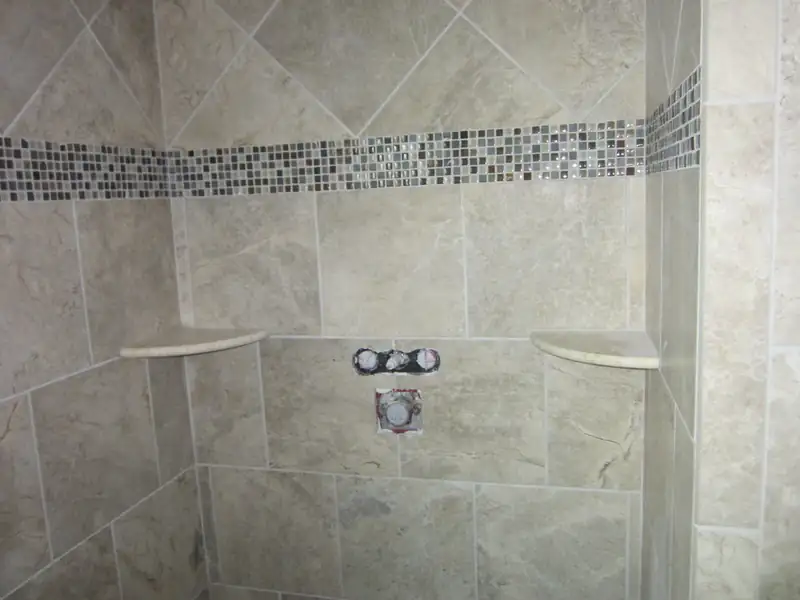
Large-format walls
Large tiles, such as 12x24 rectangles, mean fewer grout lines to scrub and a calmer wall. They need a flat wall, since a dip shows at the edges, and they are usually offset by a third or stacked rather than offset by half.
See porcelain vs ceramic tile for how size and body affect the choice.
Small tile on the floor
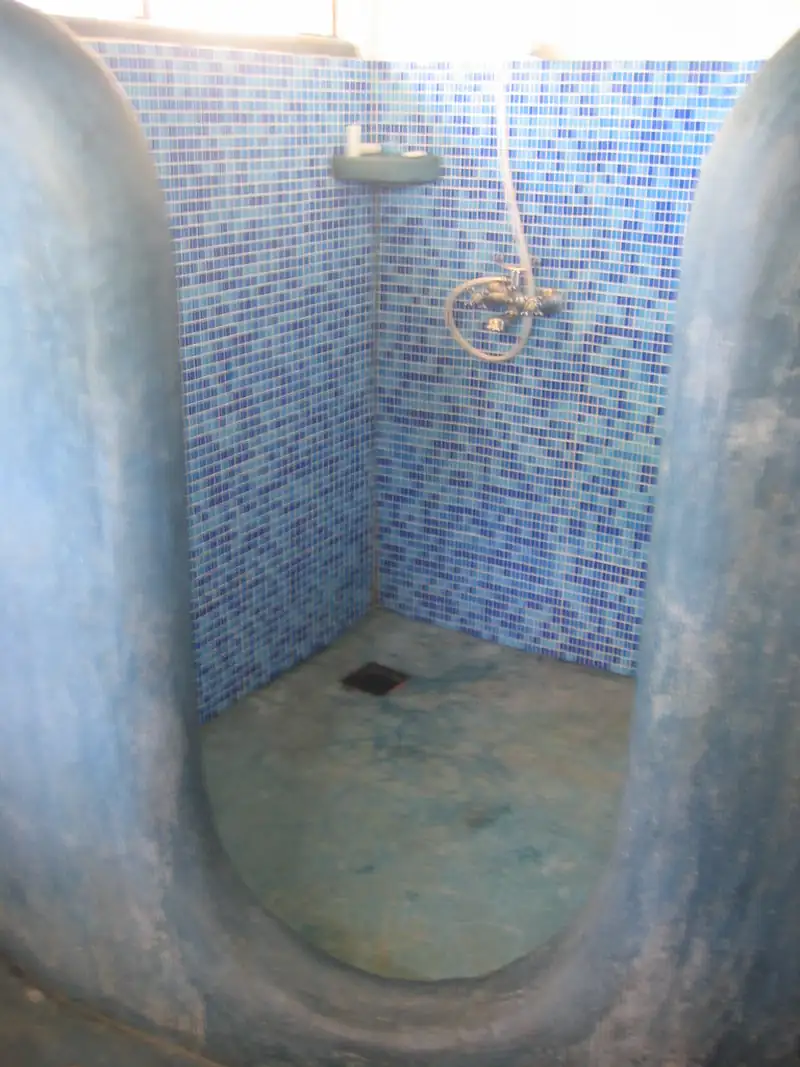
Small tiles bend to the slope of a shower floor and the extra grout lines add grip. Wikipedia mentions ceramic tiles about one inch square used to set images into shower room and pool floors. Wikipedia also warns that some polished stone tiles, such as granite, marble and travertine, are very slippery when wet.
Hex, penny-round and small square mosaics are common picks; a honed or textured finish helps underfoot.
Ideas for small bathrooms
In a small bathroom, a light tile carried from floor to ceiling makes the room feel taller. Using the same color on the walls and floor, with only the size changing, keeps it from looking busy. A single accent, such as a colored niche, gives interest without crowding.
Modern looks
Modern showers often use stacked tile, vertical rectangles or one color on every surface. Matte finishes, deep green or blue tile, and black fixtures are common pairings right now. Treat these as ideas to sample, not rules.
For color ideas, see bathroom color trends.
Classic looks
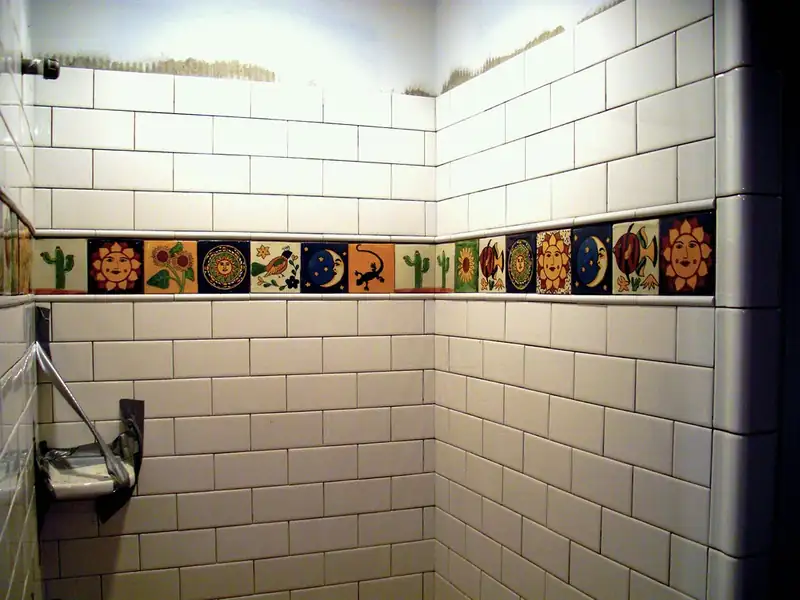
Classic showers use white subway tile, a small hex floor and a simple border. They suit older houses and are easy to match later. See subway vs handmade tile for how the two compare on a wall.
Niches and accent bands
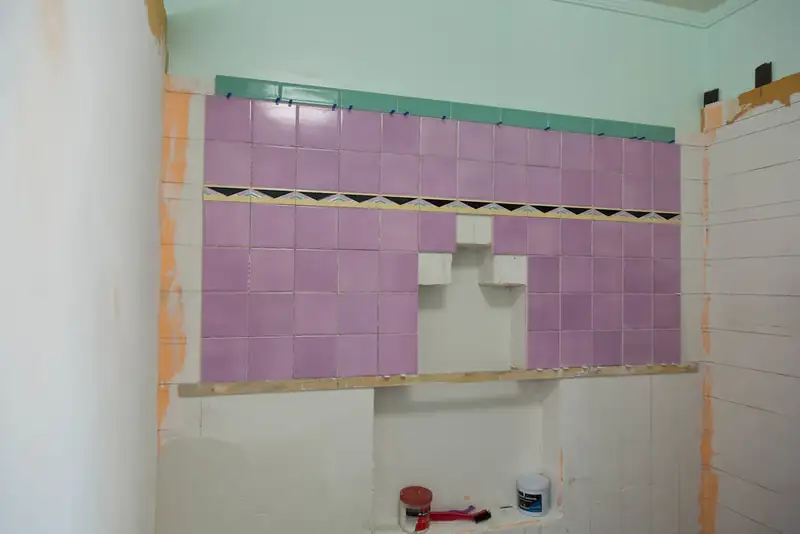
A niche keeps bottles off the floor; lining it with a contrasting tile turns it into a feature. An accent band at eye level is another simple way to add a pattern without tiling a whole wall.
Plan the niche between studs on a wall that is not an outside wall, and line the tile up with its edges.
Linear drains and the floor
Wikipedia describes trench or channel drains, now sold for home showers, and notes a curbless entrance is more easily achieved with a modular system.
A linear drain lets the floor slope one way, so larger floor tiles can be used. A center drain needs a four-way slope, which suits small tiles.
Natural stone in a shower
Stone looks rich but needs more care, and some stones are softer or more absorbent than porcelain. See natural stone and marble tile before choosing it for a shower floor.
Grout and sealing
Showers are the hardest place on grout. Epoxy or urethane grout resists stains on the floor; cement grout works on walls if sealed. See grout types for the trade-offs.
Common search: what tile is best for a shower floor?
Usually a small porcelain mosaic with a matte or textured finish, which gives grip and follows the slope. Larger tiles can work with a linear drain. Polished stone is generally the riskiest pick underfoot.
Shower and tile pages
This page is about tile ideas. For the work itself, see shower remodels in Rosemead, walk-in showers in Alhambra, tub-to-shower conversions in Temple City and bathroom tile installation in Monterey Park.
More materials and styles
- Sage, terracotta and deep blue cabinets
- Granite countertops
- Butcher block countertops
- LVP vs tile flooring
- Victorian tile
- Basketweave tile
- Mosaic tile
- Quarry tile
- Stacked stone
- Hexagon tile
- Terrazzo tile
- Herringbone tile
- Backsplash tile ideas
- Quartz countertops
- Spanish tile bathroom
- Saltillo tile
- Zellige tile backsplash
- Talavera tile
- Cement tile bathroom floor
- Terracotta tile floors
- Bathroom color trends
- Porcelain wood-look tile
- Subway tile vs handmade tile
- Porcelain vs ceramic tile
- LVP vs laminate flooring
- Semi-gloss vs satin paint
- MDF vs wood trim
- Natural stone and marble bathroom tile
- Grout types: cement, epoxy, urethane
Planning the whole room? Read our remodel guides, starting with how to choose bathroom tile.