
Why color, and why these three
Color makes a small bathroom feel deliberate. A single colored tile, vanity or wall gives the room a personality that all-white rarely does.
Sage and olive greens, terracotta and burnt orange, and deep blue and teal all have something in common: they look natural next to wood, clay and brass, the materials found in many older houses. That makes them easier to live with than trend colors that clash with the rest of the home.
Think of these as ideas, not statistics or rules. The right color is the one that looks good in your bathroom's light.
Historic house styles vs these modern colors
Many older homes around the valley have Spanish revival, craftsman or bungalow details. Wikipedia's Alhambra article, for example, lists craftsman, bungalow, Spanish colonial revival and Spanish Mediterranean among that city's home styles, and Spanish Colonial Revival is sometimes called the Early California Style.
Those houses came with an earthy palette: red clay roofs, cream stucco, dark wood trim, painted blue and yellow tile. The current color families are softer, more muted cousins of that palette, which is why they sit so comfortably in older homes.
In postwar and mid-century houses, the same colors work in cleaner forms: flat-panel vanities, large tiles and fewer patterns.
Sage and olive green
Green is calming and pairs with almost everything. Sage is soft and gray-leaning; olive is warmer and deeper. Both look good with white tile, wood vanities and brass or black fixtures.
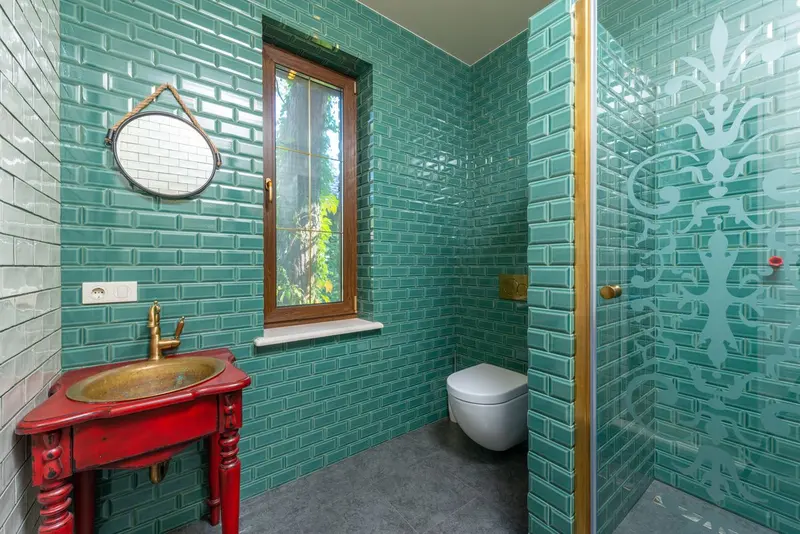
Ways to use it: a painted vanity, a wall of green zellige-style tile in the shower, or green patterned floor tile in a small room. In a north-facing bathroom with cool light, a warmer olive keeps the room from feeling gray.
Green pairs especially well with a terracotta floor, which is one of the most popular combinations we show.
Terracotta and burnt orange
These warm tones bring sunshine into a room. Terracotta floors, burnt-orange accent tile or a rust-colored wall make a bathroom feel welcoming.
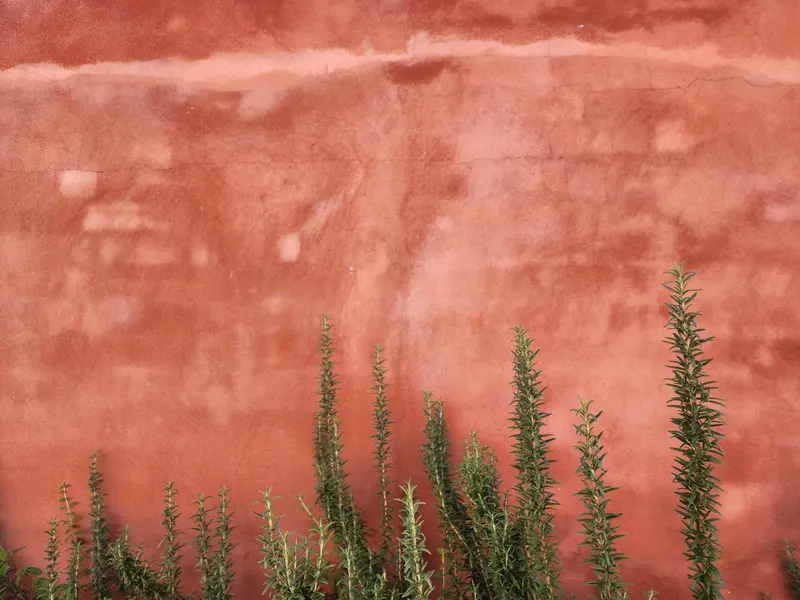
Use them with care in small rooms; a little goes a long way. A Saltillo-look floor with white walls, or one orange tile wall behind a white tub, is often enough.
Burnt orange pairs well with deep blue for contrast, and with cream for a softer look.
Deep blue and teal
Dark, saturated blues and teals make a bathroom feel rich. They work on glossy tile, where light bounces off the glaze, and on vanities or a single painted wall.
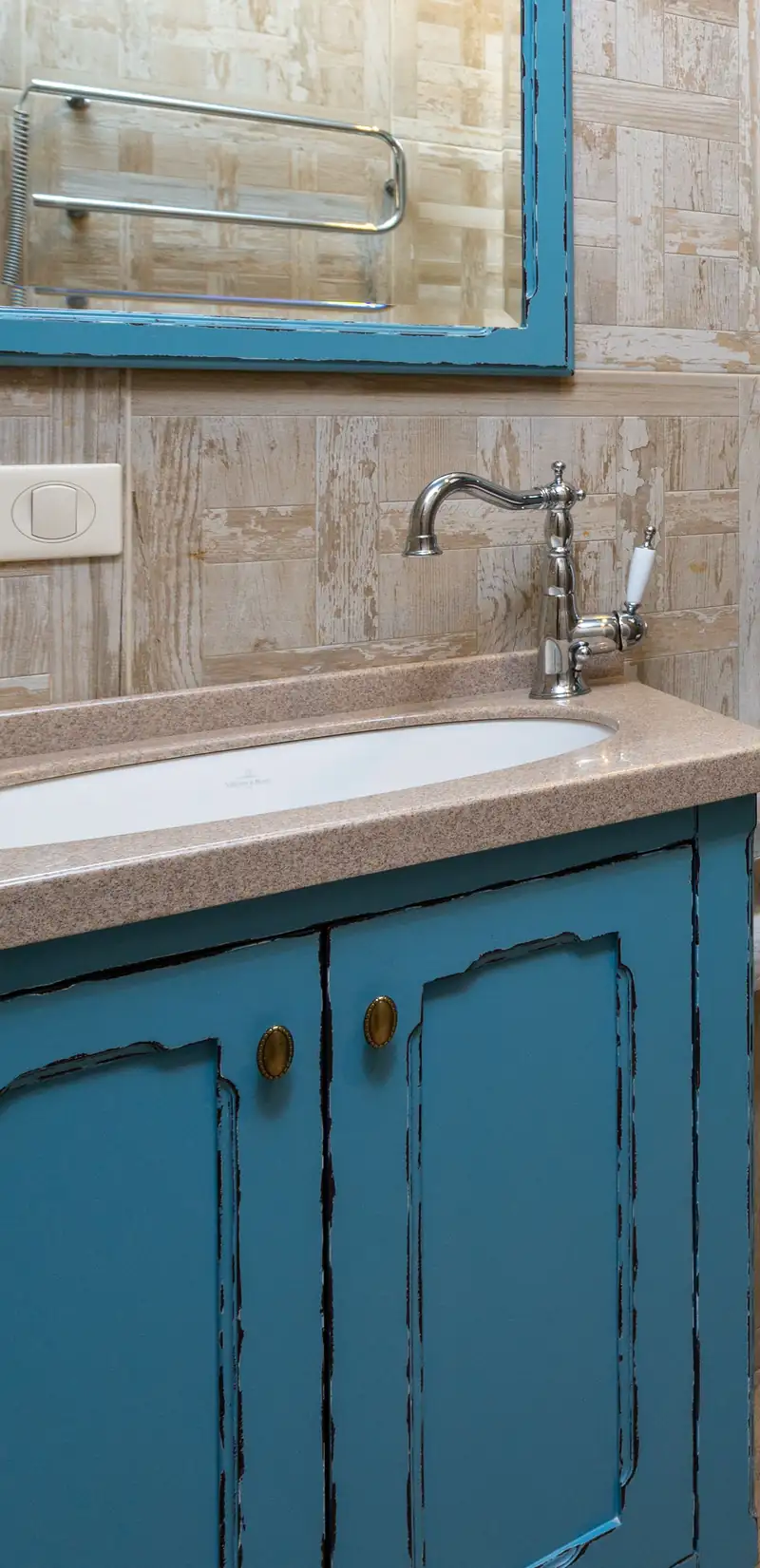
Blue-and-white tile has a long history in Spanish and Mexican design; see our Talavera tile page. A modern version might be a deep teal shower wall with white grout and brass fixtures.
Dark colors can make a small room feel smaller if used everywhere. Keeping the ceiling and one wall light balances it.
Putting colors together
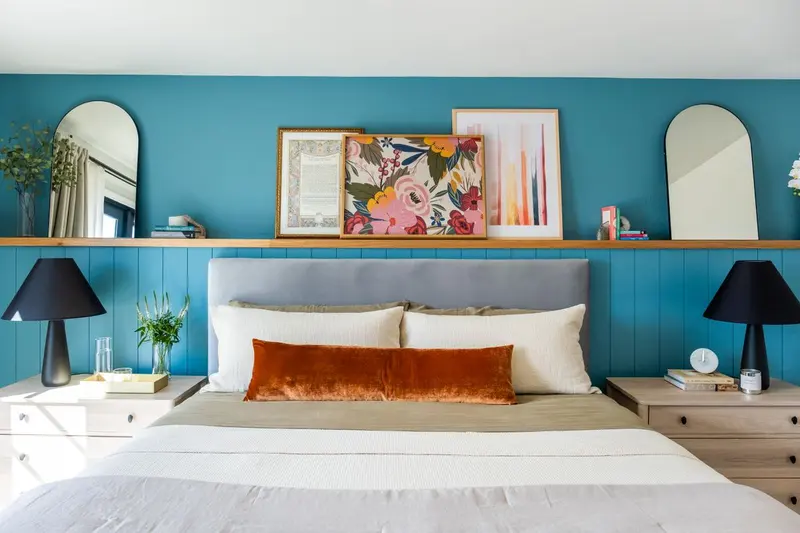
One bold color plus neutrals is the safest approach. Two colors work if one is clearly dominant. Green and terracotta, blue and orange, and teal and cream are reliable pairs.
Patterned tile can bring several colors at once. A cement tile floor with green and terracotta in the pattern lets you pull either color into the vanity or paint.
Fixtures tie the scheme together.
- Brass warms up greens and blues.
- Matte black sharpens terracotta.
- Chrome suits cooler blues.
Testing colors before committing
Bathroom light is tricky. A window facing north, a single ceiling fixture, or warm vs cool bulbs can change a color a lot. Look at samples at different times of day.
We bring tile and finish samples to the estimate and can leave a few with you. Painting a large board in the vanity color and leaning it against the wall for a while helps too.
See local examples on our city pages, such as tub-to-shower conversions in Monterey Park and bathroom remodeling in San Gabriel, or read the tile guide.
Color that lasts
Trends change. Putting the boldest color in easier-to-change places, like paint or a vanity, and keeping expensive tile more neutral makes a future refresh simple. If you love a bold tile, go for it; it is your bathroom.
Ready to plan? See bathroom remodeling and call for a free estimate.
Color in small doses
Not ready for a colored wall? Start small:
- a colored vanity
- a painted door
- towels and a rug
- a single row of accent tile
These are easy to change and still give the room a clear personality.
Grout can carry color too. A sage or terracotta grout on white tile adds a subtle tint across a whole shower wall without committing to colored tile.
Matching color to the light
South- and west-facing bathrooms get warm afternoon light that makes terracotta glow and can push greens toward yellow. North-facing rooms are cooler, which suits deep blues and teals and calls for warmer greens. Check samples in the morning and evening before you decide.
One last tip
Pick the tile first and the paint last. Paint comes in endless shades and can be matched to the tile; the reverse is much harder.
More materials and styles
- Sage, terracotta and deep blue cabinets
- Granite countertops
- Butcher block countertops
- LVP vs tile flooring
- Victorian tile
- Basketweave tile
- Mosaic tile
- Quarry tile
- Stacked stone
- Hexagon tile
- Terrazzo tile
- Herringbone tile
- Backsplash tile ideas
- Shower tile ideas
- Quartz countertops
- Spanish tile bathroom
- Saltillo tile
- Zellige tile backsplash
- Talavera tile
- Cement tile bathroom floor
- Terracotta tile floors
- Porcelain wood-look tile
- Subway tile vs handmade tile
- Porcelain vs ceramic tile
- LVP vs laminate flooring
- Semi-gloss vs satin paint
- MDF vs wood trim
- Natural stone and marble bathroom tile
- Grout types: cement, epoxy, urethane
Planning the whole room? Read our remodel guides, starting with how to choose bathroom tile.