
What cement tile is
Wikipedia's cement tile article says cement tiles, also called hydraulic tiles, are handmade decorative tiles that appeared in Catalonia, Spain, in the 1850s. They are not fired and have no glaze; the colored pigment layer is hydraulically pressed into the surface and becomes part of the tile.
The same source notes their heyday ran from the end of the 19th century to the middle of the 20th, before newer materials took over. Today the patterns are back in style, both in true cement and in printed porcelain.
Because the color goes into the top layer instead of sitting in a glaze, real cement tile can wear gracefully, softening over time. It is also porous and needs sealing.
Real cement vs porcelain look
Real cement tile is heavier and thicker than most porcelain. It is matte, slightly soft to the touch and develops a patina. It must be sealed before and after grouting, and resealed over the years. Acidic cleaners and some spills can etch it.
Porcelain cement-look tile prints the same patterns on a dense, low-absorption body. It needs no sealing, holds up to wet areas and costs less to maintain. Up close it is flatter in look; from standing height the pattern reads almost the same.
For a shower floor or a busy family bath, porcelain is the easier pick. For a powder room or a bath where you love the real material, cement tile can be worth the care.

Picking a pattern
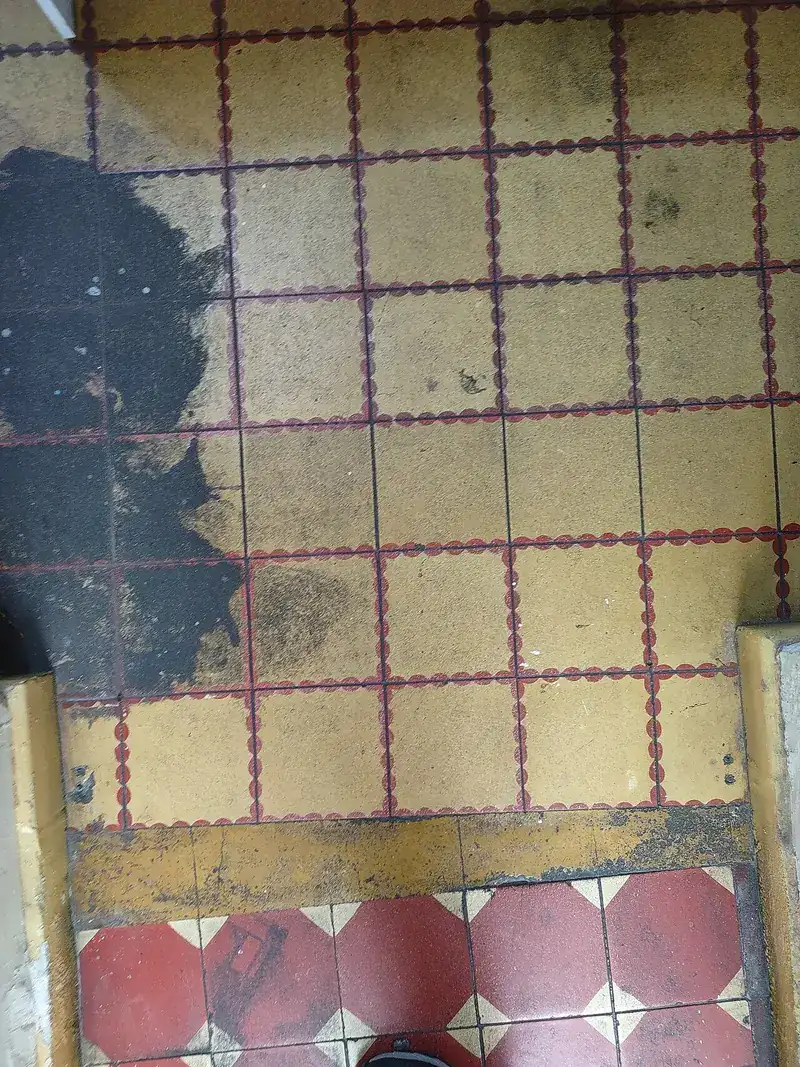
Small bathrooms can handle bold patterns better than people expect, because the floor is one compact canvas. Black-and-white geometric designs are the most classic. Blue, green and terracotta patterns lean Spanish and Mediterranean.
Look at the full repeat, not just one tile. Many patterns form a larger design across four tiles, and that is what you will see from the doorway.
Plan where the pattern starts. Centering it on the doorway or the vanity makes the room feel deliberate; letting cut tiles fall at the back wall hides partial pieces.

Walls and fixtures that suit it
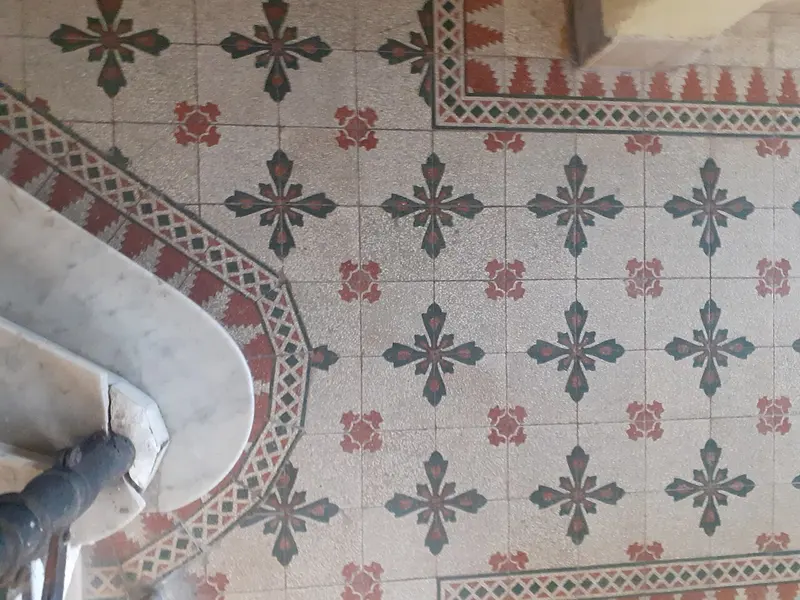
With a patterned floor, keep the walls quiet: white or soft-colored tile, or a single glossy zellige-style wall in the shower. Our zellige page covers that pairing.
Sage, olive or deep blue vanities pick up colors from many cement patterns. Matte black, brass and aged bronze fixtures all work, depending on the tile colors.
For more on bringing Spanish character into a bathroom, see the Spanish tile bathroom page and the Talavera tile page.
Where it fits in SGV homes
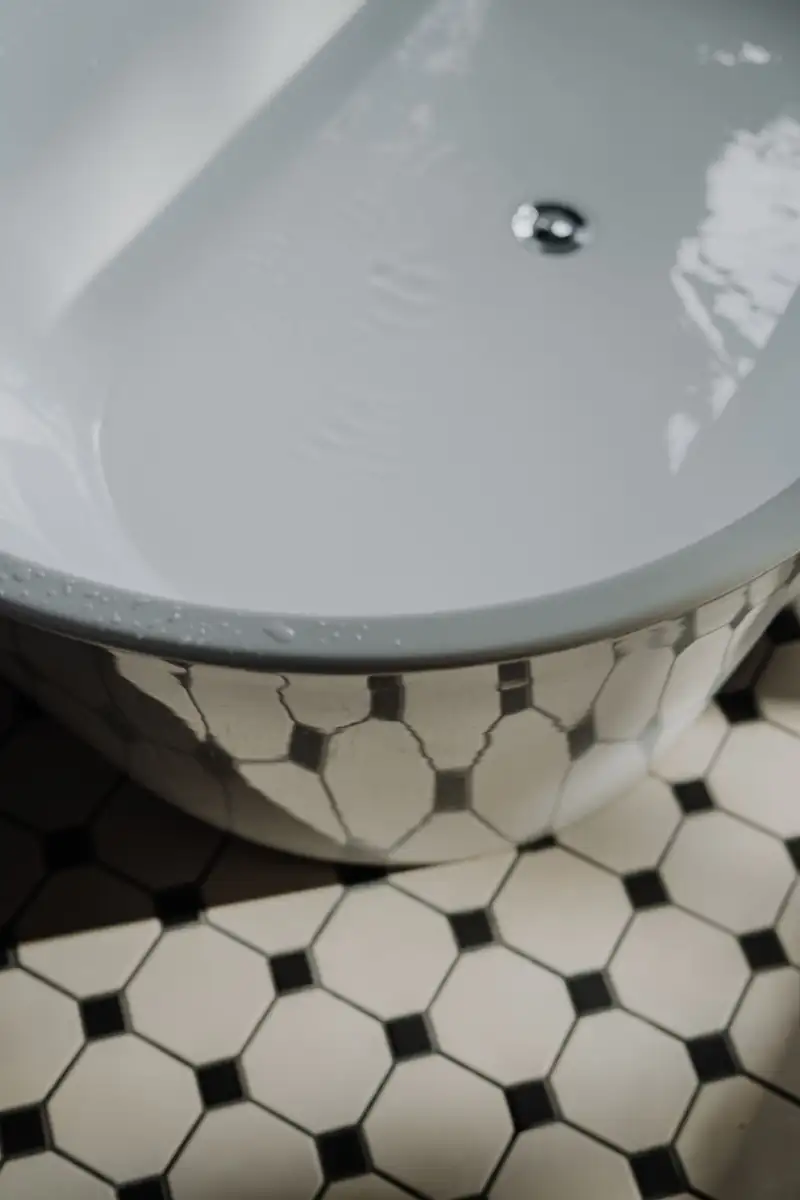
Patterned floors suit older houses with Spanish-style details, which many valley homes have, and they can also add personality to a plain postwar bathroom. Our local pages for Temple City, San Gabriel and Rosemead talk about house styles in those cities.
Kitchens and entries can take cement tile too. For a kitchen, see kitchen remodeling in Rosemead.
Installation and care
Cement tile needs a flat, stiff base, careful handling so edges do not chip, and sealing before grout touches the surface so pigment does not stain. We follow the maker's steps for sealing and grouting.
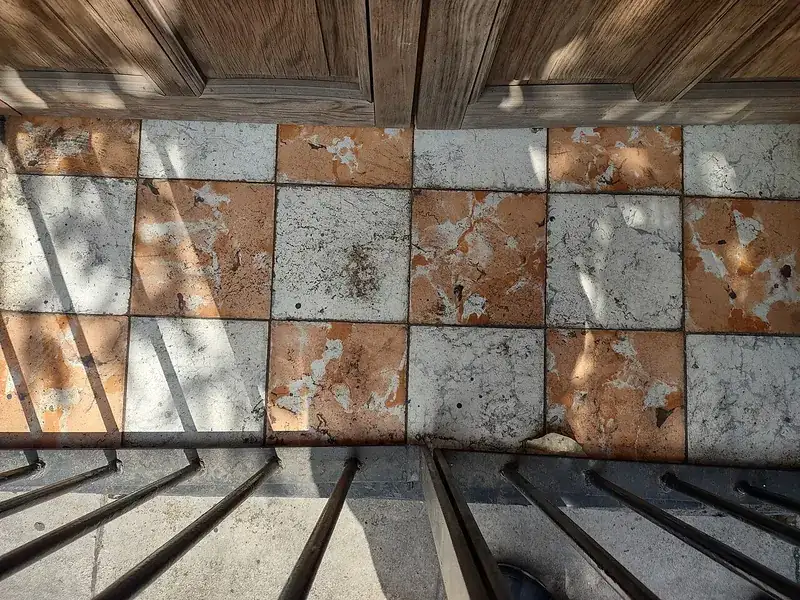

Clean with pH-neutral cleaners. Reseal as recommended by the maker or when water stops beading on the surface. Wipe up spills like vinegar or wine quickly.
Under the tile, the floor build-up matters. In a shower, the pan and waterproofing come first; the shower pan guide explains them. For tile basics, see the bathroom tile guide.
Planning a bathroom around it
A patterned floor usually comes as part of a full bathroom remodel. See bathroom remodeling and the small bathroom layout guide, then call for a free estimate.
Color ideas for patterned floors
- Black and white is timeless and works with almost any vanity color.
- Navy and white feels crisp and pairs well with brass.
- Green patterns in sage or olive bring a garden feel and suit wood vanities.
- Terracotta and cream patterns warm up a north-facing bathroom.
If the pattern has three or more colors, pull one of them for the vanity or paint and keep the rest neutral. That ties the room together without adding more pattern.
Grout color changes the look a lot. Matching the darkest color in the pattern hides wear; matching the lightest keeps the floor bright but shows dirt sooner.
Thresholds and transitions
Cement tile is often thicker than the floor in the hallway. We plan the height so the change at the doorway is small, using a threshold that matches the trim or a low-profile metal edge. Getting this right keeps toes from catching and doors from scraping.
If the hall floor will be replaced later, tell us at the estimate. Planning both heights together avoids a step that is hard to fix afterward.
Spare tiles
Keep a few spare tiles in a dry spot. Patterns get discontinued, and one cracked tile is easy to swap if you have a match.
Common search: can cement tile go in a shower?
Real cement tile can be used on shower walls with careful sealing, but on a shower floor it stays wet often and needs frequent resealing. Most owners choose a porcelain cement-look tile for the shower floor and keep real cement tile for the main bathroom floor.
More materials and styles
- Sage, terracotta and deep blue cabinets
- Granite countertops
- Butcher block countertops
- LVP vs tile flooring
- Victorian tile
- Basketweave tile
- Mosaic tile
- Quarry tile
- Stacked stone
- Hexagon tile
- Terrazzo tile
- Herringbone tile
- Backsplash tile ideas
- Shower tile ideas
- Quartz countertops
- Spanish tile bathroom
- Saltillo tile
- Zellige tile backsplash
- Talavera tile
- Terracotta tile floors
- Bathroom color trends
- Porcelain wood-look tile
- Subway tile vs handmade tile
- Porcelain vs ceramic tile
- LVP vs laminate flooring
- Semi-gloss vs satin paint
- MDF vs wood trim
- Natural stone and marble bathroom tile
- Grout types: cement, epoxy, urethane
Planning the whole room? Read our remodel guides, starting with how to choose bathroom tile.