
Why cabinet color matters
Cabinets cover more wall than almost anything else in a kitchen, so their color sets the mood of the whole room. A bold color on every door reads very differently from the same color on just an island or the lower run.
Built-in cabinets are a fairly modern idea. Wikipedia's kitchen cabinet article says kitchen cabinets as we know them were invented in the 20th century, with the freestanding Hoosier cabinet of the 1910s as a forerunner. Before that, many kitchens used work tables and a pantry.
Sage green: where the color comes from
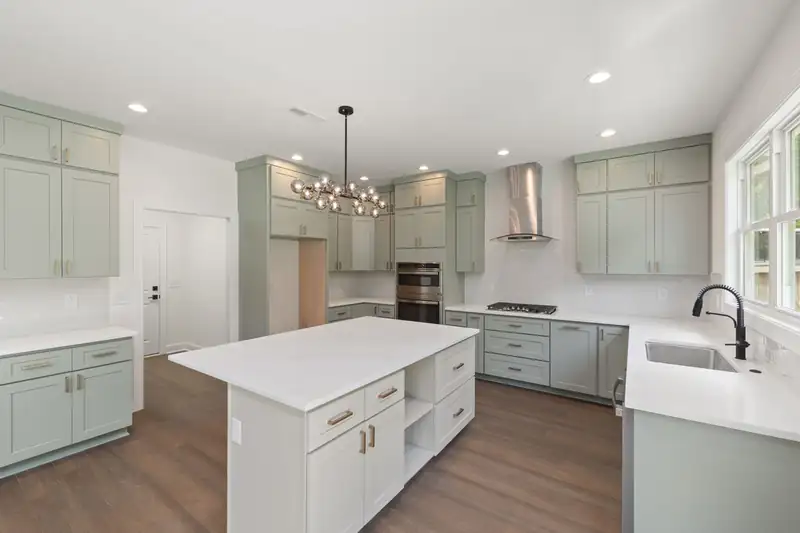
Wikipedia describes sage as a gray-green like dried sage leaves. That gray is the key: sage is softer and calmer than a bright kelly or emerald green, which is why it works on a full kitchen of cabinets without taking over the room.
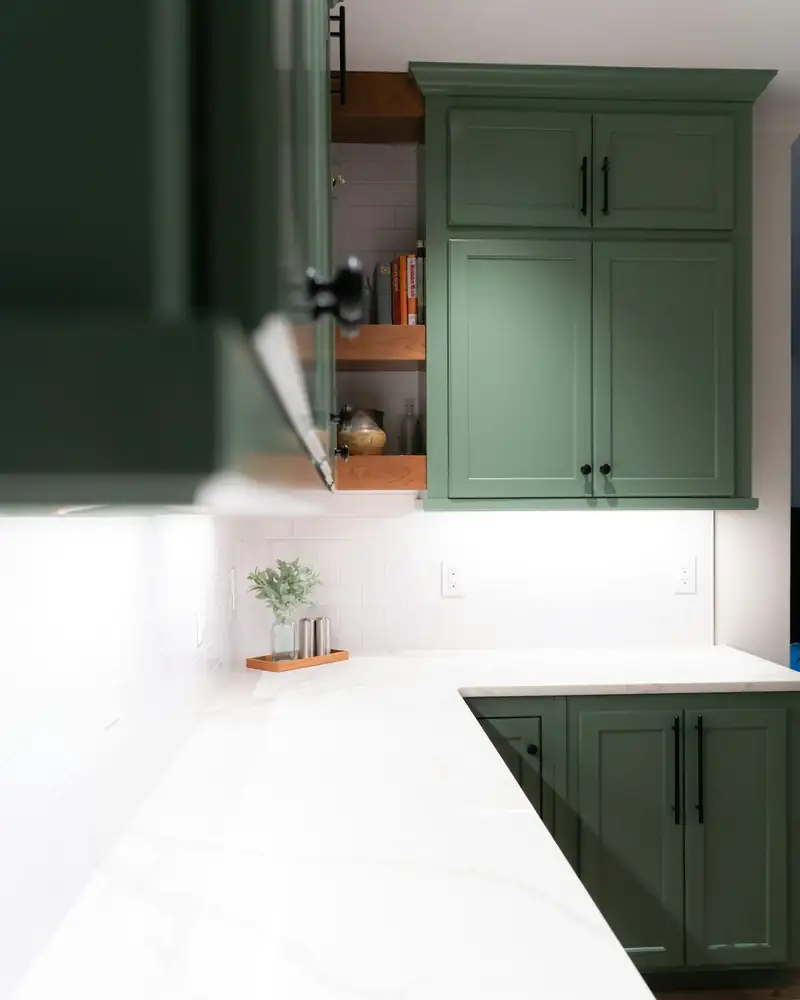
Sage ranges from almost-gray to a deeper herb green. Lighter versions feel airy in a small or north-facing kitchen. Deeper versions look rich on shaker doors and pair well with black or brass hardware.
What goes with sage cabinets
Sage sits well next to warm whites, cream and natural wood. White or lightly veined counters, such as quartz or marble-look stone, keep it fresh, while butcher block makes it feel more like a cottage kitchen.
For the backsplash, glossy handmade-look tile adds texture without fighting the color; see zellige backsplash ideas and subway vs handmade tile. Terracotta-toned floors also suit sage, which ties into the next color.
Terracotta: a color from fired clay
Terracotta is named for the material. Wikipedia's terracotta article explains that the word is Italian for "baked earth" and describes a clay ceramic fired at fairly low temperatures, often seen as red-toned flower pots and tableware. As a paint color, it is a warm, earthy orange-red rather than a bright citrus orange.
In Southern California, terracotta has deep roots in clay roof tile and Saltillo and terracotta tile floors. Painted terracotta cabinets borrow that warmth and fit well in Spanish revival and mission-style homes.
Living with terracotta cabinets
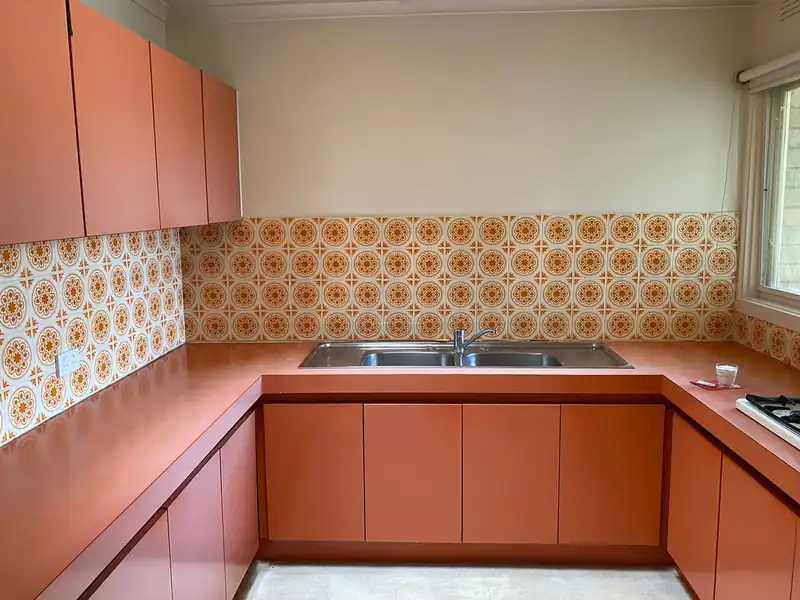
Terracotta is a strong color, so many kitchens use it in one place: an island, the lower cabinets, or a single wall of doors. Paired with creamy white uppers or open shelves, it feels warm instead of heavy.
It goes naturally with cream counters, white plaster-look walls, black iron hardware and patterned tile. If you love painted tile, see Talavera tile and cement tile for patterns that suit a warm palette.
Look at samples in your own light. Terracotta can turn pink in cool light and brown in dim light, so try it on a large board next to your floor and counter before deciding.
Deep blue: navy and its history
Wikipedia's navy blue article says the name comes from the dark blue worn by officers in the British Royal Navy, whose first uniform regulations in 1748 used dark blue and white. By at least 1780 the British press was calling the color navy blue.
Blue pigment has its own story. Wikipedia calls Prussian blue, created in the early 18th century, the first modern synthetic pigment, and notes that it is still used in paints. Modern deep blue cabinet paints come in many shades, from near-black navy to inky blue with a hint of green.
Making deep blue work
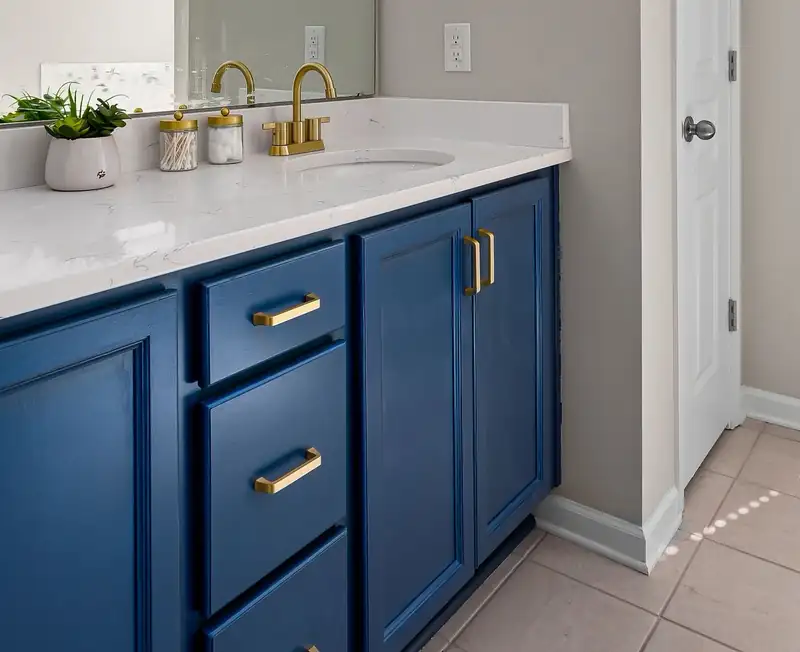
Deep blue is a dark color, so light matters. In a bright kitchen it looks crisp and tailored. In a dim kitchen it can read almost black, which some people love and others find heavy. A blue island with lighter perimeter cabinets is a common middle ground.
Brass, gold and polished nickel hardware all stand out on navy. White counters and a white or soft gray backsplash keep the look clean; see backsplash tile ideas for options. Warm wood floors balance the cool blue.
Picking a sheen for cabinets
Cabinets get touched and wiped constantly, so the paint finish matters as much as the color. Satin and semi-gloss are the usual picks for doors and frames because they clean up better than flat paint. For how sheens compare, see semi-gloss vs satin paint.
Higher gloss shows brush marks and dents more, while lower sheen hides small flaws but can be harder to scrub. Dark colors like navy show dust and fingerprints more than lighter ones, which is worth knowing before you choose a high-gloss finish.
Prep and testing before you paint
Good cabinet paint starts with prep: cleaning off kitchen grease, sanding or deglossing, and a primer that suits the existing finish. Ask your paint store which primer and topcoat they recommend for the cabinet material you have.
Paint a sample door or a large sample board and look at it in the morning, afternoon and evening. Hold it next to the floor, counter and backsplash. A color that looks perfect on a small chip can change once it covers a whole wall of cabinets.
Painting as part of a remodel
Cabinet color is often decided together with counters, backsplash and flooring. Our small kitchen refresh guide covers what changes when you update finishes without moving cabinets.
For whole-room planning, see painting and kitchen remodeling, plus the local pages for interior painting in Rosemead and cabinet replacement in Alhambra. For bathroom vanities in these colors, see bathroom color trends.
More materials and styles
- Granite countertops
- Butcher block countertops
- LVP vs tile flooring
- Victorian tile
- Basketweave tile
- Mosaic tile
- Quarry tile
- Stacked stone
- Hexagon tile
- Terrazzo tile
- Herringbone tile
- Backsplash tile ideas
- Shower tile ideas
- Quartz countertops
- Spanish tile bathroom
- Saltillo tile
- Zellige tile backsplash
- Talavera tile
- Cement tile bathroom floor
- Terracotta tile floors
- Bathroom color trends
- Porcelain wood-look tile
- Subway tile vs handmade tile
- Porcelain vs ceramic tile
- LVP vs laminate flooring
- Semi-gloss vs satin paint
- MDF vs wood trim
- Natural stone and marble bathroom tile
- Grout types: cement, epoxy, urethane
Planning the whole room? Read our remodel guides, starting with how to choose bathroom tile.