
What quartz is
"Quartz" counters are an engineered product, not a slab cut straight from a quarry. Wikipedia's engineered stone article describes it as crushed stone bound together by an adhesive, most often a polymer resin, made in a factory in blocks or slabs and then cut and polished by fabricators before it is set in place. The quartz-based version is used mainly for kitchen counters as an alternative to laminate or granite.
Because it is made rather than quarried, quartz comes in more consistent colors and patterns than natural stone. Two slabs of the same color usually match closely, which helps on long runs or an island.
It is not the same as quartzite, a natural stone with a similar name. Ask the showroom which one you are looking at; the care and look are different.
Warm and Spanish-inspired looks
White quartz with gray veining is everywhere, but it is not the only option. For houses with Spanish revival or mission touches, warmer slabs often fit better: creamy whites, soft beige with light veining, or a matte finish that reads closer to limestone or plaster.
Pair a warm slab with a Saltillo-style floor, a patterned cement-look backsplash or hand-painted Talavera-style tile behind the range. In a busy-tile kitchen, a quieter counter keeps the room from feeling crowded.
Edges matter for the look too.
- A simple eased edge suits modern kitchens.
- A thicker mitered edge looks substantial on an island.
- A softly rounded profile can echo arches and curved plaster in older homes.
These are design ideas to compare with real samples, not rules.
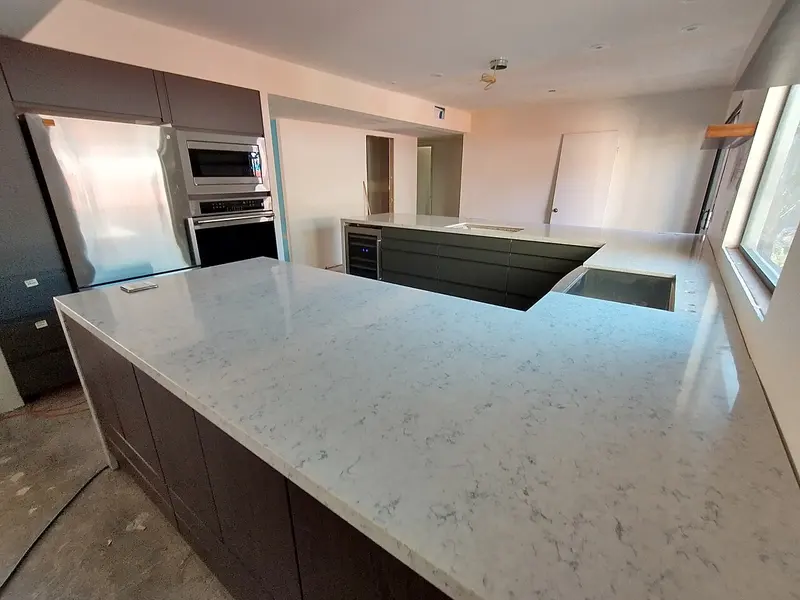

Colors that are popular now
Counters often take a back seat to cabinet color.
- Sage and olive green cabinets look good with warm white quartz.
- Deep blue or teal islands pair well with a bright, simple top.
- Terracotta and burnt-orange accents, from tile to stools, sit naturally against cream and beige slabs.
Look at samples next to your cabinet door, floor and backsplash in your own kitchen light. A slab that looks right in a showroom can shift once it is under your windows.
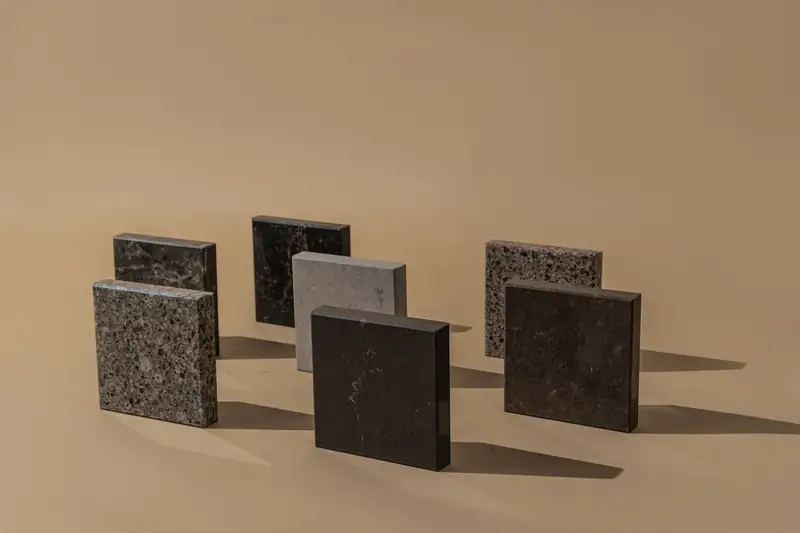
Quartz in bathrooms
Quartz works well on vanities. It resists staining from soap and makeup better than many natural stones and does not need regular sealing. For vanity sizes, sink styles and lighting, see the vanity and lighting guide.
Remnants, the leftover pieces from larger slabs, can be a good fit for a single vanity. Ask about them at your estimate.
Care and limits
Quartz is easy to keep clean with mild soap and water. Avoid harsh cleaners and abrasive pads. Very hot pans set straight on the surface can damage the resin, so trivets are a good habit.
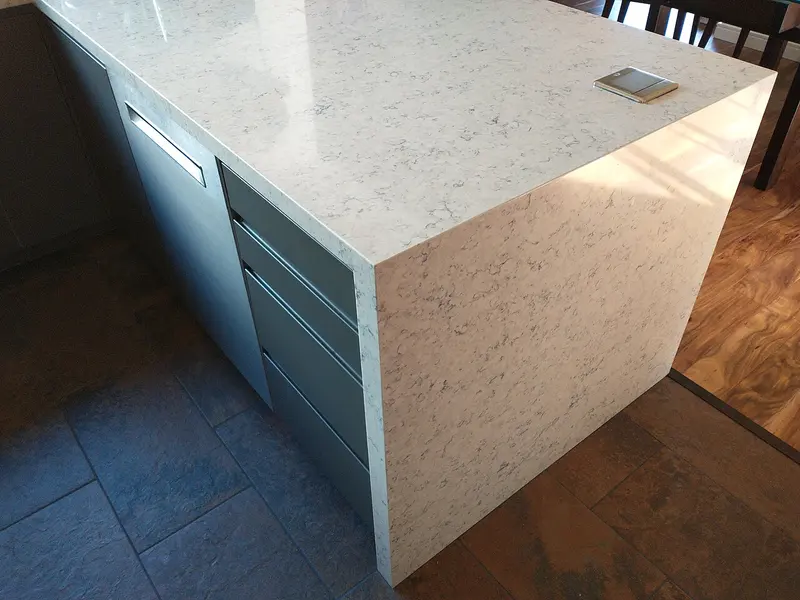

Most quartz is meant for indoor use; direct sun can fade some colors over time. If your counter sits by a sunny window or an outdoor kitchen, ask about that before choosing a slab.
How quartz fits a remodel with us
We measure the cabinets once they are set, then the fabricator makes a template and cuts the slab. Sink cutouts, faucet holes and the cooktop opening are planned at that stage. After install, we set the sink and hook up plumbing.
See kitchen remodeling for the full service, and the small kitchen refresh guide if you are only replacing counters and backsplash.
Local pages: kitchen remodel in Alhambra and kitchen remodel in Monterey Park.
Choosing a slab, step by step
Start with the cabinets. Settle the door style and color first, then bring a door sample to the slab yard or showroom. Choosing counters in isolation is how people end up with a top that fights the room.
Next, narrow down by finish. Polished quartz reflects light and shows fewer smudges than some matte finishes, though matte looks softer and more natural next to clay tile. Ask to see both under the same light.
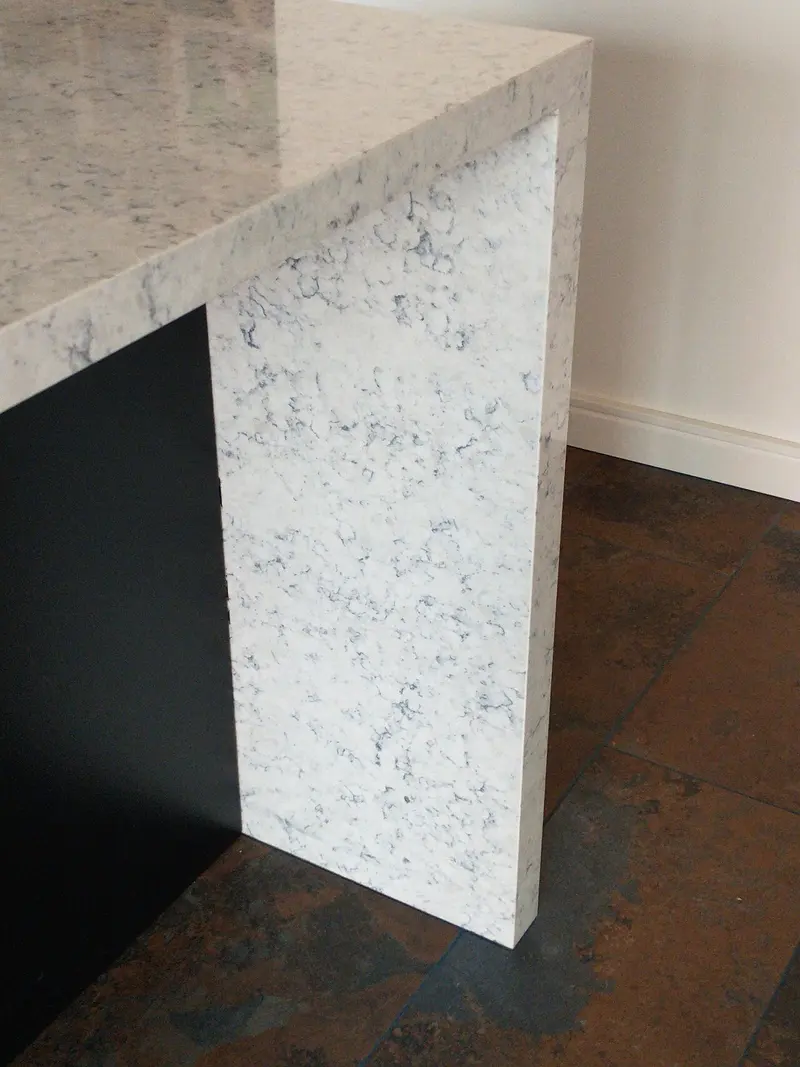

Then look at the full slab when you can, not just a small chip. Veining that looks subtle on a sample can run bold across a whole island. If the pattern has a direction, decide which way it should run before the fabricator templates.
Plan the backsplash at the same time. A full-height slab backsplash behind the range is a clean look; a tile backsplash gives you room to bring in pattern and color. Either way, the counter and backsplash should be chosen together.
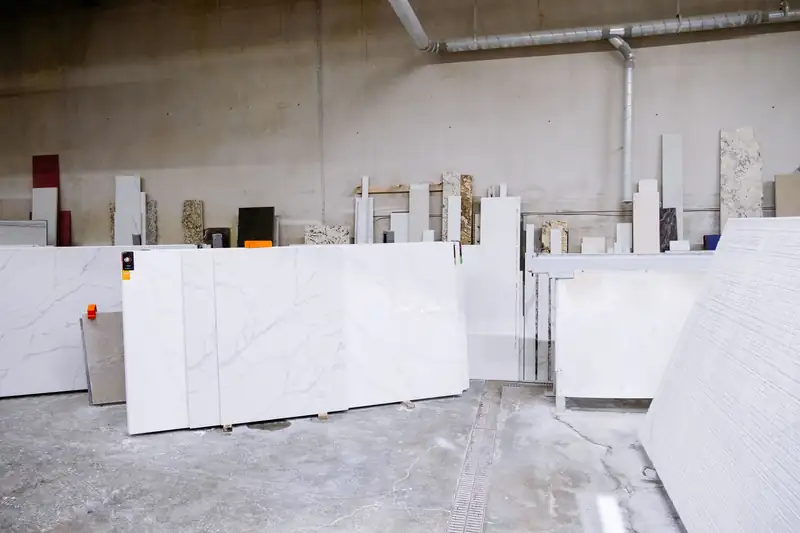
Finally, think about seams. Long runs and L-shaped counters may need one. A good layout puts seams where they are least visible, away from the sink and cooktop.
Sinks and faucets with quartz
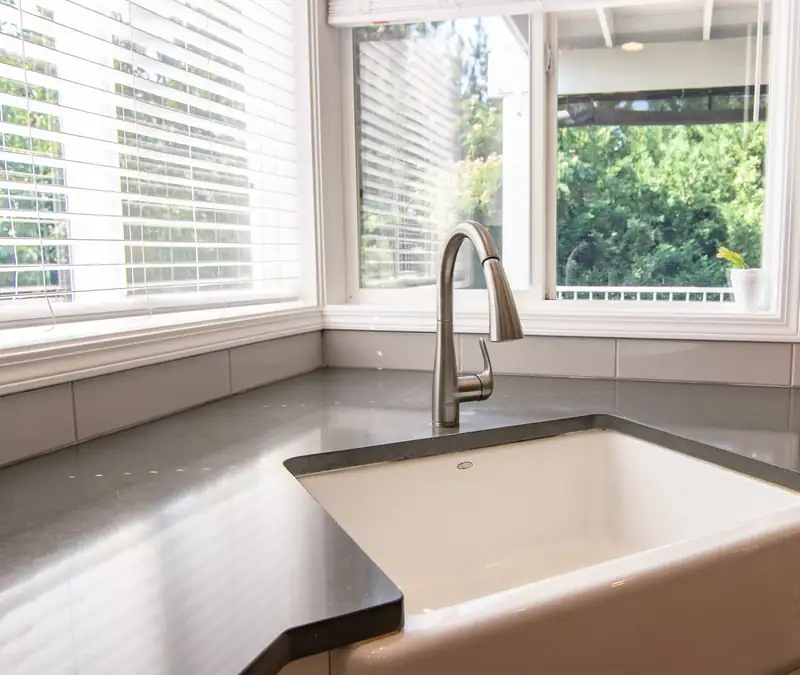
Undermount sinks are the most common pairing with quartz because the polished cut edge looks clean and wipes straight into the bowl. Farmhouse sinks also work and suit warmer, Spanish-leaning kitchens. Drill faucet and soap holes in the slab before install so the fabricator can place them exactly.
A word on samples
Small samples help, but ask to see a large piece or full slab before deciding.
Quartz vs quartzite vs granite
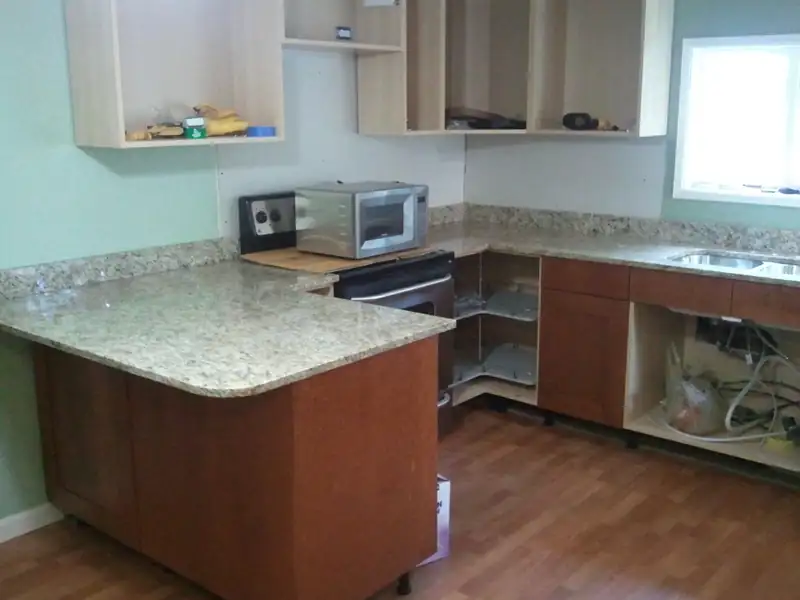
The three names sound alike but are different materials. Quartz counters are engineered: Wikipedia's engineered stone article describes crushed stone bound with resin, pressed into slabs. Quartzite and granite are natural stone cut from the earth.
Wikipedia describes quartzite as a very hard metamorphic rock that began as quartz sandstone and was changed by heat and pressure. It is usually white to gray, the article says, though pink and red tones come from small amounts of hematite. Because it is natural, every slab is different.
Wikipedia describes granite as a coarse-grained igneous rock made mostly of quartz, feldspar and mica, formed from magma that cooled slowly underground. That coarse grain gives granite its speckled look, in white, pink or gray, per the same article.
In practice: quartz gives the most consistent color and generally needs no sealing; granite and quartzite each have one-of-a-kind patterns and are usually sealed. Natural stone generally handles heat better than resin-bound quartz. Ask the fabricator about care for the exact slab you choose, since stones vary.
Whichever you pick, we handle the cabinets, sink and backsplash around it. See countertop replacement in Alhambra, Rosemead or Temple City, and backsplash installation.
What is inside a quartz slab
Wikipedia's engineered stone article says the quartz version is mostly crushed silica, roughly nine parts stone to one part polyester resin by weight, pressed under vacuum into a dense slab. It describes the result as non-porous, with color and pattern that stay consistent from slab to slab.
The same article notes the material is cut with a water jet or a diamond blade, the way natural stone is, which is why quartz is cut by a fabricator rather than on site with ordinary saws.
If you are only swapping old counters for quartz in the same layout, our countertop replacement pages cover that job city by city: countertops in Alhambra, countertops in Monterey Park, countertops in Rosemead, countertops in San Gabriel, countertops in Temple City. For tile behind the new top, see backsplash in Alhambra, backsplash in Monterey Park, backsplash in Rosemead, backsplash in San Gabriel, backsplash in Temple City.
More materials and styles
- Sage, terracotta and deep blue cabinets
- Granite countertops
- Butcher block countertops
- LVP vs tile flooring
- Victorian tile
- Basketweave tile
- Mosaic tile
- Quarry tile
- Stacked stone
- Hexagon tile
- Terrazzo tile
- Herringbone tile
- Backsplash tile ideas
- Shower tile ideas
- Spanish tile bathroom
- Saltillo tile
- Zellige tile backsplash
- Talavera tile
- Cement tile bathroom floor
- Terracotta tile floors
- Bathroom color trends
- Porcelain wood-look tile
- Subway tile vs handmade tile
- Porcelain vs ceramic tile
- LVP vs laminate flooring
- Semi-gloss vs satin paint
- MDF vs wood trim
- Natural stone and marble bathroom tile
- Grout types: cement, epoxy, urethane
Planning the whole room? Read our remodel guides, starting with how to choose bathroom tile.