
What sheen means
Wikipedia describes sheen as how much light a paint finish reflects. Gloss paint reflects most light like a mirror; flat paint scatters it. Between them sit common names, from dull to shiny: matte, eggshell, satin, silk, semi-gloss and high gloss.
The article notes these names are not standardized, so one maker's satin may look shinier than another's. Always compare real samples.
How they compare on paper
One gloss scale quoted on Wikipedia measures reflected light at a set angle. On that scale, semi-gloss reflects about 41 to 69 percent and satin about 26 to 40 percent. Treat the numbers as a rough guide, since makers measure differently.
The same article says sheen comes mainly from the ratio of binder to pigment: more binder gives a smoother, shinier film; less binder leaves pigment grains that scatter light.
Where semi-gloss works best
Common places for semi-gloss:
- baseboards
- door and window casings
- interior doors
- crown molding
- bathroom trim
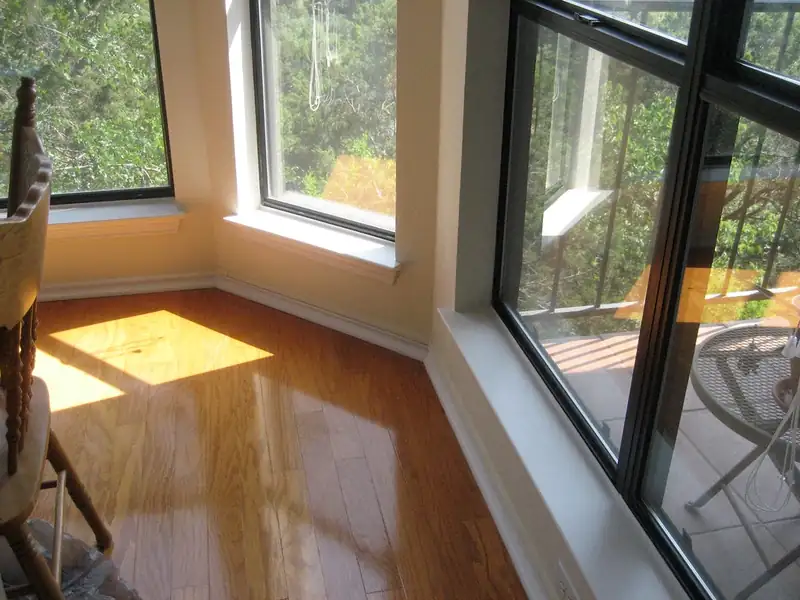
Its harder, smoother film wipes clean easily, which helps on surfaces that get scuffed, kicked and touched. The shine also outlines trim against flatter wall paint.
Where satin works best
Satin is a soft, low shine. It suits cabinets where a calmer look is wanted, bathroom and kitchen walls, and trim in rooms where semi-gloss would feel too bright.
It still cleans well, though usually not quite as easily as semi-gloss.
Bathrooms
Bathrooms get steam and splashes, so a finish that wipes clean is usually a good idea. Semi-gloss on trim and doors is common; satin on walls is a frequent pick, with many paint lines offering formulas made for humid rooms.
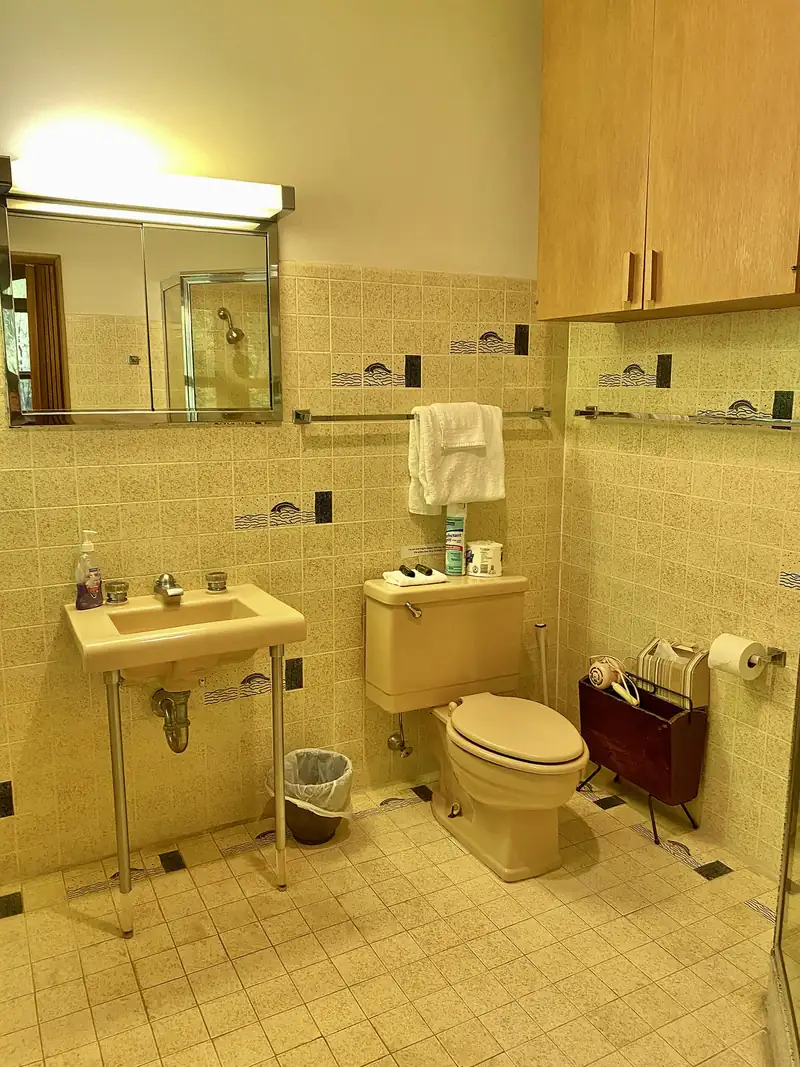

Good ventilation helps any paint last in a bathroom. A fan that runs during and after showers does more than sheen alone. Let fresh paint cure fully before the first hot shower.
Cabinets
For cabinets, both sheens are popular. Semi-gloss gives a crisp, classic finish and cleans easily around handles. Satin looks more modern and hides small dents and brush marks better.
Prep matters more than sheen: cabinets need cleaning, sanding and priming before any finish coat. See kitchen cabinets in Alhambra if replacing makes more sense than painting.
Color and sheen
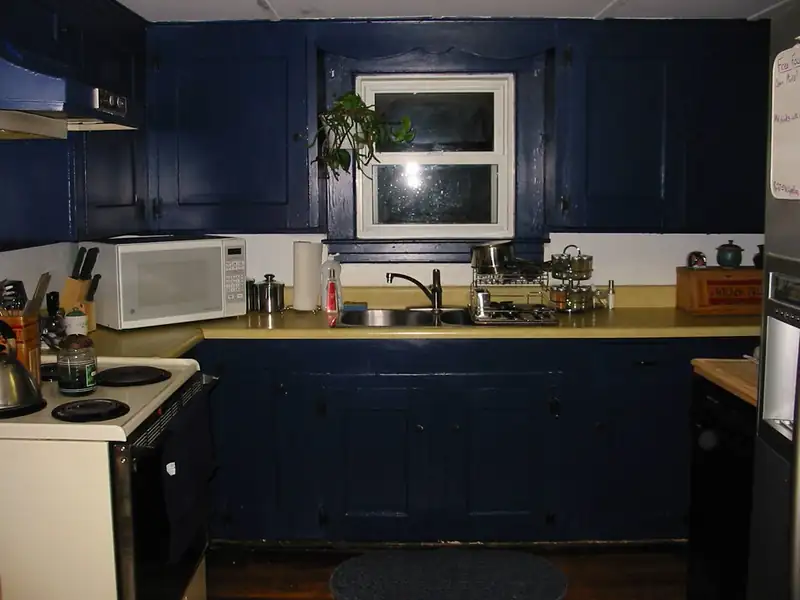
Sheen changes how a color reads: Wikipedia notes gloss level can affect apparent color. A dark navy cabinet in semi-gloss looks deeper and shinier than the same color in satin.
Test a sample board in your own light, near the trim or cabinet it will sit beside.
Mixing sheens in one room
A common pattern is flat or eggshell on walls, satin or semi-gloss on trim and doors, and a ceiling in flat. The contrast in shine helps trim stand out without a contrasting color.
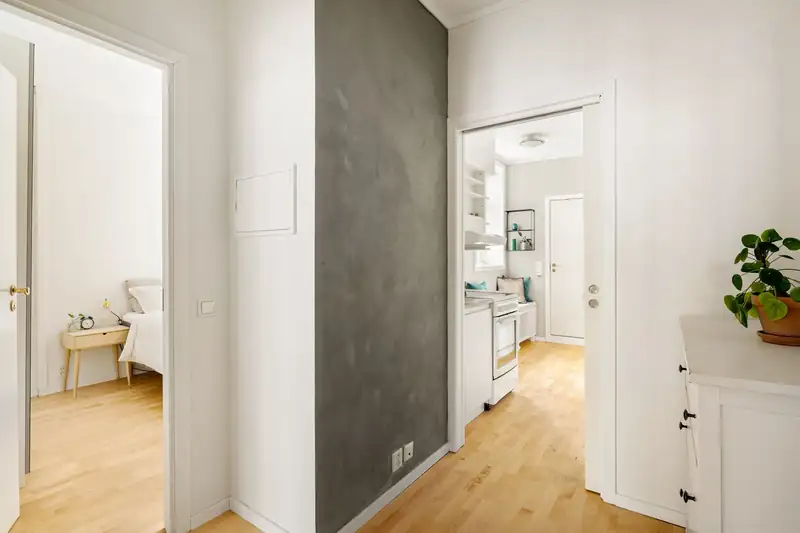
Keep all the trim in one room in the same sheen so the doors, casings and base match.
What shine shows
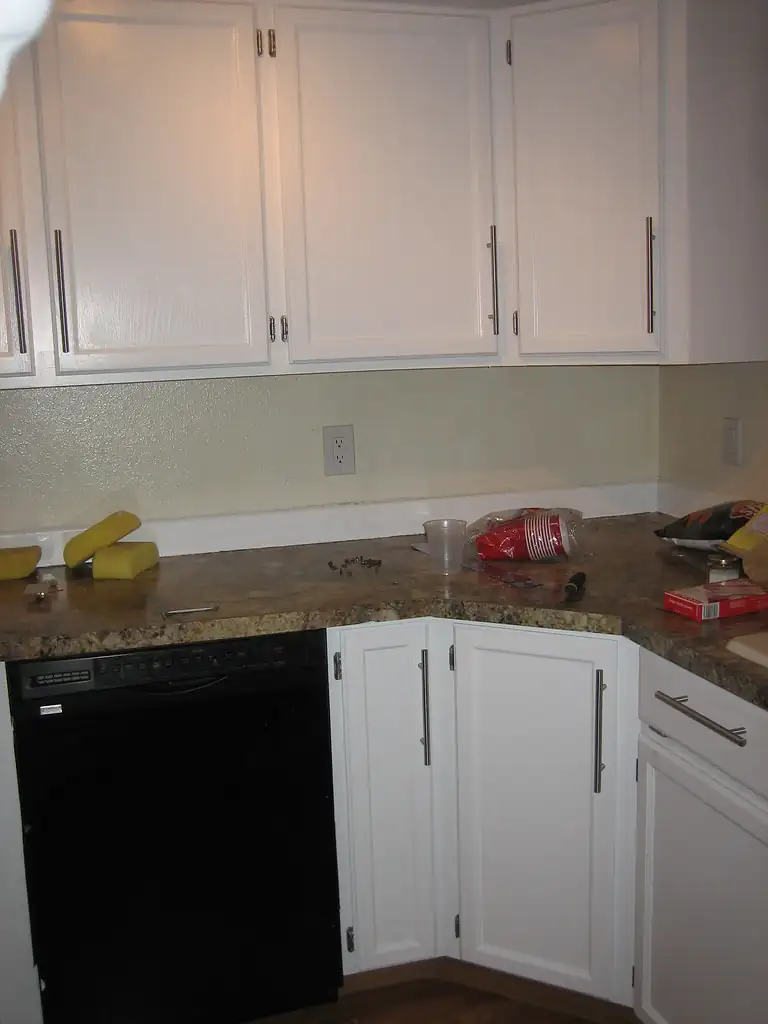
Wikipedia's gloss article explains that smooth surfaces reflect more light in a mirror-like direction, while rough ones scatter it. In practice, the shinier the paint, the more it shows dents, patches and brush marks.
So older trim with dings may look better in satin, and smooth new trim can carry semi-gloss well. Raking light from a window shows the most.
Prep and application
Shinier paint is less forgiving, so semi-gloss rewards careful prep: fill holes, sand smooth, caulk gaps between trim and wall, and remove dust before the finish coat. Satin hides a little more but still shows a poor surface.
Brush marks and roller texture show more in higher sheens. A good brush, a fine roller and thin, even coats help both. Many painters spray doors and cabinets for the smoothest result.
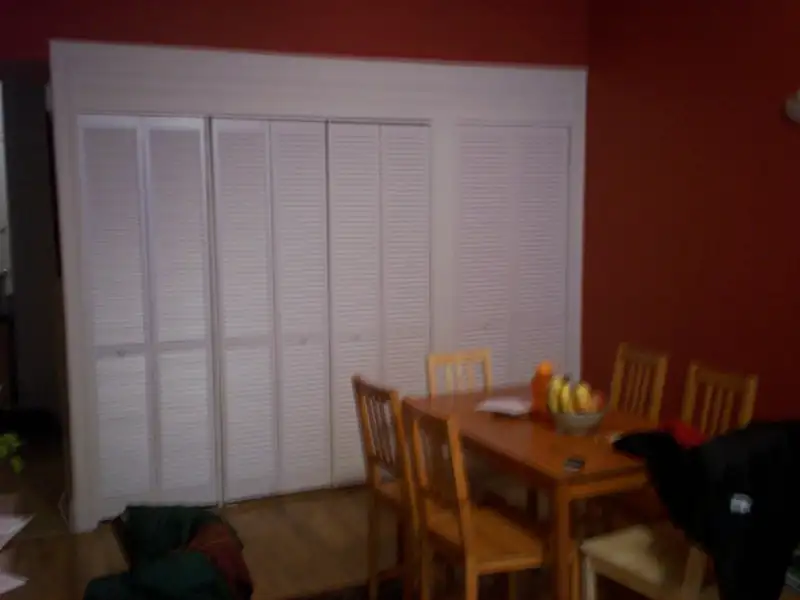
Old trim may have oil-based paint under it. A water-based coat over oil can peel unless the surface is cleaned, sanded and primed with a bonding primer, so test the old paint first.
Touch-ups
Touch-ups blend more easily in satin than in semi-gloss, where a patch can flash as a shinier or duller spot. Keep a labeled can of the exact color and sheen for later.
Painting pages by city
For trim and door painting, see door and trim painting in Rosemead, Monterey Park and San Gabriel. For walls, see interior painting in Alhambra and Temple City.
For trim itself, see baseboard installation and the MDF vs wood trim page.
More materials and styles
- Sage, terracotta and deep blue cabinets
- Granite countertops
- Butcher block countertops
- LVP vs tile flooring
- Victorian tile
- Basketweave tile
- Mosaic tile
- Quarry tile
- Stacked stone
- Hexagon tile
- Terrazzo tile
- Herringbone tile
- Backsplash tile ideas
- Shower tile ideas
- Quartz countertops
- Spanish tile bathroom
- Saltillo tile
- Zellige tile backsplash
- Talavera tile
- Cement tile bathroom floor
- Terracotta tile floors
- Bathroom color trends
- Porcelain wood-look tile
- Subway tile vs handmade tile
- Porcelain vs ceramic tile
- LVP vs laminate flooring
- MDF vs wood trim
- Natural stone and marble bathroom tile
- Grout types: cement, epoxy, urethane
Planning the whole room? Read our remodel guides, starting with how to choose bathroom tile.