
What quarry tile is
The National Park Service's Preservation Brief 40 calls quarry tiles the most basic type of historic ceramic floor tile. It says they were originally made from quarried stone but are machine-made by extrusion, and are unglazed slabs of clay baked in a kiln.
Colors
The brief notes quarry tile colors are natural earthen shades of gray, red and brown, set by the clay and partly by how hot and how long the tile is fired.
Because the color runs through the body of the tile, chips and wear show less than on a glazed tile.
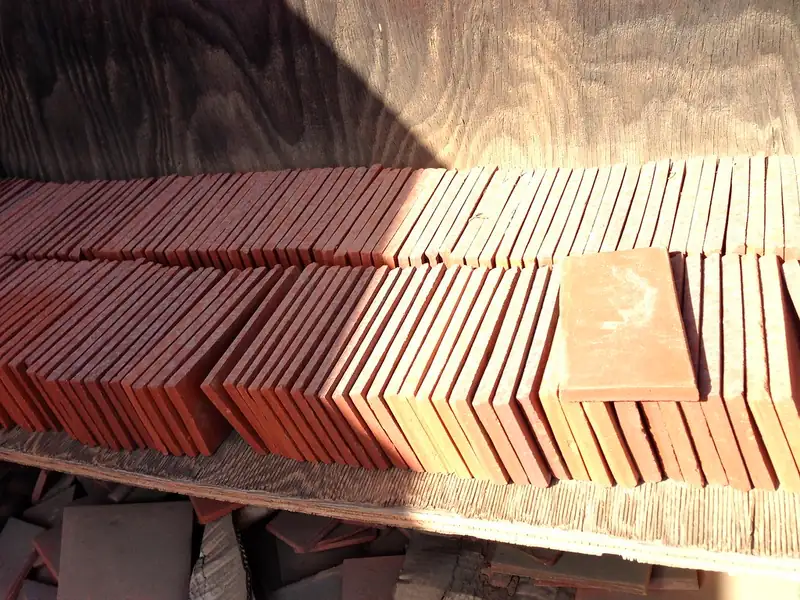
Sizes and shapes
The same brief lists thicknesses of about a quarter to half an inch, with squares from 3 to 12 inches, 6 inches being one of the most common, plus rectangles and even hexagons.
Kitchens
Quarry tile is dense and hard-wearing, which is why it shows up in restaurant kitchens. At home it suits a farmhouse or Spanish kitchen. Pair it with a simple backsplash; see backsplash tile ideas.
Entries, laundry and patios
Its matte, unglazed surface gives decent grip, so it works in entries and back halls. Outdoors, check that the tile is rated for the weather where it goes.
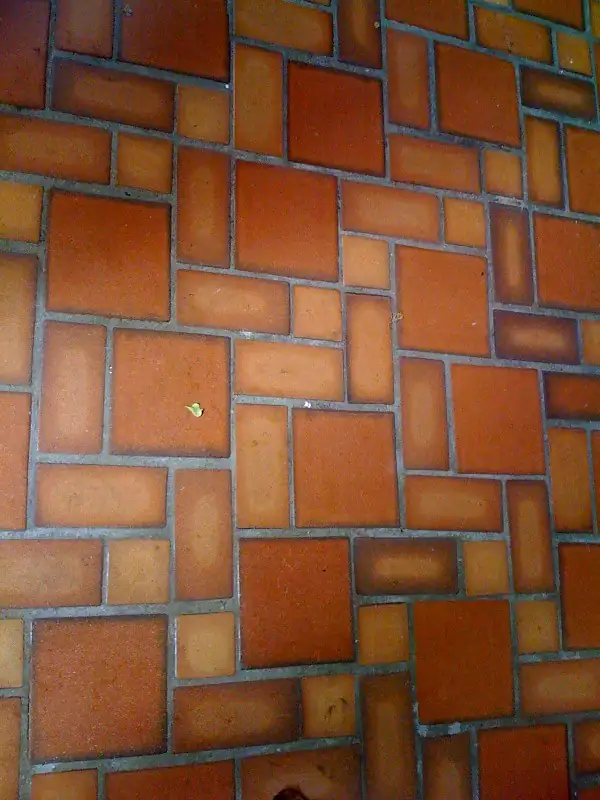
Quarry tile vs terracotta and saltillo
All three are red clay floors. Quarry tile is machine-made, denser and more uniform. Terracotta and saltillo are usually softer, more porous and more varied by hand. See terracotta tile floors and saltillo tile.
Pavers
The NPS brief describes pavers as a simpler, often cruder cousin of quarry tile, usually unglazed and slightly thicker. It notes handmade pavers common in Mexico and southern Europe are non-vitreous, meaning they absorb more water.
Sealing
Many quarry tiles are dense enough to need little sealing, but a penetrating sealer helps against kitchen grease and wine. Test a spare tile first, since some sealers darken clay.
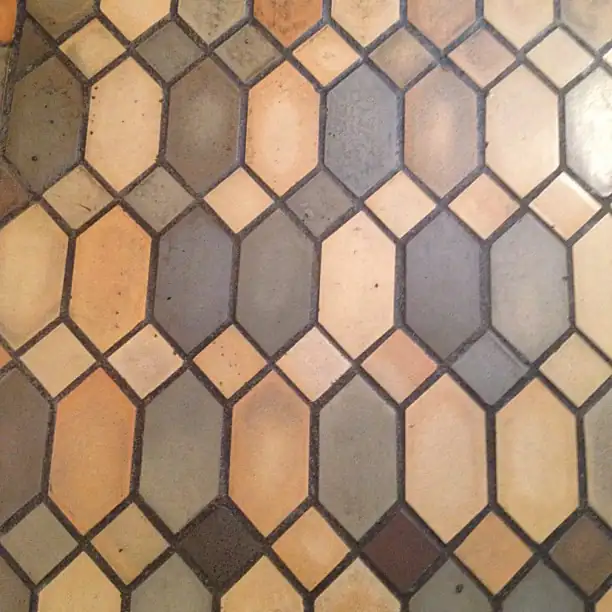
Grout
Charcoal or warm gray grout hides kitchen dirt well. Since grout lines are wide on many quarry floors, a stain-resistant grout helps; see grout types.
Care
Sweep grit often, and keep rugs at the doors to catch most of it. Mop with a pH-neutral cleaner. Older quarry floors that look dull usually need a deep clean and fresh sealer, not new tile.
Common search: is quarry tile slippery?
Unglazed quarry tile is usually less slippery than glossy tile. Grease or a heavy wax coat can make any floor slick, so keep it clean and avoid shiny finishes.
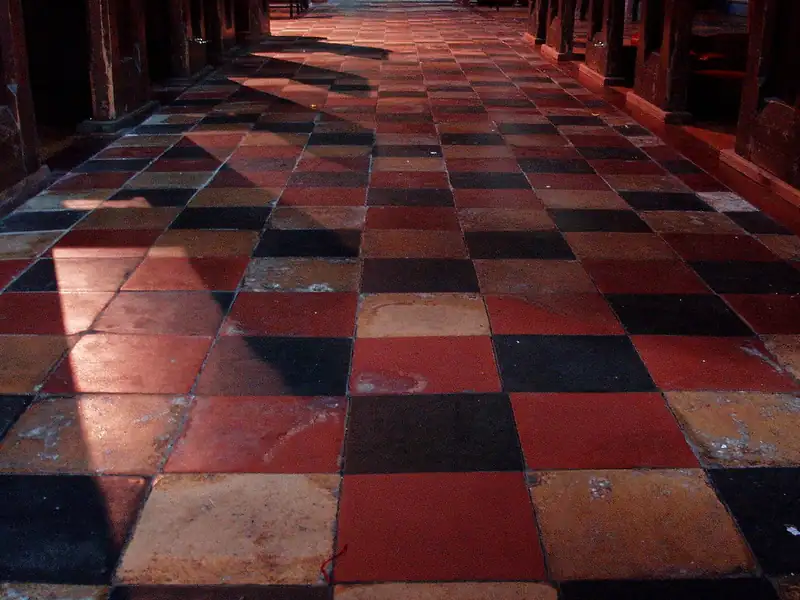
Tile floor pages
For tile work in general, see tile floor installation in San Gabriel, tile floor installation in Monterey Park and kitchen remodels in Alhambra.
More materials and styles
- Sage, terracotta and deep blue cabinets
- Granite countertops
- Butcher block countertops
- LVP vs tile flooring
- Victorian tile
- Basketweave tile
- Mosaic tile
- Stacked stone
- Hexagon tile
- Terrazzo tile
- Herringbone tile
- Backsplash tile ideas
- Shower tile ideas
- Quartz countertops
- Spanish tile bathroom
- Saltillo tile
- Zellige tile backsplash
- Talavera tile
- Cement tile bathroom floor
- Terracotta tile floors
- Bathroom color trends
- Porcelain wood-look tile
- Subway tile vs handmade tile
- Porcelain vs ceramic tile
- LVP vs laminate flooring
- Semi-gloss vs satin paint
- MDF vs wood trim
- Natural stone and marble bathroom tile
- Grout types: cement, epoxy, urethane
Planning the whole room? Read our remodel guides, starting with how to choose bathroom tile.