
What LVP is
Wikipedia's vinyl flooring article says "luxury vinyl tile" (LVT) is an industry term, not a standard, for vinyl that realistically copies natural materials and has an added wear layer, usually a heavy film topped with a UV-cured urethane that helps it resist scuffs, stains and scratches.
The same article says "luxury vinyl plank" (LVP) usually means the products that look like wood, that LVP tends to be thicker than LVT, and that it often uses a click-lock system rather than glue.
What porcelain and ceramic tile are
Tile is fired clay. Wikipedia describes porcelain tile as a dense, vitrified ceramic tile with water absorption under 0.5 percent, made from a mix of clays, feldspar and quartz pressed and fired at high temperature. Ceramic wall and floor tile is fired too, but is usually more porous.
Tile is set in mortar and the joints are filled with grout, so the floor is rigid and hard. For a closer look at the two kinds of tile, see porcelain vs ceramic tile.
A short history of vinyl floors
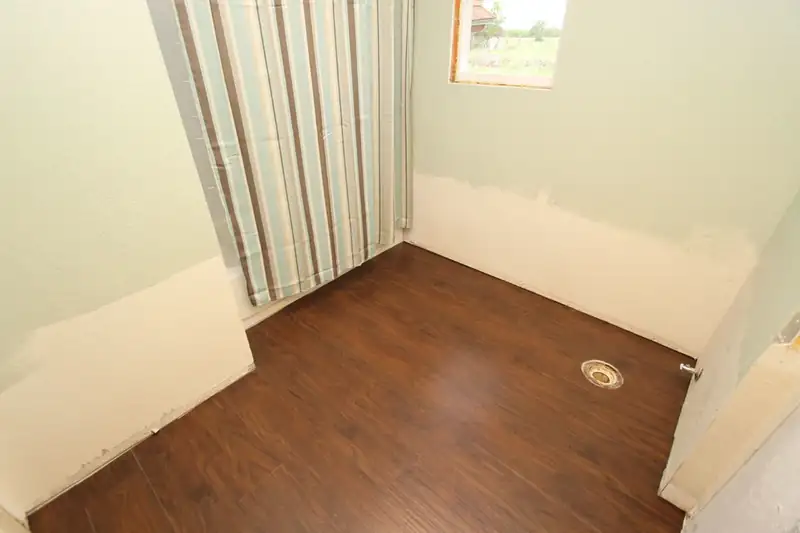
Wikipedia traces resilient floors back to 1894, when Philadelphia architect Frank Furness patented a system of rubber floor tiles. Plasticized PVC was invented by Waldo Semon in the United States in 1926, and a vinyl composition tile was shown at the Century of Progress Exposition in Chicago.
According to the same article, vinyl flooring was not widely marketed until the late 1940s because vinyl was scarce during the war years, and it went on to become a very common choice for hard-surface floors. Today’s wood-look plank is a much newer branch of that family.
Water and wet rooms
Both floors handle everyday spills in a kitchen or bathroom. Porcelain is close to impervious, and a tile floor is set in mortar, so it shrugs off water on its surface. Grout is the weak spot; it absorbs water unless it is sealed or made from a stain-resistant product.
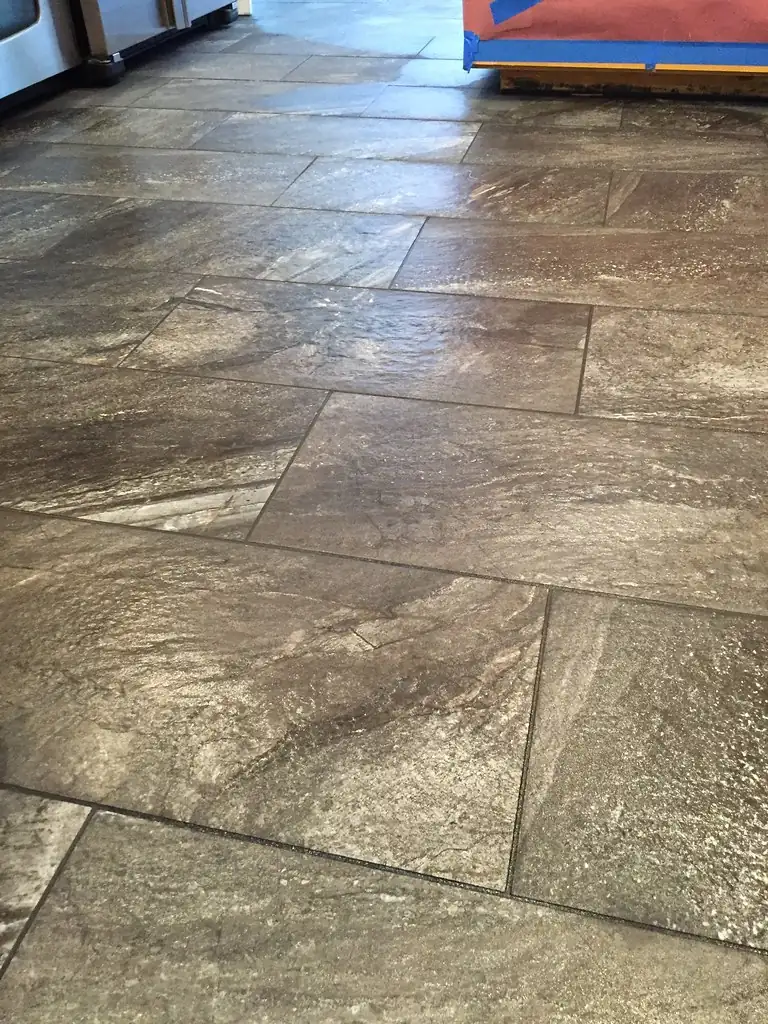
Many vinyl planks are sold as waterproof, but water can still find its way through the seams and edges to the subfloor, so the edges at tubs, toilets and doorways matter. Inside a shower, tile over proper waterproofing is the norm; see the shower waterproofing guide for what goes behind it.
Feel, sound and comfort
Vinyl plank is softer and a little warmer underfoot than tile, and it is quieter to walk on, especially with an attached pad. Dropped glasses are more likely to survive it.
Tile is hard and cool. Some people love that in a warm climate; others find it tiring to stand on for long stretches in a kitchen. A good mat at the sink and range helps. Tile also pairs well with radiant floor heat if you want warmth without giving up stone or clay.
Wear and how long they last
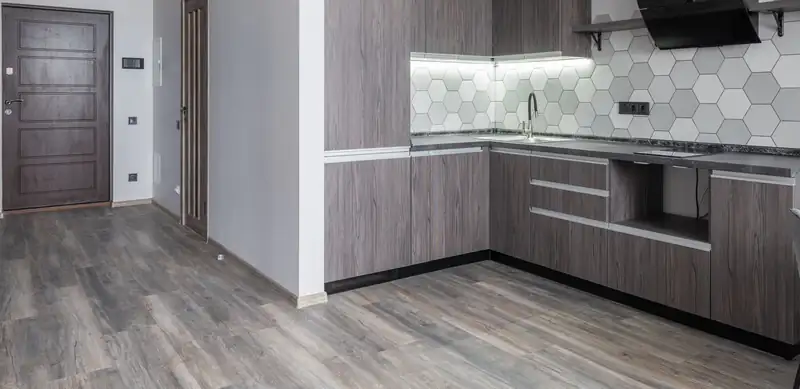
Wikipedia notes that, compared with tile, stone or wood, luxury vinyl tends to have lower durability and a shorter useful life, though with proper care it can last for years. Its wear layer protects the printed pattern; once that layer is worn through, the pattern can show wear.
Upkeep is different too. Vinyl plank is swept and damp-mopped; avoid steam mops and harsh cleaners unless the maker says they are fine. Tile is easy to mop, and the grout lines are what need attention: a sealer on cement grout, or a stain-resistant grout from the start, keeps them looking clean.
Porcelain is very hard and the color often runs through the whole tile, so chips are less noticeable. A single cracked tile can be replaced, but matching it later is easier if you keep a few spares from the original order.
Looks and patterns
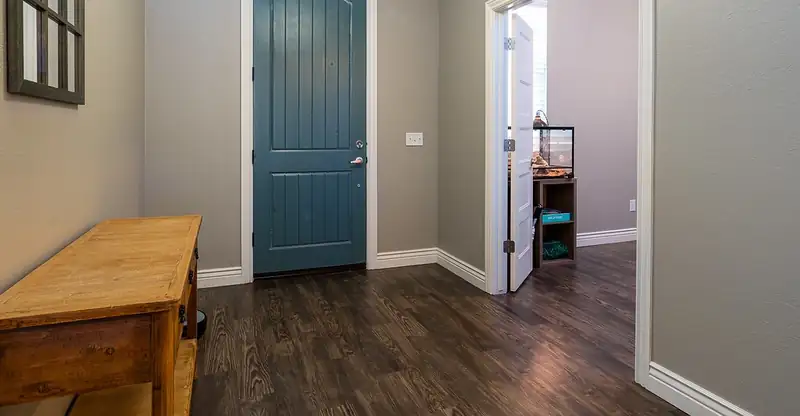
Vinyl plank is mostly about wood looks, from light oak to dark walnut. Tile can also look like wood; see porcelain wood-look tile. It can also be stone-look, concrete-look, patterned or handmade.
If you want a pattern on the floor, such as hexagon, herringbone or a cement tile look, tile gives you the most choices.
Floors underneath and transitions
Both floors want a flat, solid subfloor. Floating vinyl plank can often go over a sound existing hard floor; tile needs a rigid base with no flex, which can mean backer board or other prep. Either way, check the room heights at doorways, dishwashers and the bottom of the stairs.
Where one floor meets another, plan the transition strip early. If you are weighing vinyl against laminate as well, see LVP vs laminate flooring.
Baseboards and door casings also come into play. Vinyl plank that floats needs a small gap at the walls, which baseboard or quarter-round covers. Tile is usually set before new baseboard goes on, and the base sits on top of the tile edge.
Which floor for which room
A common pattern in local homes is tile in bathrooms and laundry rooms, and vinyl plank or tile in kitchens and living areas, chosen by feel and look. For whole-room planning see flooring, bathroom remodeling and kitchen remodeling.
If you cannot decide, try both. Lay a few planks and a few tiles side by side in the room, walk on them in socks and shoes, and look at them in morning and evening light. Think about who uses the room, pets and kids included, and how much you mind grout lines or seams.
It also helps to think past the floor itself. Tile choices tie into the shower, the tub surround and the backsplash, while vinyl plank often runs through a whole level of the house without a break. Picture the full path from the front door to the back of the house before you settle on one floor for one room.
Local pages cover each job by city, such as tile floors in Monterey Park and vinyl plank floors in Alhambra.
More materials and styles
- Sage, terracotta and deep blue cabinets
- Granite countertops
- Butcher block countertops
- Victorian tile
- Basketweave tile
- Mosaic tile
- Quarry tile
- Stacked stone
- Hexagon tile
- Terrazzo tile
- Herringbone tile
- Backsplash tile ideas
- Shower tile ideas
- Quartz countertops
- Spanish tile bathroom
- Saltillo tile
- Zellige tile backsplash
- Talavera tile
- Cement tile bathroom floor
- Terracotta tile floors
- Bathroom color trends
- Porcelain wood-look tile
- Subway tile vs handmade tile
- Porcelain vs ceramic tile
- LVP vs laminate flooring
- Semi-gloss vs satin paint
- MDF vs wood trim
- Natural stone and marble bathroom tile
- Grout types: cement, epoxy, urethane
Planning the whole room? Read our remodel guides, starting with how to choose bathroom tile.