
When tile floors took off
The National Park Service's Preservation Brief 40 says it was in the Victorian era that ceramic tile floors first became common in the United States, and that American decorative tile making began about 1870 and flourished until about 1930.
The brief adds that the architect Andrew Jackson Downing recommended encaustic tiles for homes in 1850, especially in vestibules and entrance halls, for their practicality.
Encaustic tiles
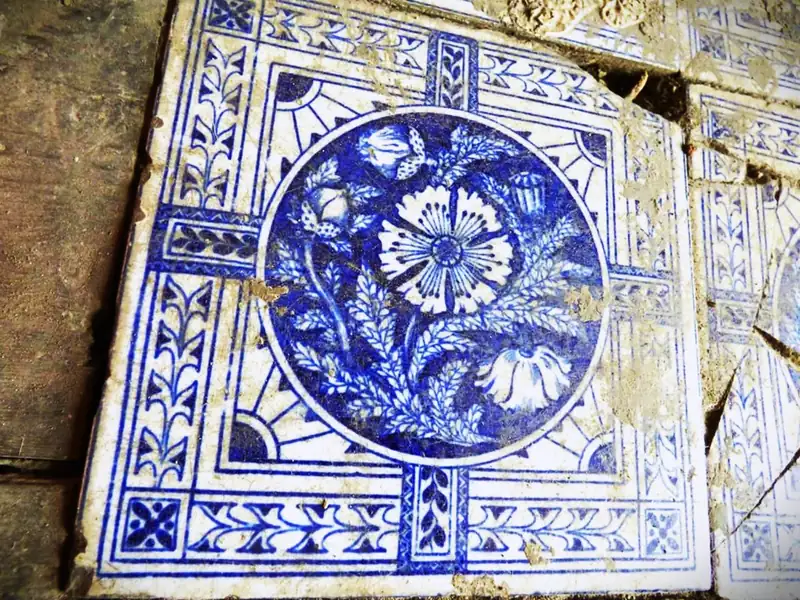
Wikipedia describes encaustic or inlaid tiles as tiles whose pattern comes from different colors of clay rather than glaze, so the design stays as the surface wears down. It notes most use two colors, though some use up to six.
The article says the Victorians borrowed the word encaustic, and that the medieval name was simply inlaid tile.
Geometric tiles
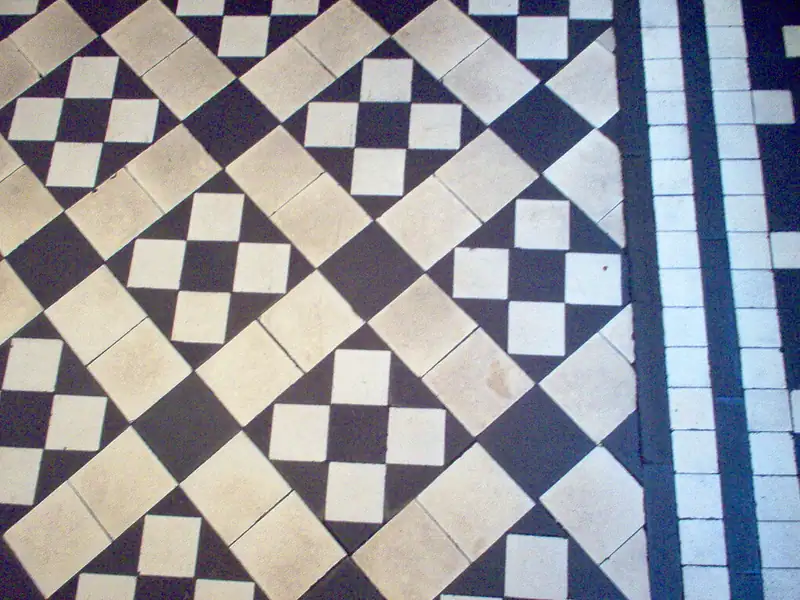
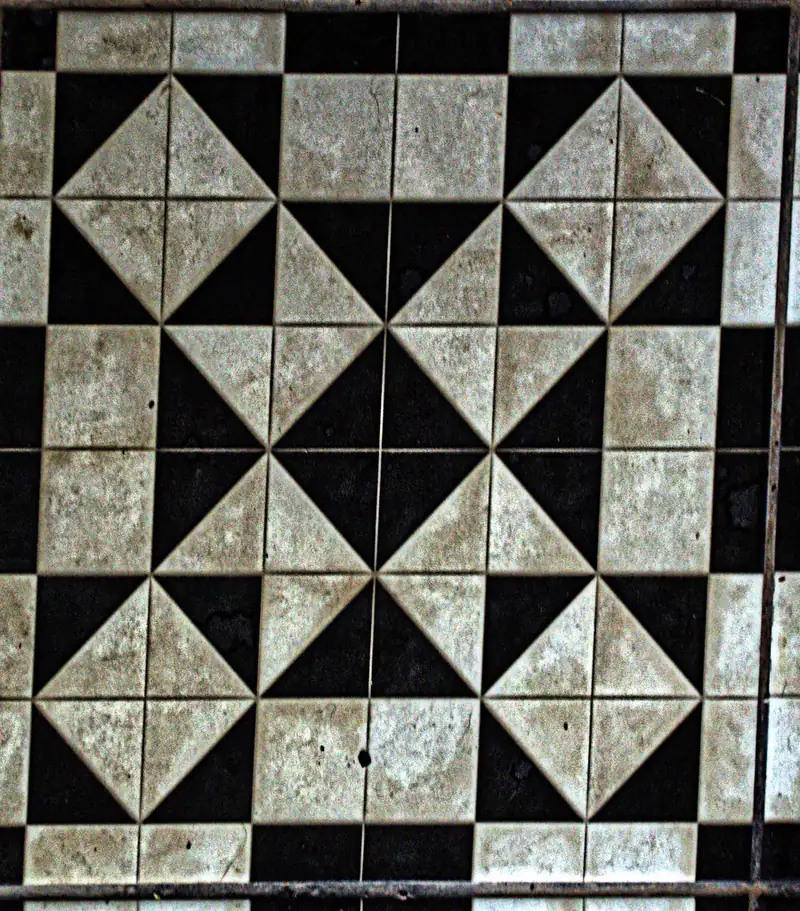
The NPS brief describes geometric tiles as smaller, single-color pieces that form a pattern when set together. It says they were based on segments of a six-inch square and came as rectangles, squares, triangles and hexagons.
They suited borders well and cost less to make than encaustic tile, since each piece used one clay and one color.
Where it suits a home
Entry halls, porches and bathrooms are the natural places for a Victorian pattern. A full star-and-checker floor works in a hall; a simpler field with a border suits a small bath. For bathroom tile in general, see bathroom tile installation in Monterey Park.
Patterns and borders
Classic layouts include black and white checkers set on the diagonal, eight-point stars, and a wide border framing a central field. Red, buff, black and white were common colors, with blue and green accents.
Reproduction and look-alike tile
Today the look comes from reproduction geometric tiles, from porcelain printed with Victorian patterns, and from cement tile. Printed porcelain is the low-care route; see porcelain vs ceramic tile. For cement tile, see cement tile bathroom floors.
Walls
Victorian homes also used glazed wall tile, often with molded or painted bands and dado rails. A simple glazed wall tile with one decorative band gives a similar feel without overdoing it.
Old floors uncovered
Old tile is sometimes found under carpet or vinyl. A deep clean often brings it back, and loose or cracked pieces can sometimes be reset or matched. Preservation guidance like the NPS brief is worth reading first.
Grout and setting
Small geometric pieces leave many tight joints, so a grout color close to the main tile keeps the pattern crisp. See grout types. Like other floor tile, the pieces need a flat, sound base.
Care
Unglazed clay tile can stain, so seal it where food or water lands. Sweep often and mop with a pH-neutral cleaner; avoid acidic cleaners on old floors.
Related tile styles
Other tiles from the same era include hexagon tile, mosaic tile and quarry tile.
Tile floor pages
For tile work in general, see tile floor installation in Alhambra, tile floor installation in Rosemead and bathroom tile installation in San Gabriel.
More materials and styles
- Sage, terracotta and deep blue cabinets
- Granite countertops
- Butcher block countertops
- LVP vs tile flooring
- Basketweave tile
- Mosaic tile
- Quarry tile
- Stacked stone
- Hexagon tile
- Terrazzo tile
- Herringbone tile
- Backsplash tile ideas
- Shower tile ideas
- Quartz countertops
- Spanish tile bathroom
- Saltillo tile
- Zellige tile backsplash
- Talavera tile
- Cement tile bathroom floor
- Terracotta tile floors
- Bathroom color trends
- Porcelain wood-look tile
- Subway tile vs handmade tile
- Porcelain vs ceramic tile
- LVP vs laminate flooring
- Semi-gloss vs satin paint
- MDF vs wood trim
- Natural stone and marble bathroom tile
- Grout types: cement, epoxy, urethane
Planning the whole room? Read our remodel guides, starting with how to choose bathroom tile.