
What herringbone is
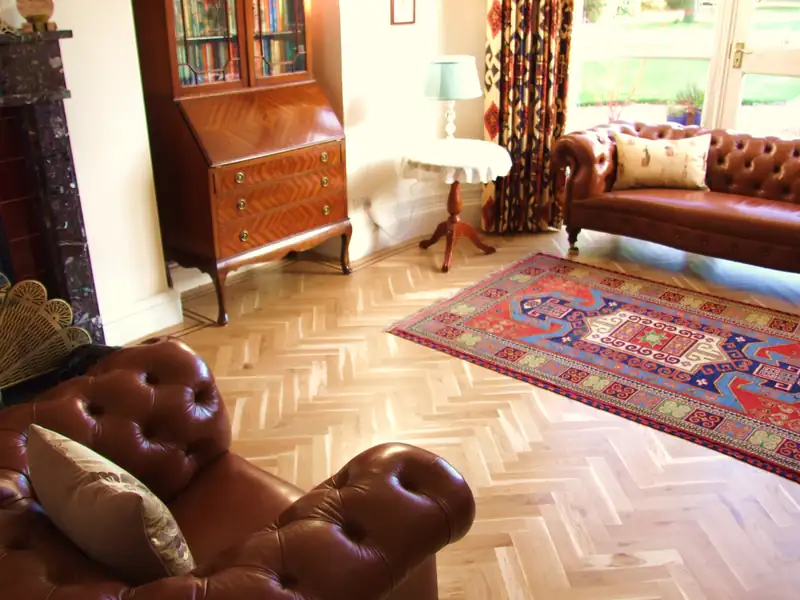
Wikipedia describes the herringbone pattern as an arrangement of rectangles used for floors and paving, named for a resemblance to the bones of a fish such as a herring. It notes the rectangles are usually in a 2:1 ratio, sometimes 3:1.
The article adds that herringbone floors can be done in wood, brick and tile.
Herringbone vs chevron
Herringbone uses plain rectangles that meet at the end of one and the side of the next, so the zigzag looks stepped. Chevron uses pieces cut at an angle so the points meet in a clean V. Chevron tiles are sold pre-cut; herringbone uses ordinary rectangles.
Tile sizes that work
Common tile picks include 2x8, 3x12 and 4x12 rectangles, longer than the 2:1 ratio typical of brick. Very long planks make a bold floor. Tiny mosaics on mesh sheets give the look on a backsplash without cutting every piece.
For subway tile in herringbone, see subway vs handmade tile.
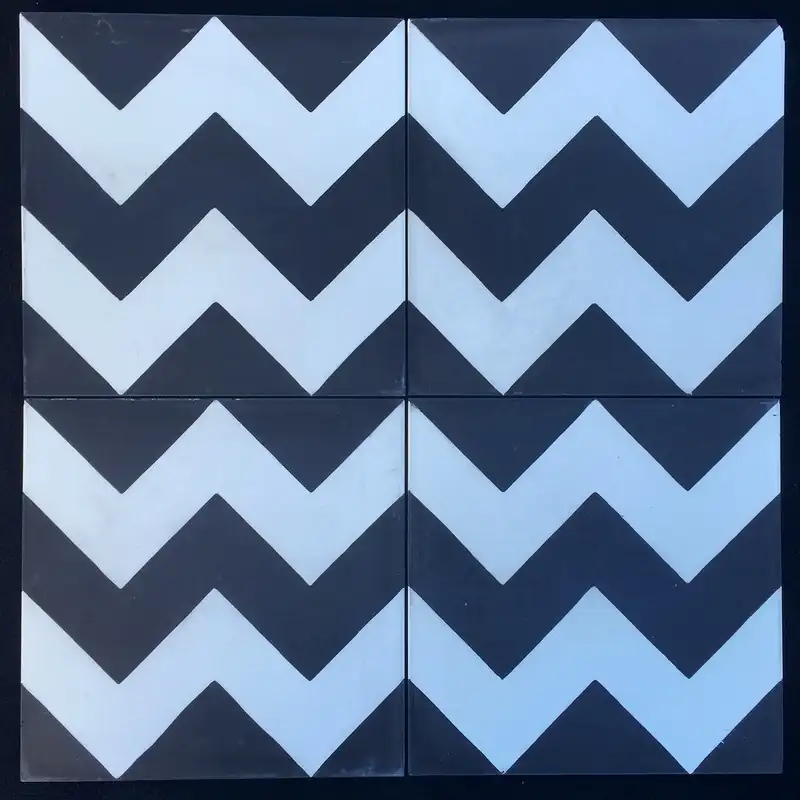
Herringbone floors
Wikipedia warns that a herringbone floor is challenging, since the rows must line up smoothly and small mistakes can be glaring, especially in a room that is not perfectly flat.
That is why floor prep matters more than usual. We check flatness and level first. In a hallway, running the zigzag down the length makes the space feel longer.
Backsplashes
A herringbone backsplash turns a plain white tile into a feature. It is a good choice behind a range, or across the whole wall when the counter is plain. See backsplash tile ideas for pairing with cabinets and counters.
Showers
On a shower wall, herringbone can run floor to ceiling or sit in a single accent panel. On a shower floor, small mosaics in a herringbone sheet follow the slope better than large pieces.
For other shower ideas, see shower tile ideas.
Layout and centering
The zigzag should be centered on something the eye notices: the range, the sink, the middle of a doorway or the length of a hall. We snap a centerline and dry-lay a few rows before setting any tile, so the cuts at the edges come out even.
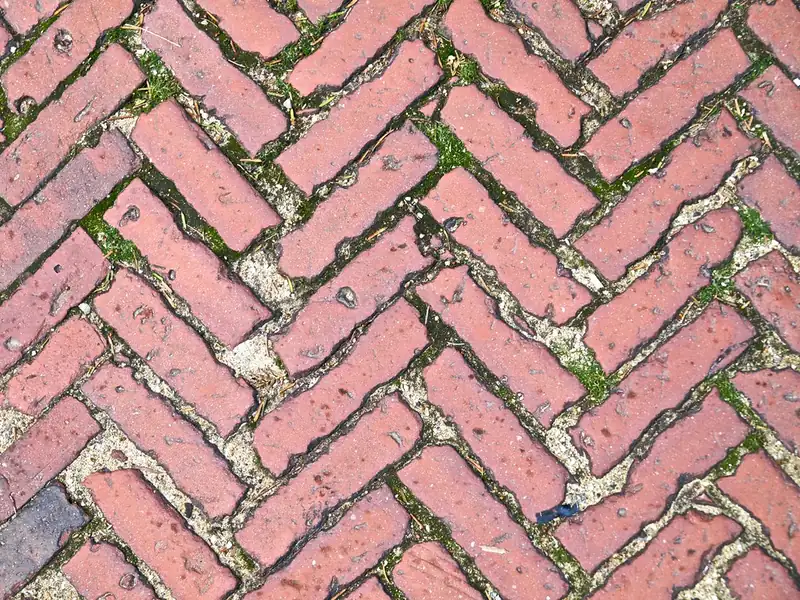
Waste and cuts
Every edge gets an angled cut, so herringbone uses more tile than a straight lay and takes longer to set. Order extra, and keep a few spare pieces for future repairs.
Grout color
Contrasting grout shows off the zigzag; matching grout makes it subtle. On a floor, a mid-tone grout hides dirt. See grout types for cement, epoxy and urethane.
Materials
Porcelain, ceramic, marble and wood-look tile all work in herringbone. Wood-look planks in herringbone copy a classic parquet floor; see porcelain wood-look tile. Handmade tile with uneven edges needs wider joints.
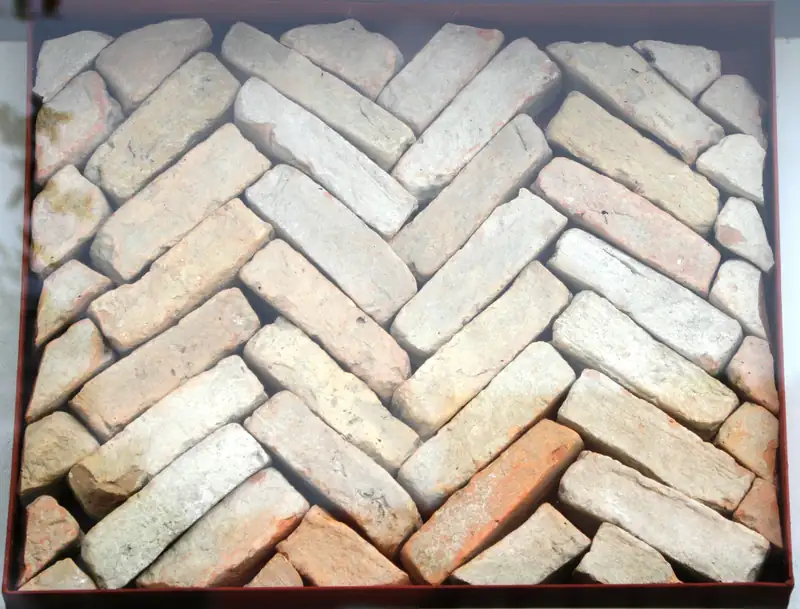
Common search: is herringbone tile timeless?
The pattern has been used in paving and floors for a very long time, so it rarely looks like a passing trend. The tile color and size date faster than the layout does.
Tile and remodel pages
For the work itself, see backsplash installation in Rosemead, tile floors in Temple City and shower remodels in Monterey Park.
More materials and styles
- Sage, terracotta and deep blue cabinets
- Granite countertops
- Butcher block countertops
- LVP vs tile flooring
- Victorian tile
- Basketweave tile
- Mosaic tile
- Quarry tile
- Stacked stone
- Hexagon tile
- Terrazzo tile
- Backsplash tile ideas
- Shower tile ideas
- Quartz countertops
- Spanish tile bathroom
- Saltillo tile
- Zellige tile backsplash
- Talavera tile
- Cement tile bathroom floor
- Terracotta tile floors
- Bathroom color trends
- Porcelain wood-look tile
- Subway tile vs handmade tile
- Porcelain vs ceramic tile
- LVP vs laminate flooring
- Semi-gloss vs satin paint
- MDF vs wood trim
- Natural stone and marble bathroom tile
- Grout types: cement, epoxy, urethane
Planning the whole room? Read our remodel guides, starting with how to choose bathroom tile.