
Why stone in a bathroom
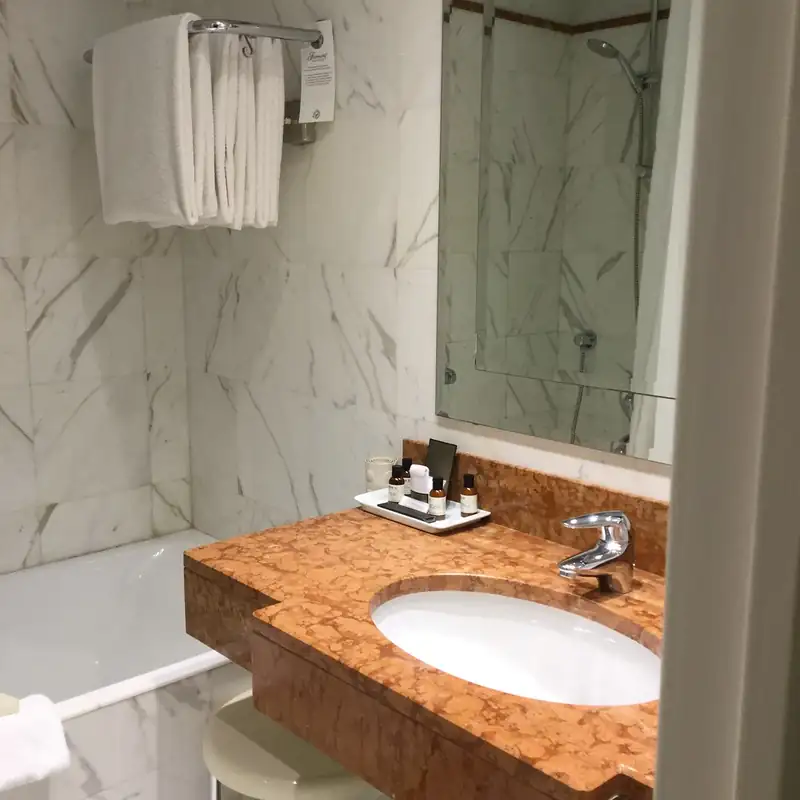
Natural stone gives depth that printed tile only imitates: veins run through the stone, and the surface changes as light moves across it. A stone vanity top, floor or shower wall can set the tone for the whole room.
The trade-off is care. Most stones used in bathrooms are softer and more porous than porcelain, so the right stone, finish and sealer matter.
Marble
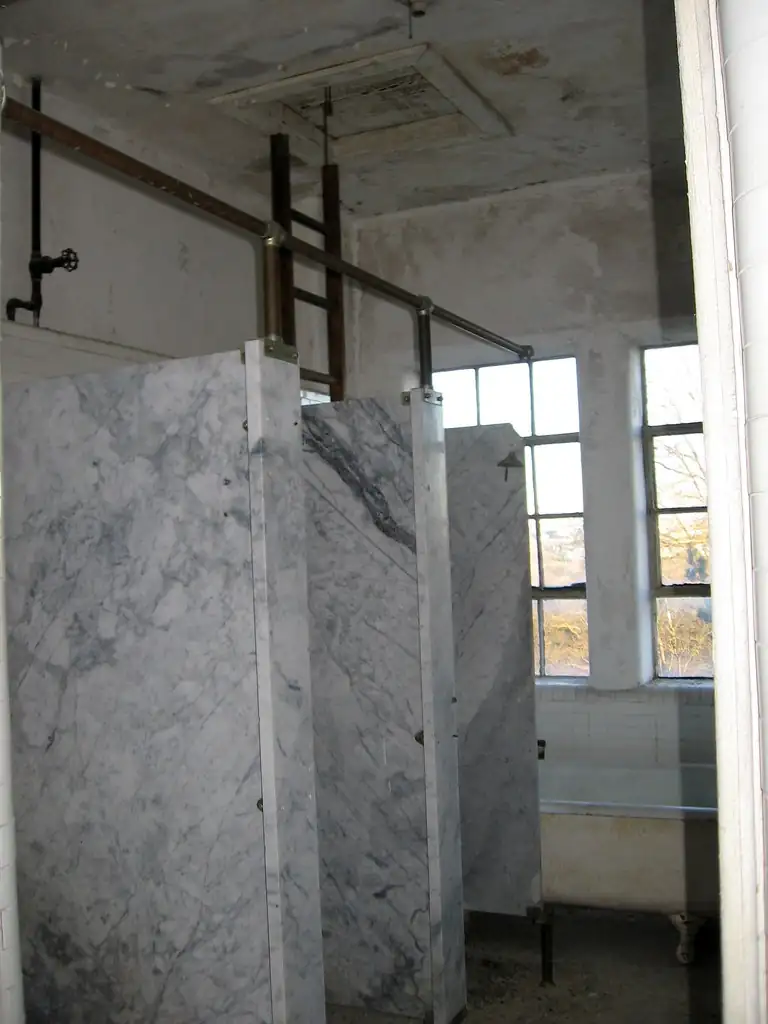
Wikipedia describes marble as a metamorphic rock of recrystallized carbonate minerals, most often calcite or dolomite. Pure white marble comes from very clean limestone or dolomite, the article says, and its signature veins and swirls come from impurities such as clay, sand or iron oxides.
Because it is a carbonate stone, marble can etch from acids. In a bath, that means some cleaners, and in a kitchen, lemon juice and vinegar. A dull spot from etching is a surface change, not a stain.
Travertine and limestone
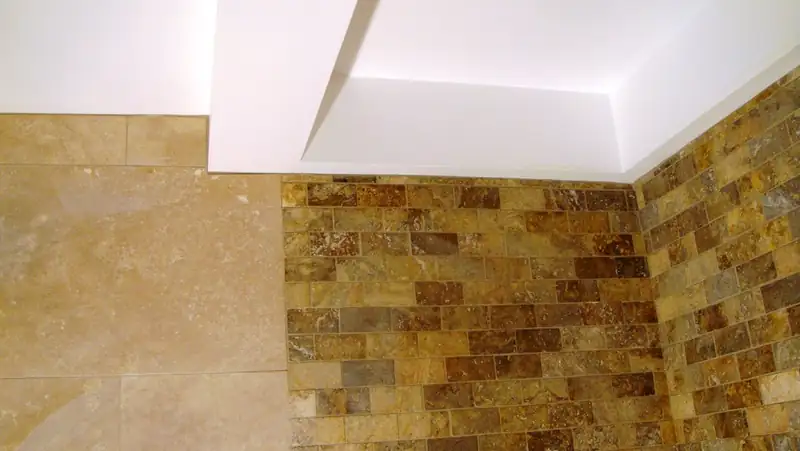
Wikipedia describes travertine as a form of limestone deposited around mineral springs, often in white, tan, cream and rust tones. Its natural holes are usually filled at the factory for indoor tile.
Wikipedia says limestone is made mostly of calcite and aragonite, forms of calcium carbonate. Like marble, both can etch from acids and are softer than granite or porcelain.
Travertine and limestone give a warm, matte look that suits Spanish and Mediterranean bathrooms.
Water and sealing
Common reasons to seal stone in a bath:
- it absorbs water
- it takes stains
- soap and minerals can leave marks on it
Sealers slow absorption but do not make stone waterproof. The waterproofing in a shower belongs behind the tile, in the wall and floor system. Test the sealer by dripping water on it; if it darkens the stone quickly, it is time to reseal.
Slate
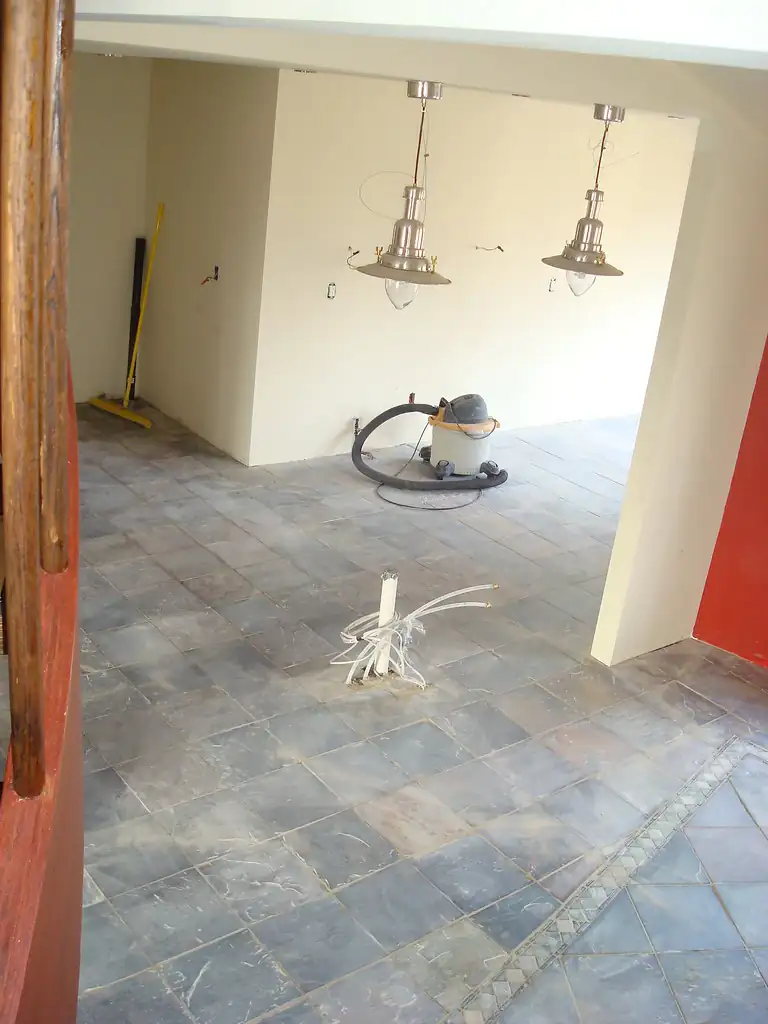
Wikipedia describes slate as a fine-grained, foliated metamorphic rock that splits into smooth, flat sheets, which is why it has long been used for floor tiles. It is often gray, the article notes, though many slates show rust, green and purple tones.
Slate is usually less affected by acids than marble, and its natural cleft texture gives grip underfoot. Some slates flake at the surface, so choose a dense, consistent grade.
Finishes and slip
Polished stone is shiny and shows the veining best, but it is slippery when wet. Honed stone has a smooth matte face that shows etching less. Tumbled and brushed finishes add texture and grip.
For bathroom and shower floors, many people choose honed or textured stone, or small mosaic tiles whose extra grout lines add grip.
Stone vs stone-look porcelain
If the look matters more than the material, porcelain printed to look like marble is a common option with less upkeep. See porcelain vs ceramic tile.
Real stone has variation through its whole body and patterns that do not repeat. Printed porcelain repeats every few tiles. Many people use real stone on a vanity or accent wall and porcelain on the shower floor.
Cleaning
Use cleaners labeled safe for natural stone. Avoid vinegar, citrus and many bathroom sprays, which can etch carbonate stones. A squeegee after showers keeps mineral spots down.
Grout choice matters with stone too; see the grout types page.
Picking slabs and tiles
Stone varies from batch to batch, so see the actual tiles before they go in. Lay out several boxes on the floor and mix them so color and veins spread evenly.
White stones can show stains from some setting materials, so the installer should use a setting material suited to the stone. We follow the stone supplier on that.
Joints and edges
Stone tiles are often set with thin joints for a near-seamless look, which usually calls for unsanded or fine grout that will not scratch a polished face. Tumbled stone with soft edges takes a wider joint.
Exposed edges at niches, curbs and window sills can be finished with matching stone pieces or a bullnose edge, so plan trim pieces when you pick the stone.
Stone in our bathroom pages
See bathroom tile installation in San Gabriel, shower remodels in Temple City, bathroom remodels in Monterey Park, walk-in showers in Alhambra and tile floors in Rosemead. For stone counters, see quartz vs quartzite vs granite.
More materials and styles
- Sage, terracotta and deep blue cabinets
- Granite countertops
- Butcher block countertops
- LVP vs tile flooring
- Victorian tile
- Basketweave tile
- Mosaic tile
- Quarry tile
- Stacked stone
- Hexagon tile
- Terrazzo tile
- Herringbone tile
- Backsplash tile ideas
- Shower tile ideas
- Quartz countertops
- Spanish tile bathroom
- Saltillo tile
- Zellige tile backsplash
- Talavera tile
- Cement tile bathroom floor
- Terracotta tile floors
- Bathroom color trends
- Porcelain wood-look tile
- Subway tile vs handmade tile
- Porcelain vs ceramic tile
- LVP vs laminate flooring
- Semi-gloss vs satin paint
- MDF vs wood trim
- Grout types: cement, epoxy, urethane
Planning the whole room? Read our remodel guides, starting with how to choose bathroom tile.