
What stacked stone is
Stacked stone is a style of stone veneer. Wikipedia describes stone veneer as a thin layer of stone used as a decorative face that is not meant to carry load.
The stacked look uses long, thin strips laid in tight rows, often with little or no visible joint between pieces.
Natural, manufactured or stone-look tile
The same article says natural veneer is real stone, collected or quarried and cut to a consistent thickness. Manufactured veneer is a lightweight concrete mix poured into rubber forms and colored to resemble stone.
A third route is porcelain tile printed and molded to look like stacked stone. It is lighter and easy to clean; see porcelain vs ceramic tile.
How it goes on a wall
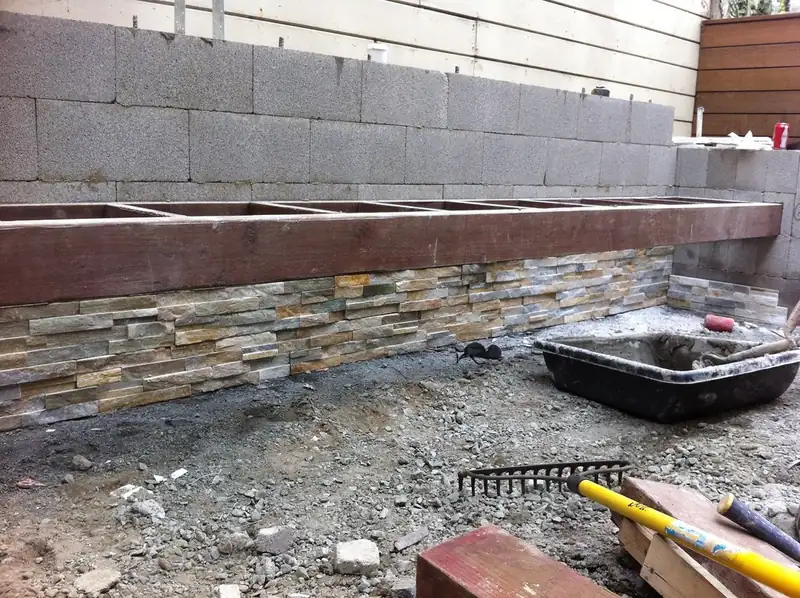
Wikipedia notes that the adhered method bonds the veneer to the wall with mortar, and that it is mostly used indoors. Heavier natural stone may also need mechanical fixings.
Stone-look tile goes on like other wall tile, on a flat, sound surface with thin-set. See natural stone tile for how real stone differs.
Fireplaces
A fireplace surround is the classic place for stacked stone. Full height to the ceiling makes the fireplace the focal point; a lower band around the opening is quieter. See fireplace surround tile in Alhambra.
Accent walls
A stacked stone wall behind a TV, bar or entry adds texture without paint. Lighting from above, close to the wall, brings out the shadows. For other wall ideas, see accent walls in Rosemead.
Kitchen backsplashes
Rough stone collects grease and is hard to wipe, so a smoother stone-look tile is the easier choice behind a stove. See backsplash tile ideas.
Colors
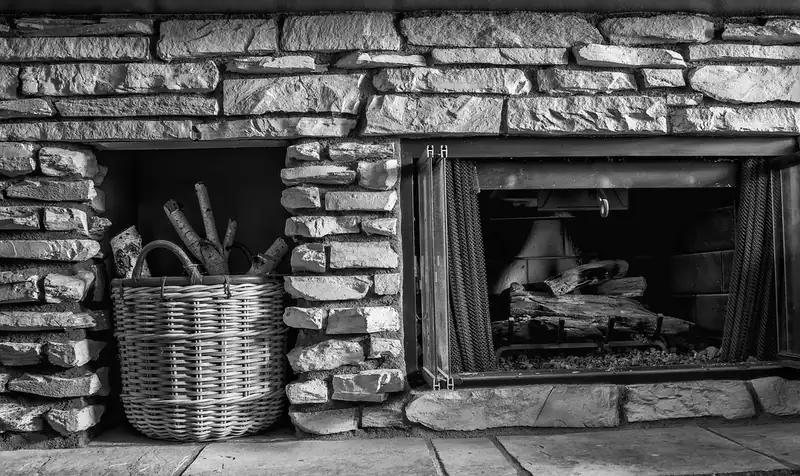
Gray and charcoal slate tones look modern. Tan, rust and gold quartzite tones feel warm and suit Spanish and ranch homes. Mixed tones hide dust and small chips better than one flat color.
Joints and edges
Most stacked styles use tight joints for a dry-stack look. Outside corners need L-shaped corner pieces or careful cuts so the end grain does not show. Where joints are filled, see grout types.
Weight and the wall behind it
Real stone is heavy, so the wall and backing must suit the load. Stone-look porcelain weighs much less and can go where heavy stone cannot.
Care
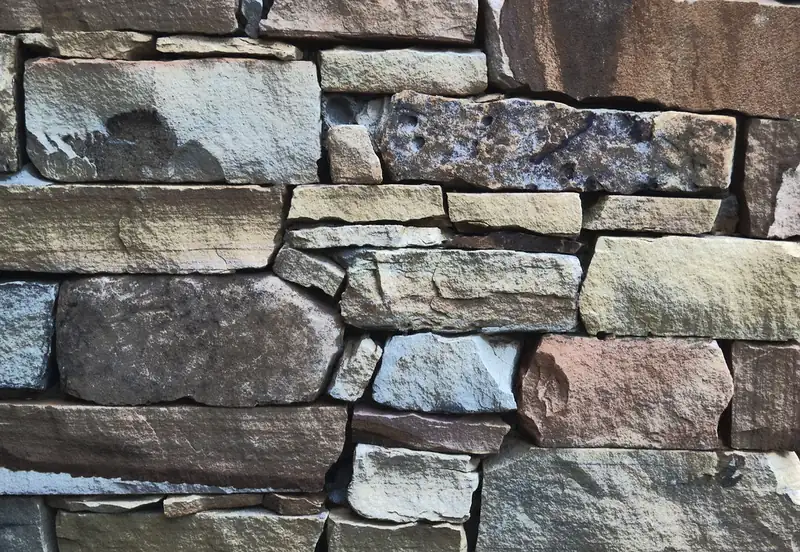
Dust the ledges with a soft brush. Real stone near a fireplace can darken from soot; a stone-safe cleaner and a soft brush handle most of it. Sealing helps natural stone resist stains.
Common search: is stacked stone outdated?
Busy multicolor stone from the 2000s can feel dated, but a single calm tone, or a smooth stone-look tile, still suits current rooms.
Tile and fireplace pages
For tile and wall work, see fireplace surround tile in San Gabriel, fireplace surround tile in Temple City and backsplash installation in Monterey Park.
More materials and styles
- Sage, terracotta and deep blue cabinets
- Granite countertops
- Butcher block countertops
- LVP vs tile flooring
- Victorian tile
- Basketweave tile
- Mosaic tile
- Quarry tile
- Hexagon tile
- Terrazzo tile
- Herringbone tile
- Backsplash tile ideas
- Shower tile ideas
- Quartz countertops
- Spanish tile bathroom
- Saltillo tile
- Zellige tile backsplash
- Talavera tile
- Cement tile bathroom floor
- Terracotta tile floors
- Bathroom color trends
- Porcelain wood-look tile
- Subway tile vs handmade tile
- Porcelain vs ceramic tile
- LVP vs laminate flooring
- Semi-gloss vs satin paint
- MDF vs wood trim
- Natural stone and marble bathroom tile
- Grout types: cement, epoxy, urethane
Planning the whole room? Read our remodel guides, starting with how to choose bathroom tile.