
Counters in a city of older homes
Alhambra incorporated in 1903, and Wikipedia notes that it promotes itself as a "city of homes," with craftsman, bungalow and Spanish colonial revival houses among its styles. Many kitchens in houses like these have been redone more than once, so the counter you see today may sit on cabinets from a different decade.
That matters for a countertop job. Before anything is ordered, we check whether the base cabinets are level, solid and worth keeping. A new slab on a sagging cabinet run will not stay flat, so the cabinet check comes first.
What usually comes off
In older Alhambra kitchens we often find ceramic tile counters set on a thick mortar bed, laminate over particleboard, or a mix where one section was replaced later. Tile on mortar is heavy and slow to remove, and it can hide old water damage at the sink.
We take the old top off with care for the cabinets underneath, cap the plumbing, and look at the wall behind it. Plaster walls in older houses are rarely perfectly straight, which shows up later when a backsplash meets the new counter.
Choosing a surface
- Quartz is a common pick because it does not need sealing and handles everyday spills well.
- Granite brings natural movement and takes heat better, though it benefits from periodic sealing.
- Solid surface can be repaired in place if it gets scratched, and laminate keeps a tight budget workable.
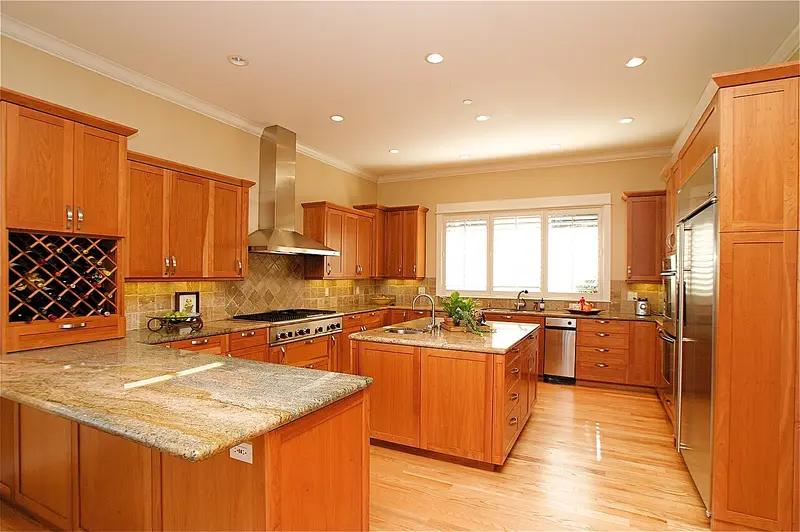
Bring a cabinet door or a floor sample to the estimate if you are keeping them. Seeing a slab sample next to your own finishes, in your own light, tells you more than a showroom does.
Matching the age of the house
Some Alhambra kitchens have original built-ins, like a china cabinet or a breakfast nook, that owners want to keep. A honed or matte surface in a warm white, or a soapstone-look counter, tends to sit comfortably next to old painted woodwork.
For a more current kitchen, a thin square edge and a full-height slab backsplash behind the range read clean and modern. Both directions are ideas to consider, not rules.
Templating and install
Stone and quartz tops are made to fit your exact cabinets, so the process has two visits. First the cabinets must be final and level. Then a template is made of the run, including the sink and cooktop cutouts. The shop cuts and finishes the slab from that template.
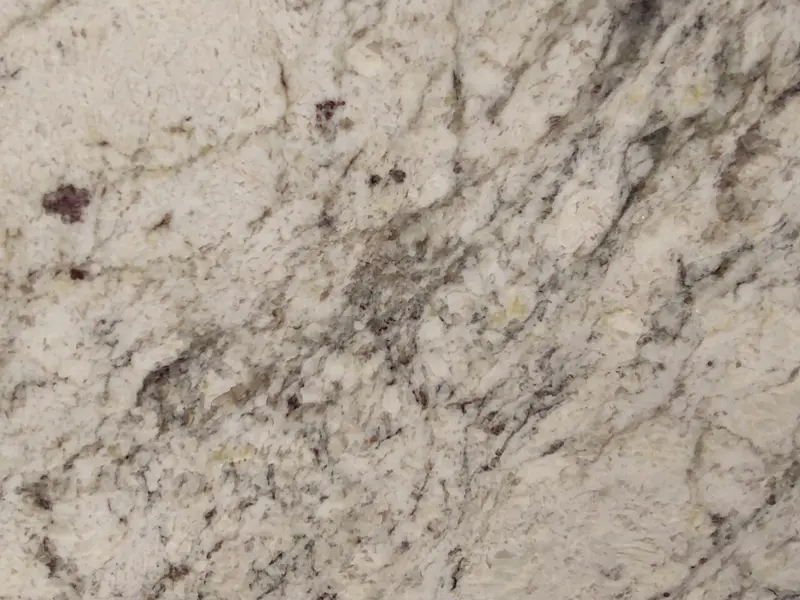
We coordinate templating and install, and we schedule the plumbing reconnect around the install day so the sink is not out longer than it needs to be. Expect a gap of some days between templating and install while the top is made.
Sinks, faucets and cutouts
An undermount sink is easy to wipe toward, since there is no rim on the counter. A drop-in sink can work with laminate or tile. If you want a new sink, choose it before templating, because the cutout is made to that exact model.
Faucet holes, a soap pump and an air gap or filter tap all need to be decided early too. Changing your mind after the slab is cut is hard.
Backsplash where the counter meets the wall
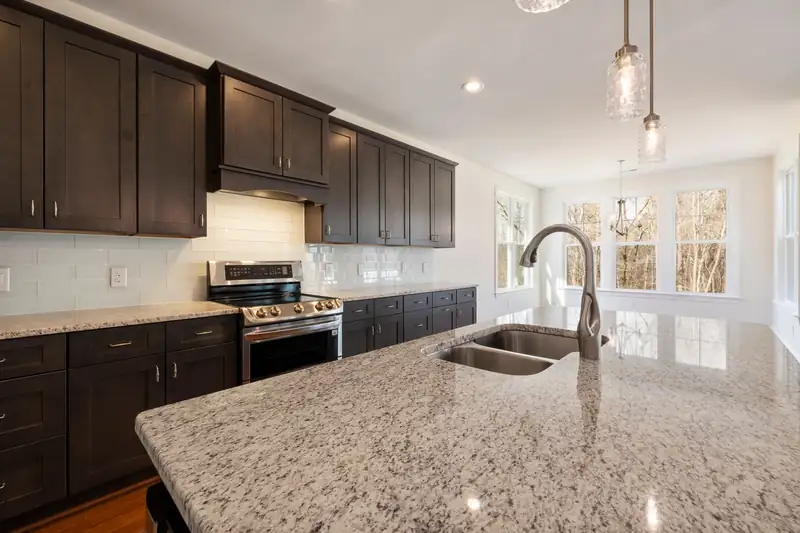
Because older walls are often out of plumb, a tile backsplash can hide small gaps better than a thin slab splash. A short four-inch splash in the counter material is the simplest option.
If you love pattern, a Talavera-style or zellige backsplash behind the range adds color without competing with a calm counter.
Corners, seams and overhangs
Long or L-shaped runs may need a seam. The shop places it where it is least noticeable, often at the sink or in a corner. An island overhang for stools needs enough support underneath, which we plan with the cabinet layout.
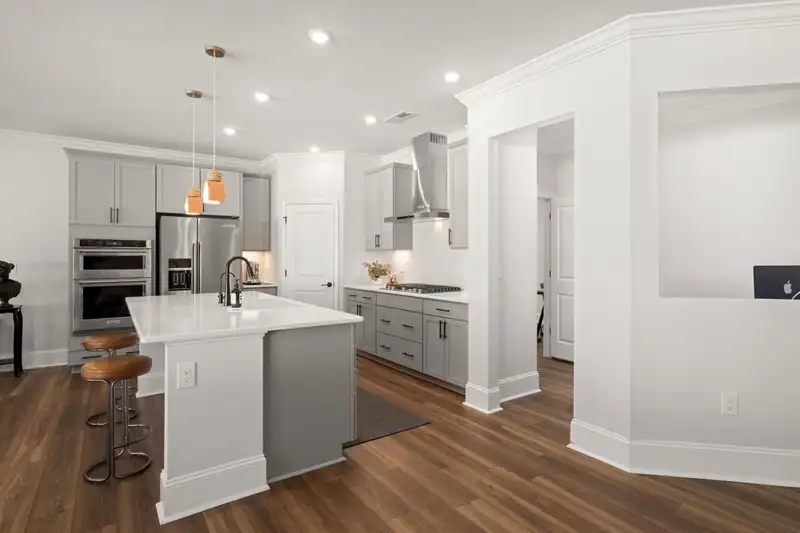
Ask to see where seams will fall before the slab is cut, so nothing is a surprise on install day.
Clearing out for the work
Before removal day, empty the upper cabinets nearest the counter as well as the lowers, since removal can shake loose old shelves and dishes. Cover nearby floors you want to protect, and plan where the fridge contents and small appliances will live while the work is under way.
In older houses with narrow doorways, the new slab may need to come in through a side door or a window opening. We look at the path from the street to the kitchen during the estimate so install day goes smoothly.
Caring for the new counter
Use cutting boards rather than cutting on the surface, and trivets under hot pots. Wipe up wine, coffee, oil and citrus soon. Granite benefits from resealing from time to time; quartz and solid surface do not need it.
If you ever see a chip at an edge, call us. Small chips can often be filled so they are hard to spot.
A note on vintage tile
Some Alhambra owners like their old counter tile and want to save a few pieces. If tiles come off in one piece, they can be reused as a trivet, a framed piece or an accent in a backsplash. We try to remove a few carefully if you ask before we start.
If the old counter has a material you are unsure about, have it tested by a certified lab or consultant before removal, and we will go over the result with you.
Working with us
The free estimate covers measuring and an itemized written quote. Parts depend on the job and are covered there. We text before heading over and always stop and ask before extra work.
If the new layout needs a new circuit, such as for an under-cabinet appliance, an electrician handles any new circuits and we coordinate. See also kitchen remodeling in Alhambra and cabinet replacement in Alhambra.
Around Alhambra
We work across the city, including homes near Main Street and Garfield Avenue and the streets around Alhambra Park. A tenant can let us in, and keys or lockbox codes work too.
Common search: can new counters go on old cabinets?
Often, yes, if the boxes are solid, level and dry. Water-damaged sink bases and sagging corners are the usual reasons to replace a cabinet or two first. We look inside every cabinet at the estimate and tell you what we see.
Related pages
- Bathroom remodel in Alhambra
- Kitchen remodel in Alhambra
- Tub-to-shower conversion in Alhambra
- Shower remodel in Alhambra
- Kitchen cabinet replacement in Alhambra
- Flooring installation in Alhambra
- Countertop replacement in Monterey Park
- Countertop replacement in Rosemead
- Countertop replacement in San Gabriel
- Countertop replacement in Temple City
- Backsplash installation in Alhambra
- Interior painting in Alhambra
- Leaking shower pan repair in Alhambra
- Powder room remodel in Alhambra
- Bathtub replacement in Alhambra
- Bathroom tile installation in Alhambra
- Tile floor installation in Alhambra
- Grout repair in Alhambra
- Kitchen sink and faucet replacement in Alhambra
- Drywall patching and repair in Alhambra
- Walk-in shower in Alhambra
- LVP flooring installation in Alhambra
- Toilet replacement in Alhambra
- Baseboard installation and replacement in Alhambra
- Shower and tub recaulking in Alhambra
- Interior door and trim painting in Alhambra
- Talavera and Spanish tile installation in Alhambra
- Wainscoting and accent walls in Alhambra
- Fireplace surround tile in Alhambra
- Crown molding installation in Alhambra
Materials and styles
- Sage, terracotta and deep blue cabinets
- Granite countertops
- Butcher block countertops
- LVP vs tile flooring
- Victorian tile
- Basketweave tile
- Mosaic tile
- Quarry tile
- Stacked stone
- Hexagon tile
- Terrazzo tile
- Herringbone tile
- Backsplash tile ideas
- Shower tile ideas
- Quartz countertops
- Spanish tile bathroom
- Saltillo tile
- Zellige tile backsplash
- Talavera tile
- Cement tile bathroom floor
- Terracotta tile floors
- Bathroom color trends
- Porcelain wood-look tile
- Subway tile vs handmade tile
- Porcelain vs ceramic tile
- LVP vs laminate flooring
- Semi-gloss vs satin paint
- MDF vs wood trim
- Natural stone and marble bathroom tile
- Grout types: cement, epoxy, urethane