
Rosemead homes
Wikipedia notes that the San Bernardino Freeway runs through Rosemead, and many of the city's homes went up in the decades around its construction. Colored bathroom fixtures were popular in that era, so it is common to find a pink or green tub still in place.
Some owners love the retro look; most are ready for a change.
A clean new start
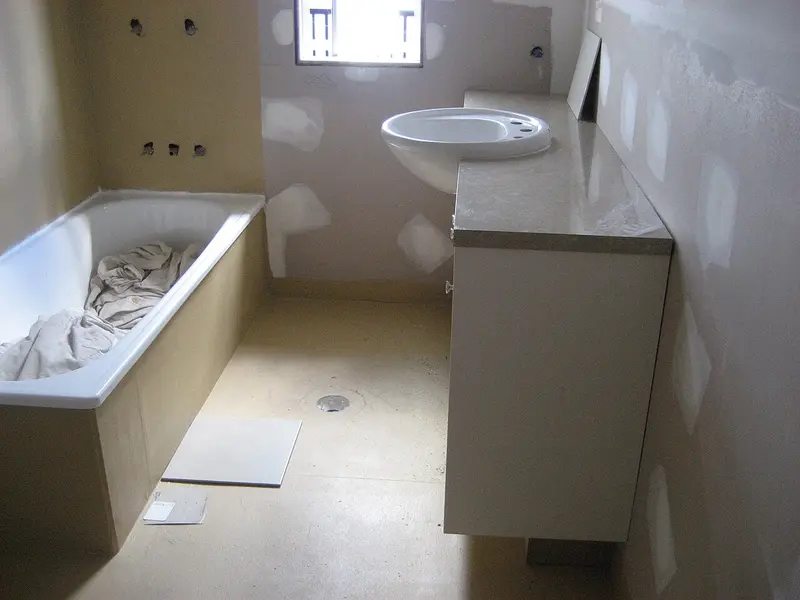
Our first photo shows a new tub set in a bathroom with the walls prepared and a vanity in place. Once the tub is in, the rest of the room comes together quickly.
Taking out a colored tub
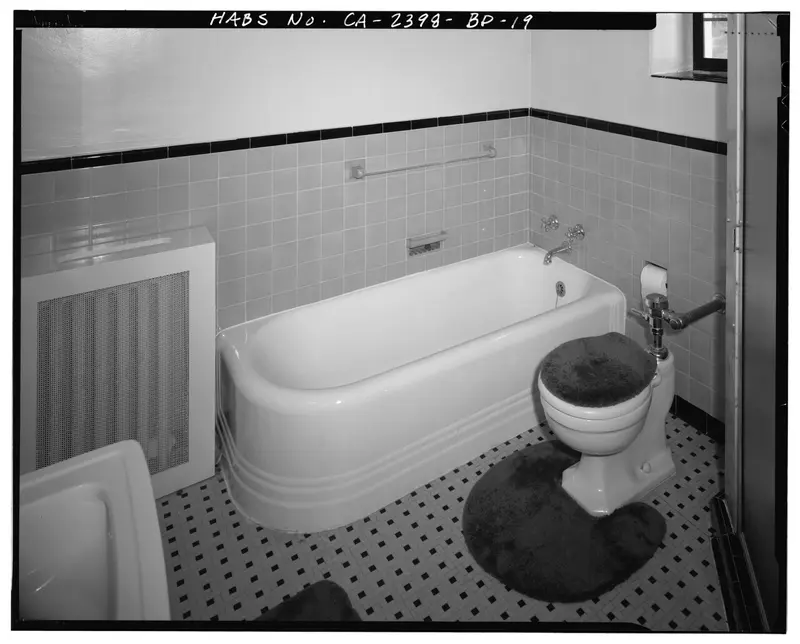
Our second photo shows a classic alcove tub with a rounded apron and tile wainscot, the kind many older homes still have. When a tub like this comes out, opening the walls lets us inspect the studs, the plumbing and the subfloor before the new tub goes in.
Hidden problems are fixed while everything is open, which is cheaper than fixing them later.
Choosing a replacement
Popular choices in Rosemead include:
- a standard alcove tub in white
- a deeper soaking tub of the same length
- a tub with a built-in apron and a slip-resistant floor
- a freestanding tub for larger rooms
Fixing the framing
Old leaks at the spout or valve can rot the bottom plate of the wall. When the tub is out, we replace damaged wood and add support under the tub flange so the new tub does not flex.
Plumbing updates
With the wall open, it is a good time to replace an old valve, add shutoff access and put in a new drain and overflow. A modern valve keeps the water temperature steady.
Clawfoot charm
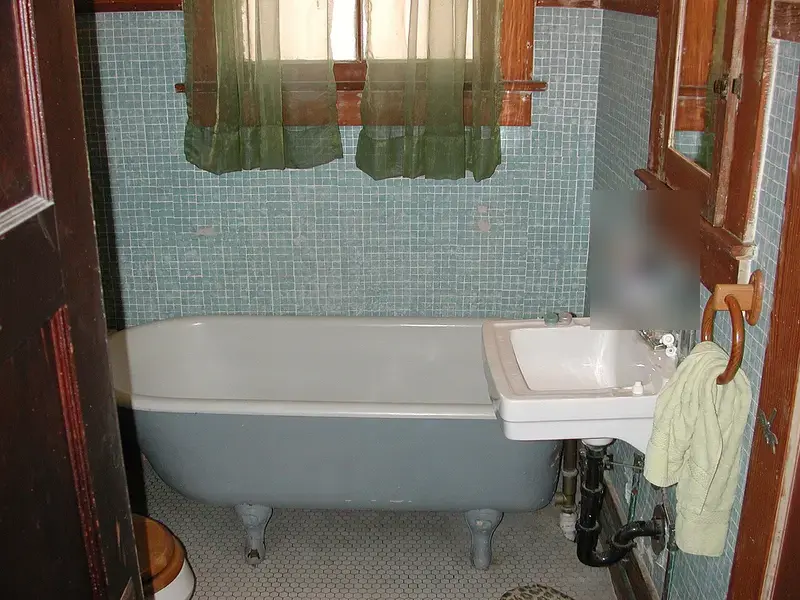
Our third photo shows a clawfoot tub with a pedestal-style sink and mosaic tile in an older bathroom. Some owners restore an old clawfoot instead of replacing it. We can talk about which is the better value for your tub.
Wall finishes around the tub
The wall around a tub can be tile, solid panels or a mix. Tile gives the most design choice. Solid panels have few seams to clean. Either way, the waterproofing behind it matters most.
Living at home during the work
We keep dust out of the rest of the house and clean up every evening. If you have only one bathroom, we schedule the steps to keep the downtime short.
Cost factors
Prices vary with the tub model, how much wall comes off, framing and floor repair, valve upgrades and tile choice. Your written quote lists each part.
Other options
If you would rather have a walk-in shower, our Rosemead tub-to-shower page explains what that involves. For a full update, see the Rosemead bathroom remodel page.
Matching new and old tile
Colored tile from past decades can be hard to match. If you keep it, we can add a band of a new color at the bottom row, or switch to a new tile from the tub up to a set height. Many owners decide to retile the whole tub wall while it is open, since it is a small area.
Choosing a tub color
White is the most common choice today and the easiest to match later. Off-white and biscuit tubs can suit warmer rooms. If you are keeping colored tile on the floor or walls, bring a loose tile or a photo to the visit so we can compare tub colors in your light.
Bathing comfort
A sloped back makes reclining easier. An armrest ledge or a wider rim gives a place to sit while bathing children. A slip-resistant floor is worth having on any tub used as a shower. These details matter more than the shape of the tub from the outside.
Before the visit
Measure the length and width of your current tub if you can, take a photo of the wall and the floor around it, and note any leaks or stains on the ceiling below or the walls next to the bathroom. These help us plan and price the job quickly.
How the work goes
We start by protecting the floors and cutting back the tile at the tub edge. The old tub comes out, and we repair any framing or floor damage. Then the new tub is set, leveled and connected. Waterproofing, tile and grout follow, and caulk goes on last. Each evening we clean up and let you know where things stand.
Ventilation and moisture
Older bathrooms often have a small window and no fan. Steam from baths can peel paint and stain grout. A fan that vents outside clears moisture quickly and helps the new tub area stay clean.
When the tub is fine but the rest is not
Sometimes the tub is sound and the problem is the tile, the caulk or the valve around it. In that case we may suggest regrouting, new caulk or a new valve trim instead of a new tub. We would rather tell you that at the visit than replace a tub that still has years left in it. If you are unsure, we can price both so you can compare.
Around Rosemead
We work in homes near Rosemead Park, along Valley Boulevard and in the neighborhoods north of the freeway.
Related pages
- Bathroom remodel in Rosemead
- Kitchen remodel in Rosemead
- Tub-to-shower conversion in Rosemead
- Shower remodel in Rosemead
- Kitchen cabinet replacement in Rosemead
- Flooring installation in Rosemead
- Countertop replacement in Rosemead
- Backsplash installation in Rosemead
- Interior painting in Rosemead
- Leaking shower pan repair in Rosemead
- Powder room remodel in Rosemead
- Bathtub replacement in Alhambra
- Bathtub replacement in Monterey Park
- Bathtub replacement in San Gabriel
- Bathtub replacement in Temple City
- Bathroom tile installation in Rosemead
- Tile floor installation in Rosemead
- Grout repair in Rosemead
- Kitchen sink and faucet replacement in Rosemead
- Drywall patching and repair in Rosemead
- Walk-in shower in Rosemead
- LVP flooring installation in Rosemead
- Toilet replacement in Rosemead
- Baseboard installation and replacement in Rosemead
- Shower and tub recaulking in Rosemead
- Interior door and trim painting in Rosemead
- Talavera and Spanish tile installation in Rosemead
- Wainscoting and accent walls in Rosemead
- Fireplace surround tile in Rosemead
- Crown molding installation in Rosemead
Materials and styles
- Sage, terracotta and deep blue cabinets
- Granite countertops
- Butcher block countertops
- LVP vs tile flooring
- Victorian tile
- Basketweave tile
- Mosaic tile
- Quarry tile
- Stacked stone
- Hexagon tile
- Terrazzo tile
- Herringbone tile
- Backsplash tile ideas
- Shower tile ideas
- Quartz countertops
- Spanish tile bathroom
- Saltillo tile
- Zellige tile backsplash
- Talavera tile
- Cement tile bathroom floor
- Terracotta tile floors
- Bathroom color trends
- Porcelain wood-look tile
- Subway tile vs handmade tile
- Porcelain vs ceramic tile
- LVP vs laminate flooring
- Semi-gloss vs satin paint
- MDF vs wood trim
- Natural stone and marble bathroom tile
- Grout types: cement, epoxy, urethane