
Local homes, many decades
Rosemead became a city in 1959 (Wikipedia), though its homes span many decades. Some older houses have plaster over wood lath; most later ones have drywall. Additions and past remodels often mix the two.
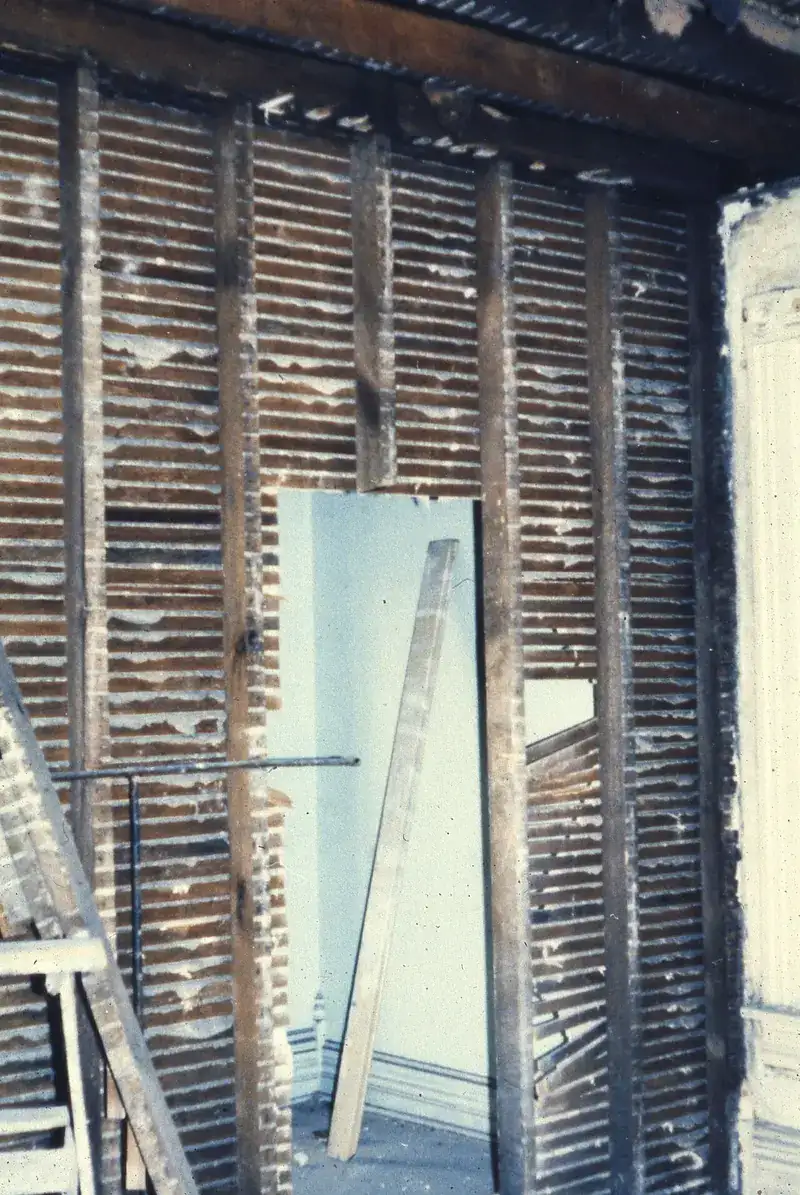
The first photo shows what is behind the wall in an older house: wood lath strips that once held plaster. When we open a wall like that, the patch has to work with both the lath and the surface around it.
Repairs we do
On Rosemead jobs we often handle:
- holes from door handles and anchors
- cracks from settling over doors and windows
- damage from old leaks
- openings after plumbing or wiring work
- loose tape and gouges from moving furniture
Since we are local, it is easy for us to come look and give you a clear quote.
Holes, step by step
We cut the damaged area to a clean shape, add backing, fit new board and tape the seams. Then come three thin coats of compound, each one wider and smoother. Sanding between coats keeps the surface flat.
The goal is a patch you cannot find by touch or under a lamp held close to the wall.
Plaster walls
For plaster, we can patch with setting compound and a plaster-base board, or anchor loose plaster with washers before skimming. Thick old plaster often needs shims under a new piece of board so the surface lines up.
We do not cover sound plaster with drywall unless you want that. A good plaster repair keeps the solid feel of the original wall.
Compound and coats
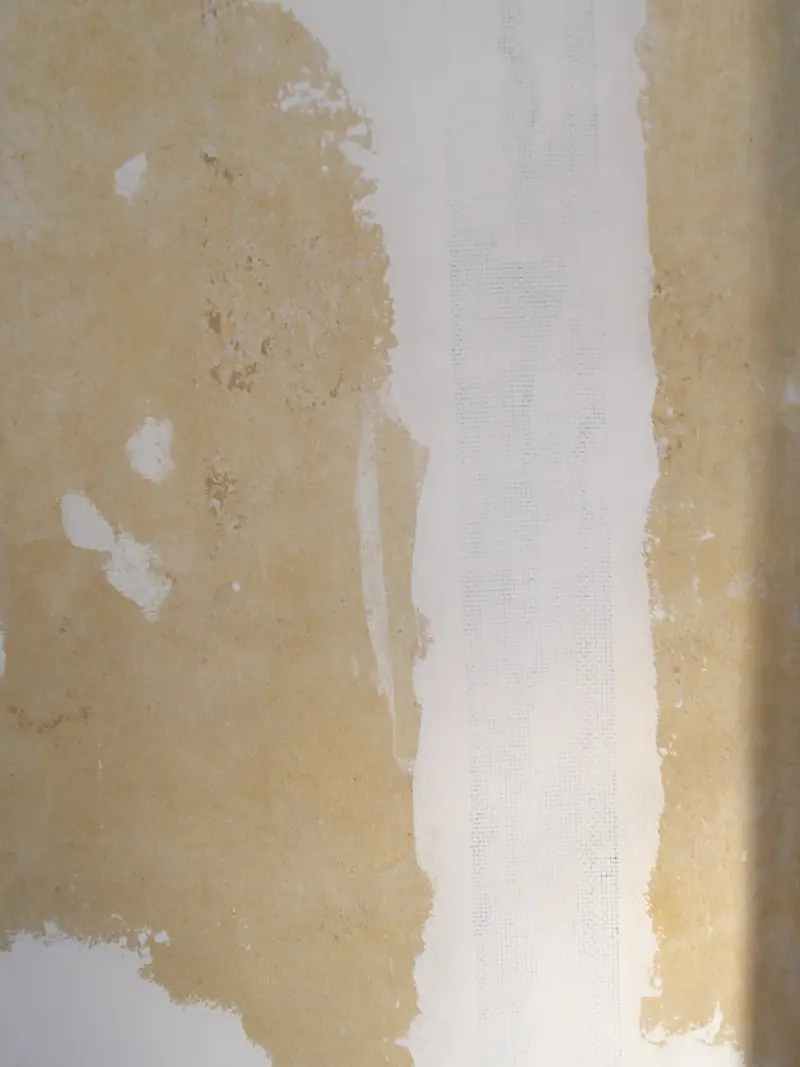
The second photo shows filler on a wall that has been partly sanded. That patchy look is normal before the final coat and primer. Sanding between coats keeps each layer thin and flat.
We use setting compound for deep fills and the first coat, and a lighter compound for finish coats, because it sands smoothly.
Matching the wall
Rosemead homes have smooth, sand, orange peel and knockdown finishes. We match the one you have, check it at an angle under the room light and adjust before primer.
On some walls a light skim coat over the whole surface gives a more even result than spot patches.
Prime and paint
We prime every patch. Primer seals the patch so the topcoat does not look dull over it. If you want paint, our interior painting page for Rosemead covers how we prep and finish.
Painting the full wall from corner to corner hides the patch best.
Repairs with other work
Drywall work often comes with another job: new cabinets, a new sink or faucet or a backsplash that came off with part of the wall. We can patch as part of that project.
Doing it together saves a second round of dust.
Settling cracks
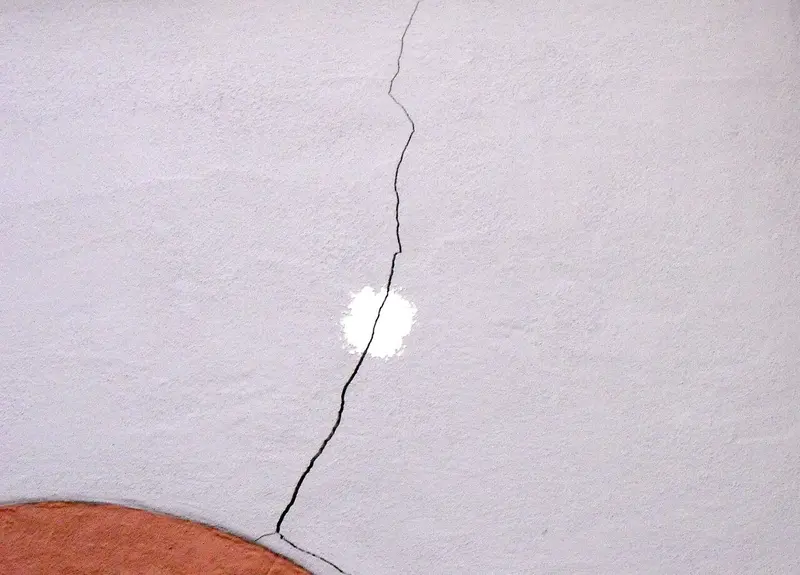
Cracks that run from the corners of doors and windows often come from small movement of the house. The third photo shows a crack where a plaster marker has been placed to see if it keeps opening.
For cosmetic cracks we open, tape and float them. If a crack is wide, uneven on each side or growing, we tell you so you can have the structure checked first.
Keeping it clean
We cover floors and furniture, mask doorways and use a vacuum sander for larger areas. We clean up when we finish.
If you have pets, let us know so we can keep doors closed while we work.
What to have ready
Before the estimate, walk through the house and mark every spot you want fixed with a small piece of painter's tape. It is easy to forget a ding behind a door or a crack in a closet once we are there.
If you have leftover paint from the last time the room was painted, keep the can. The label tells us the brand, color and sheen, which helps if you want us to touch up instead of repainting a whole wall.
After the repair
Fresh compound and primer need to dry fully before paint goes on, and paint needs time to cure before you scrub it. We tell you when it is safe to hang pictures again.
If a patch ever cracks or shows a line later, call us and we will come look at it.
Cost
Cost depends on how many patches, their size, plaster or drywall, texture and paint. We give you a written quote.
How long it takes depends on the job, mostly on drying time between coats.
Related pages
- Bathroom remodel in Rosemead
- Kitchen remodel in Rosemead
- Tub-to-shower conversion in Rosemead
- Shower remodel in Rosemead
- Kitchen cabinet replacement in Rosemead
- Flooring installation in Rosemead
- Countertop replacement in Rosemead
- Backsplash installation in Rosemead
- Interior painting in Rosemead
- Leaking shower pan repair in Rosemead
- Powder room remodel in Rosemead
- Bathtub replacement in Rosemead
- Bathroom tile installation in Rosemead
- Tile floor installation in Rosemead
- Grout repair in Rosemead
- Kitchen sink and faucet replacement in Rosemead
- Drywall patching and repair in Alhambra
- Drywall patching and repair in Monterey Park
- Drywall patching and repair in San Gabriel
- Drywall patching and repair in Temple City
- Walk-in shower in Rosemead
- LVP flooring installation in Rosemead
- Toilet replacement in Rosemead
- Baseboard installation and replacement in Rosemead
- Shower and tub recaulking in Rosemead
- Interior door and trim painting in Rosemead
- Talavera and Spanish tile installation in Rosemead
- Wainscoting and accent walls in Rosemead
- Fireplace surround tile in Rosemead
- Crown molding installation in Rosemead
Materials and styles
- Sage, terracotta and deep blue cabinets
- Granite countertops
- Butcher block countertops
- LVP vs tile flooring
- Victorian tile
- Basketweave tile
- Mosaic tile
- Quarry tile
- Stacked stone
- Hexagon tile
- Terrazzo tile
- Herringbone tile
- Backsplash tile ideas
- Shower tile ideas
- Quartz countertops
- Spanish tile bathroom
- Saltillo tile
- Zellige tile backsplash
- Talavera tile
- Cement tile bathroom floor
- Terracotta tile floors
- Bathroom color trends
- Porcelain wood-look tile
- Subway tile vs handmade tile
- Porcelain vs ceramic tile
- LVP vs laminate flooring
- Semi-gloss vs satin paint
- MDF vs wood trim
- Natural stone and marble bathroom tile
- Grout types: cement, epoxy, urethane