
Rosemead homes and their showers
Wikipedia records that Rosemead incorporated in 1959, and many homes in the area date from around that time or earlier. Bathrooms from those years often have a tub and shower combined, or a small stall with a tiled floor.
Each type leaks in its own way, so the first step is figuring out what kind of base you have.
Tub and shower combinations
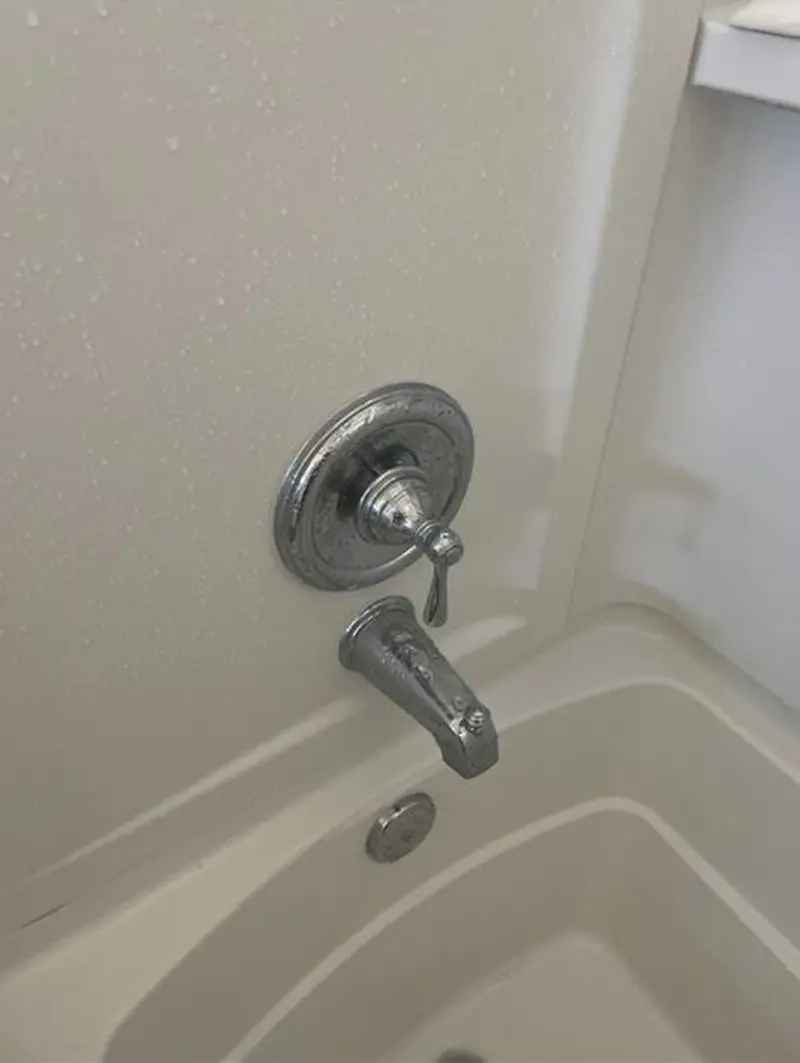
A photo lower on this page shows a tub and shower valve on one of our jobs. In a combo, water can escape at the spout, around the valve trim, or where the tub meets the wall tile.
These are often fixed with new seals, a new spout or fresh caulk rather than a rebuild.
Fiberglass and acrylic bases
Molded bases can flex and crack over time, especially if they were set without solid support underneath. A crack near the drain or the center of the floor can let water straight through.
Small cracks can sometimes be repaired. If the base moves underfoot, replacing it with a properly supported new base is usually the lasting fix.
Tiled floors
A tiled shower floor sits on a sloped base with a waterproof layer under it. Cracked grout, a hollow sound when you tap a tile, or tiles that shift are all signs that water may be getting into the base.
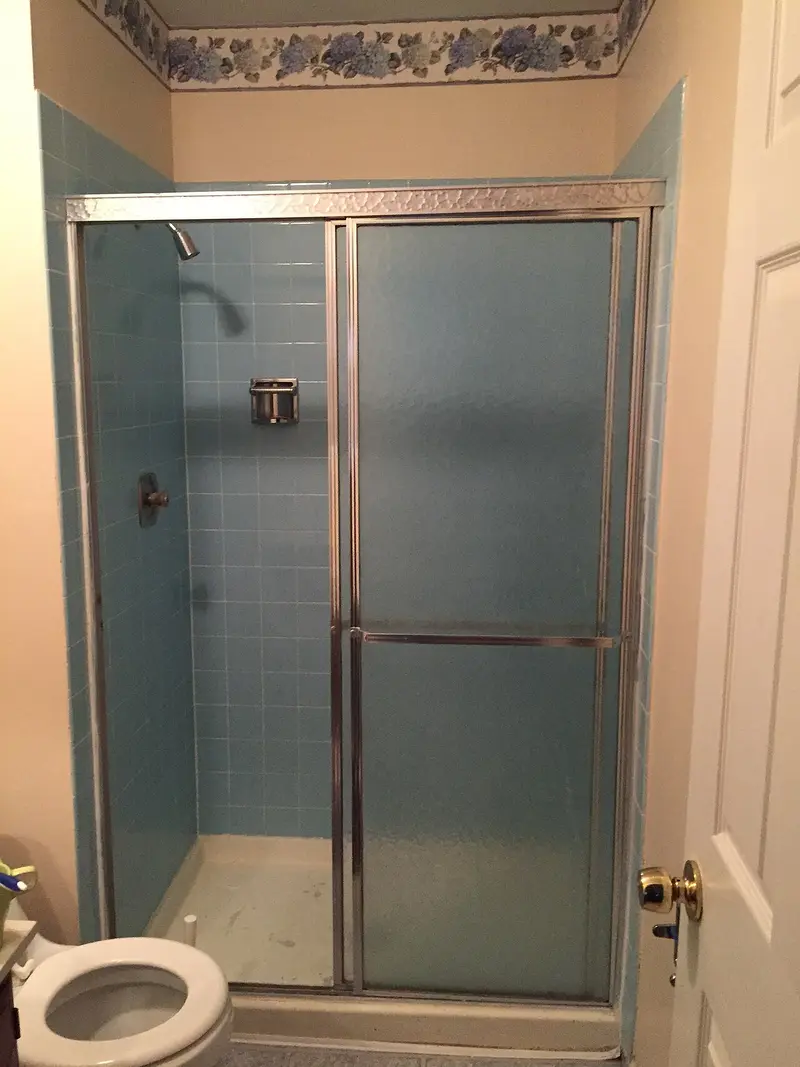
Our second photo shows a walk-in shower with a tiled floor and a sliding door, a common setup in homes of that era.
Finding the leak
We test one part at a time. Run water only at the head, then only at the spout, then fill the floor area with the drain plugged. Watching where the water shows up tells us a lot.
We explain what each test showed, and we are honest when a result is not clear.
Repair choices
Depending on what we find, the options often include:
- resealing the valve and spout
- replacing a cracked molded base
- rebuilding a tiled floor with new waterproofing
- converting a worn combo into a walk-in shower
The tub-to-shower guide covers that last option.
What happens underneath
When a base comes out, we check the drain connection, the subfloor and the bottom of the wall framing. Wet wood that is still firm can dry out. Soft or dark wood is cut out and replaced before the new base goes in.
Glass and doors
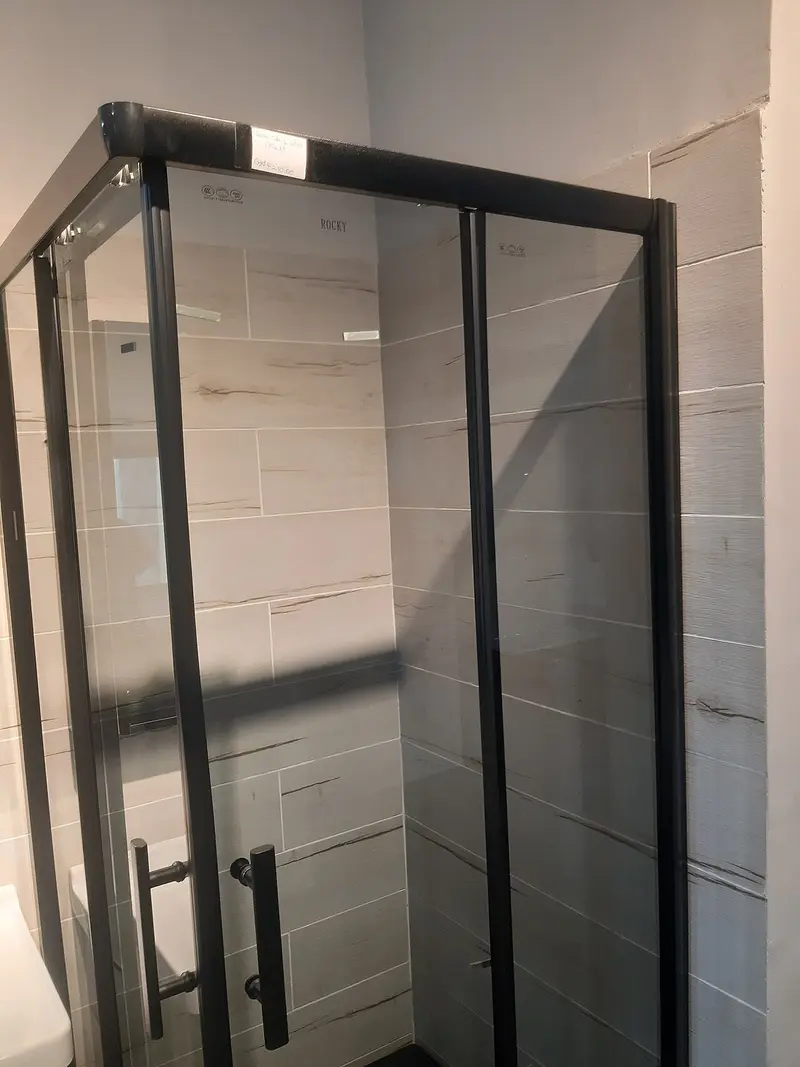
A worn door sweep or a gap at the bottom of a sliding door can splash water onto the floor outside. Sometimes a new sweep and seals are all that is needed. Our third photo shows a framed glass enclosure with a clean bottom track.
Planning around daily life
If the home has only one shower, we plan the work to keep the downtime short and tell you each day what is next. A pan rebuild still needs drying time, so we give you an honest estimate up front.
A bigger refresh
Some Rosemead owners decide to update the whole shower once the floor is open. Our Rosemead shower remodel page shows what that can include.
Older tile around the tub
In a combo, the tile that meets the tub edge takes a lot of water. If grout there has cracked or caulk has pulled away, water can run down behind the tub. Fresh caulk is a cheap first step, and we check the wall behind it if it does not help.
What we price
Our quotes break out each part: removal, any repair to the subfloor or framing, the new base or pan, waterproofing, tile, glass or door work, and cleanup. That way you can compare a repair against a full update side by side.
Leaks that come and go
Some owners notice water only after a long shower, or only when two people shower back to back. That pattern often points to grout and a pan that are slowly saturating rather than a burst or a crack.
We ask about patterns like that because they help us choose the right test.
Safe footing
A shower floor that has been wet underneath for a long time can start to feel soft or uneven. If tiles move or the base sinks when you step in, stop using the shower until it is checked. A fall is a worse problem than a leak.
Common questions about molded bases
Owners often ask if a new molded base can be set over the old one. It cannot do the job well: the drain will not line up and the support underneath stays uneven. The old base comes out, the floor is checked and leveled, and the new base is set in a firm bed so it does not flex.
A solid base can be a good choice in a small shower where a simple, low-upkeep floor matters most.
Drains and slope
A shower floor should slope gently toward the drain so water never sits in a corner. If yours has a low spot where water puddles, the grout there wears faster and lets water into the base. A rebuild fixes the slope as well as the leak.
Around Rosemead
We work in homes near Rosemead Park, along Valley Boulevard and in the neighborhoods north and south of the 10 freeway.
Related pages
- Bathroom remodel in Rosemead
- Kitchen remodel in Rosemead
- Tub-to-shower conversion in Rosemead
- Shower remodel in Rosemead
- Kitchen cabinet replacement in Rosemead
- Flooring installation in Rosemead
- Countertop replacement in Rosemead
- Backsplash installation in Rosemead
- Interior painting in Rosemead
- Leaking shower pan repair in Alhambra
- Leaking shower pan repair in Monterey Park
- Leaking shower pan repair in San Gabriel
- Leaking shower pan repair in Temple City
- Powder room remodel in Rosemead
- Bathtub replacement in Rosemead
- Bathroom tile installation in Rosemead
- Tile floor installation in Rosemead
- Grout repair in Rosemead
- Kitchen sink and faucet replacement in Rosemead
- Drywall patching and repair in Rosemead
- Walk-in shower in Rosemead
- LVP flooring installation in Rosemead
- Toilet replacement in Rosemead
- Baseboard installation and replacement in Rosemead
- Shower and tub recaulking in Rosemead
- Interior door and trim painting in Rosemead
- Talavera and Spanish tile installation in Rosemead
- Wainscoting and accent walls in Rosemead
- Fireplace surround tile in Rosemead
- Crown molding installation in Rosemead
Materials and styles
- Sage, terracotta and deep blue cabinets
- Granite countertops
- Butcher block countertops
- LVP vs tile flooring
- Victorian tile
- Basketweave tile
- Mosaic tile
- Quarry tile
- Stacked stone
- Hexagon tile
- Terrazzo tile
- Herringbone tile
- Backsplash tile ideas
- Shower tile ideas
- Quartz countertops
- Spanish tile bathroom
- Saltillo tile
- Zellige tile backsplash
- Talavera tile
- Cement tile bathroom floor
- Terracotta tile floors
- Bathroom color trends
- Porcelain wood-look tile
- Subway tile vs handmade tile
- Porcelain vs ceramic tile
- LVP vs laminate flooring
- Semi-gloss vs satin paint
- MDF vs wood trim
- Natural stone and marble bathroom tile
- Grout types: cement, epoxy, urethane