
A city of homeowners
Wikipedia says Walter Temple planned this community so average people could own homes, recorded the townsite in 1923 and that the city incorporated in 1960. Many of those homes still have their first bathrooms.
Good caulk helps an older bathroom keep going.
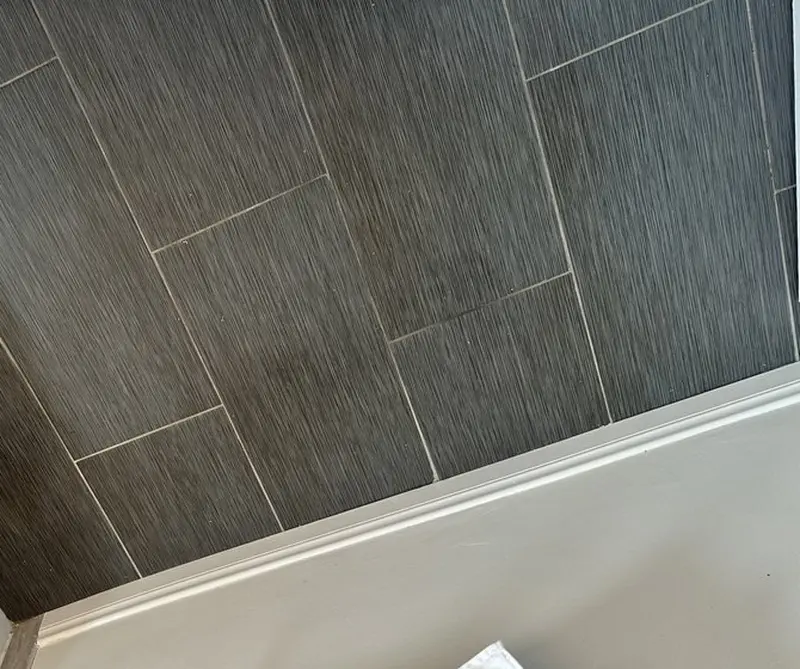
Tile meeting a tub edge
The first photo shows dark wall tile meeting a white edge in a bathroom on one of our jobs. The line where tile meets a tub or deck is a joint that needs a flexible seal.
Grout in that spot cracks as the tub moves.
What we check before sealing
Before we recaulk:
- the wall behind the joint for soft spots
- the tile near the tub for looseness
- the tub itself for movement
- the old caulk for mold and the ceiling or wall nearby for stains
New caulk only works on a sound joint.
Removing the old bead
We cut along both edges of the old bead, peel it out and scrape the rest. Old silicone leaves a film, so we use a remover and alcohol.
Then we let the joint dry.
Laying new caulk
We fill the tub with water before caulking the tub joint, lay a steady bead and tool it smooth. We tape edges on wide joints for a straight line.
Then we pull the tape and clean up.
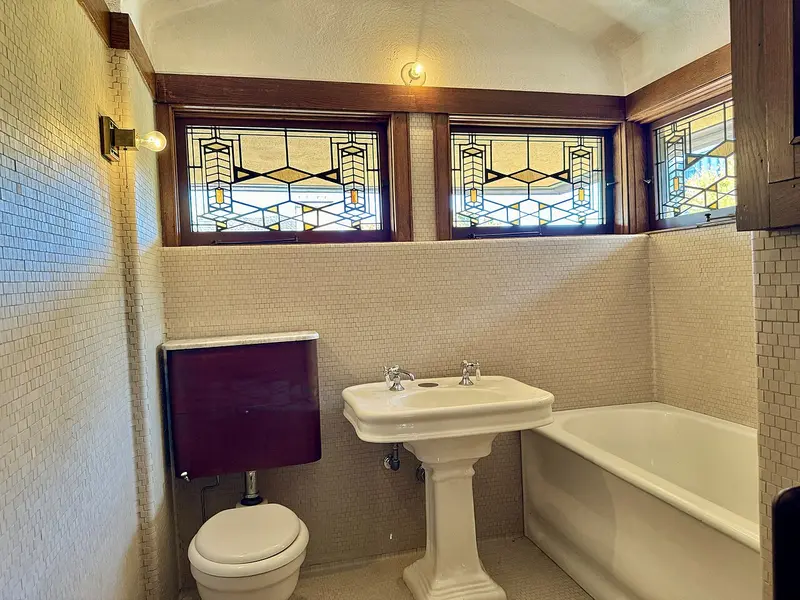
Older bathrooms
The second photo shows an older bathroom with a tub beside a pedestal sink. Rooms like this were built to last, but caulk is not.
We keep the look of the room and just replace the seal.
Where floors meet tubs
The joint where a tub apron meets the floor gets splashed and mopped. A bead there keeps water from getting under the tub. Floors around tubs take splashes every day, so this joint often wears out before the ones higher up. Mopping with a damp, not soaking, mop and drying puddles after a bath helps any bead last longer. A clear or matched color keeps it from standing out.
We match the color to the floor or tub.
Not grout
Caulk is for joints that move; grout is for joints between tiles. Grout is rigid, so it cracks where walls meet, while caulk stays flexible enough to follow small movement. Our grout repair page for Temple City covers the tile joints.
We look at both.
If water got in
If the wall behind the old caulk is soft, water has gotten in. Recaulking will not fix that alone. Our leaking shower pan page and remodel pages cover larger repairs.
We show you what we find.
After the job
Wait for the silicone to cure before using the tub. We tell you what the label says.
Ventilate the room while it cures.
Keeping it fresh
Dry the bead after showers, run the fan and use gentle cleaners. Check the caulk when you clean; small gaps are easy to fix early.
Caulk that stays dry stays clean longer.
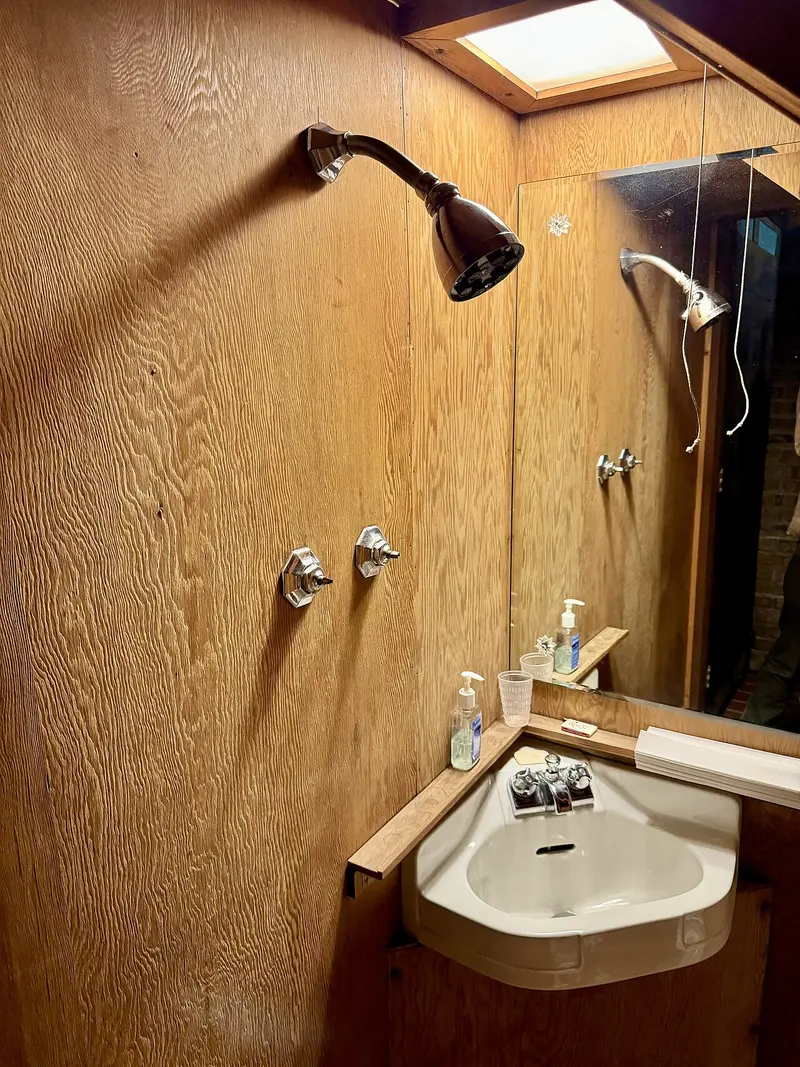
Wood-paneled and unusual showers
The third photo shows a shower with wood-look walls and a small corner sink. Different wall materials need the right caulk and careful prep.
We pick a product made for the surfaces in your bathroom.
Before a sale or move-in
Fresh caulk is a small job that makes a bathroom look ready. Buyers and new tenants notice stained or peeling caulk right away, and it can make a good tub look tired. A clean new bead makes the room feel well kept.
We can recaulk every tub and shower in the house so the joints match.
Sinks and backsplashes nearby
While we are in the bathroom, we can look at the joint where a vanity top meets the wall and around the sink rim. Those joints take splashes too and fail in the same way as tub caulk.
If they need it, we seal them with the same care.
Why the bead shape matters
A good bead is slightly concave, touching both surfaces fully and leaving no ridge where water can sit. A flat or lumpy bead holds water and dirt, and that is where mold starts. Tooling the bead with one smooth pass gives it the right shape.
It is a small detail that makes caulk last longer.
Cost
Cost depends on the number of joints, removal and repairs. We give you a written quote.
How long it takes depends on the job.
Related pages
- Bathroom remodel in Temple City
- Kitchen remodel in Temple City
- Tub-to-shower conversion in Temple City
- Shower remodel in Temple City
- Kitchen cabinet replacement in Temple City
- Flooring installation in Temple City
- Countertop replacement in Temple City
- Backsplash installation in Temple City
- Interior painting in Temple City
- Leaking shower pan repair in Temple City
- Powder room remodel in Temple City
- Bathtub replacement in Temple City
- Bathroom tile installation in Temple City
- Tile floor installation in Temple City
- Grout repair in Temple City
- Kitchen sink and faucet replacement in Temple City
- Drywall patching and repair in Temple City
- Walk-in shower in Temple City
- LVP flooring installation in Temple City
- Toilet replacement in Temple City
- Baseboard installation and replacement in Temple City
- Shower and tub recaulking in Alhambra
- Shower and tub recaulking in Monterey Park
- Shower and tub recaulking in Rosemead
- Shower and tub recaulking in San Gabriel
- Interior door and trim painting in Temple City
- Talavera and Spanish tile installation in Temple City
- Wainscoting and accent walls in Temple City
- Fireplace surround tile in Temple City
- Crown molding installation in Temple City
Materials and styles
- Sage, terracotta and deep blue cabinets
- Granite countertops
- Butcher block countertops
- LVP vs tile flooring
- Victorian tile
- Basketweave tile
- Mosaic tile
- Quarry tile
- Stacked stone
- Hexagon tile
- Terrazzo tile
- Herringbone tile
- Backsplash tile ideas
- Shower tile ideas
- Quartz countertops
- Spanish tile bathroom
- Saltillo tile
- Zellige tile backsplash
- Talavera tile
- Cement tile bathroom floor
- Terracotta tile floors
- Bathroom color trends
- Porcelain wood-look tile
- Subway tile vs handmade tile
- Porcelain vs ceramic tile
- LVP vs laminate flooring
- Semi-gloss vs satin paint
- MDF vs wood trim
- Natural stone and marble bathroom tile
- Grout types: cement, epoxy, urethane