
Homes built for families
Wikipedia says Walter Temple envisioned a community where average people could afford to own their homes, recorded the original townsite in 1923, and that the city incorporated in 1960. Many local houses have been lived in by the same family for decades.
Years of family life leave marks: door dents, picture hooks, old shelf anchors, and patches from earlier repairs that never quite blended in.
Tools and materials
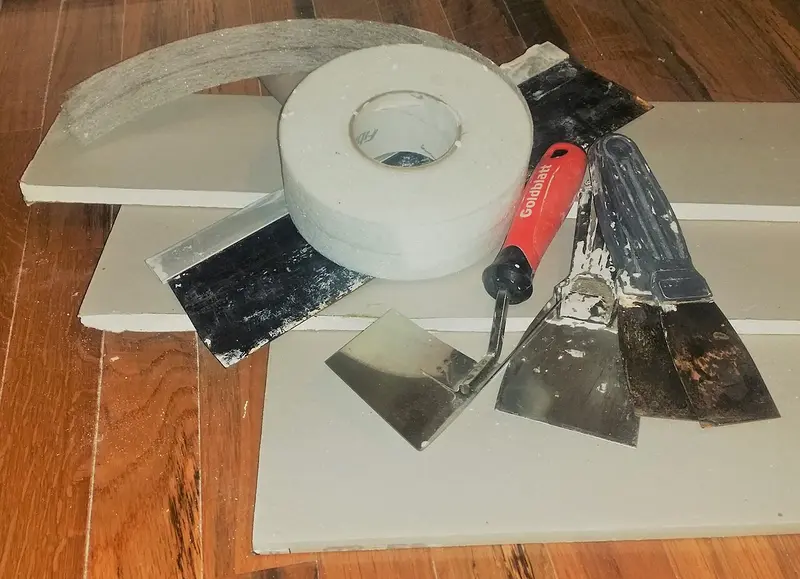
Our first photo shows the basics: pieces of drywall, joint tape and taping knives of several widths. Good results come less from special tools than from patience: thin coats, full drying and careful sanding.
We use setting compound where strength matters and finish compound for smooth top coats.
Our usual list
Typical Temple City repairs:
- holes behind doors
- anchor and nail holes
- old patches that show
- cracked corners
- ceiling stains after a leak and openings around outlets or switches
We price them together so you get one clear quote.
Patching small holes
Nail and anchor holes take two thin coats and a light sanding. A doorknob hole gets a backed patch so it does not crack around the edge.
We also suggest a door stop where one is missing.
Old patches that show
A patch that shows under paint usually has a ridge at the edge, a different texture or no primer. Holding a flashlight flat against the wall makes ridges and dips easy to spot. We sand the old patch down, feather new compound wider and match the texture.
This is one of the most common calls we get, because a visible patch catches the eye every time you walk past.
Stains and mold spots
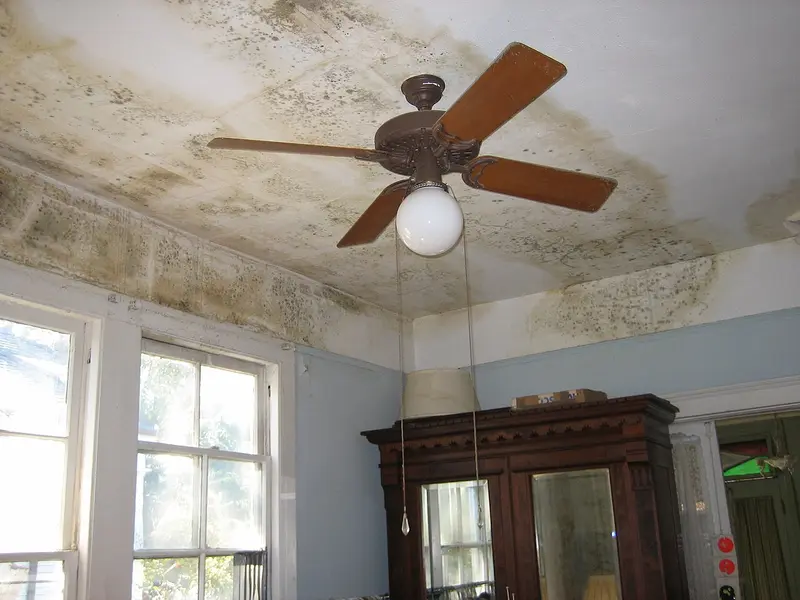
The second photo shows mold on a ceiling after a roof leak. Fix the leak first. For a small, surface-only spot on firm drywall, we can cut out and replace the damaged section and seal the area.
If mold is widespread, it should be handled by a mold specialist before we repair. We tell you honestly what we see.
Ceilings
Ceiling repairs follow the same steps as walls, with more attention to the patch edges, since ceiling light shows every ridge.
For water stains on firm board, a stain-blocking primer keeps the mark from bleeding through new paint.
Texture and primer
We match smooth and textured finishes and check them at an angle under the room light. Every patch gets primer before paint.
For the best result, paint the whole wall. Our interior painting page for Temple City covers how we do that.
Repairs with other work
If you are replacing a sink or faucet or updating a bath, wall repairs are often part of the job. We handle them in the same project.
That keeps dust to one round.
Keeping the house clean
We cover floors, mask the area and use a vacuum sander for larger patches. We clean up when we finish.
Move fragile items off nearby shelves before we start.
Openings for outlets and fixtures
When electrical boxes, pipes or fixtures are moved, the old opening needs a patch and the new one needs a clean edge. We fit backing, fill the gap and finish it flat.
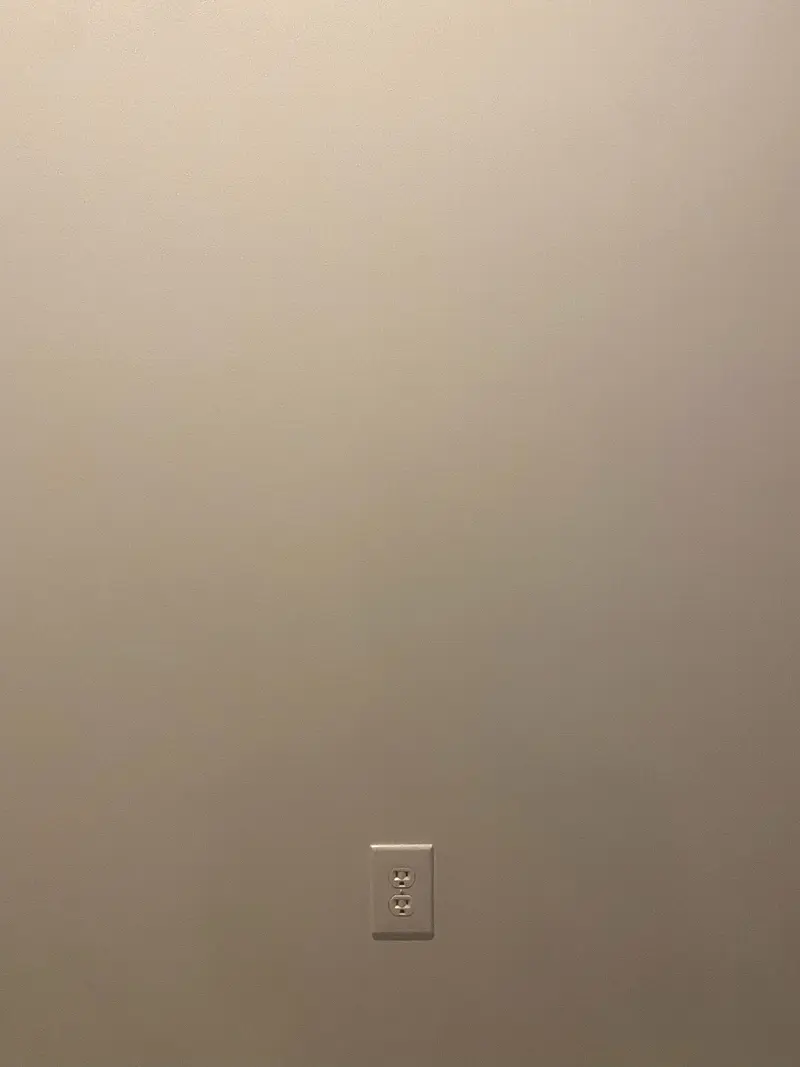
The third photo shows what we aim for: a plain, even wall where the outlet sits in a smooth surface.
Plan your list
Walk the house with a roll of painter's tape and mark every spot that bothers you, from a hole behind the bedroom door to a crack in the hall. Closets and garages count too. A complete list helps us give you one accurate price.
If you still have paint from the last time a room was painted, keep the can. The label shows the color and sheen, which helps if you want touch-ups instead of a full repaint.
When the wall is plaster
Some older Temple City homes still have plaster in a few rooms. Plaster is harder and thicker than drywall, so a drywall patch in a plaster wall needs shims or a setting compound to sit flush.
We check by tapping the wall and looking at an outlet edge, and we choose the patch to match what is there.
Cost
Cost depends on the number and size of patches, texture, any water damage and paint. We give you a written quote.
How long it takes depends on the job, mostly on drying time.
Related pages
- Bathroom remodel in Temple City
- Kitchen remodel in Temple City
- Tub-to-shower conversion in Temple City
- Shower remodel in Temple City
- Kitchen cabinet replacement in Temple City
- Flooring installation in Temple City
- Countertop replacement in Temple City
- Backsplash installation in Temple City
- Interior painting in Temple City
- Leaking shower pan repair in Temple City
- Powder room remodel in Temple City
- Bathtub replacement in Temple City
- Bathroom tile installation in Temple City
- Tile floor installation in Temple City
- Grout repair in Temple City
- Kitchen sink and faucet replacement in Temple City
- Drywall patching and repair in Alhambra
- Drywall patching and repair in Monterey Park
- Drywall patching and repair in Rosemead
- Drywall patching and repair in San Gabriel
- Walk-in shower in Temple City
- LVP flooring installation in Temple City
- Toilet replacement in Temple City
- Baseboard installation and replacement in Temple City
- Shower and tub recaulking in Temple City
- Interior door and trim painting in Temple City
- Talavera and Spanish tile installation in Temple City
- Wainscoting and accent walls in Temple City
- Fireplace surround tile in Temple City
- Crown molding installation in Temple City
Materials and styles
- Sage, terracotta and deep blue cabinets
- Granite countertops
- Butcher block countertops
- LVP vs tile flooring
- Victorian tile
- Basketweave tile
- Mosaic tile
- Quarry tile
- Stacked stone
- Hexagon tile
- Terrazzo tile
- Herringbone tile
- Backsplash tile ideas
- Shower tile ideas
- Quartz countertops
- Spanish tile bathroom
- Saltillo tile
- Zellige tile backsplash
- Talavera tile
- Cement tile bathroom floor
- Terracotta tile floors
- Bathroom color trends
- Porcelain wood-look tile
- Subway tile vs handmade tile
- Porcelain vs ceramic tile
- LVP vs laminate flooring
- Semi-gloss vs satin paint
- MDF vs wood trim
- Natural stone and marble bathroom tile
- Grout types: cement, epoxy, urethane