
Older bathrooms in Alhambra
Alhambra incorporated in 1903, according to Wikipedia, and many homes here still have older tubs set into tiled walls. Those bathrooms have been recaulked many times, often with layers of caulk on top of caulk.
Layers like that never seal well, so we start by taking all of it off.
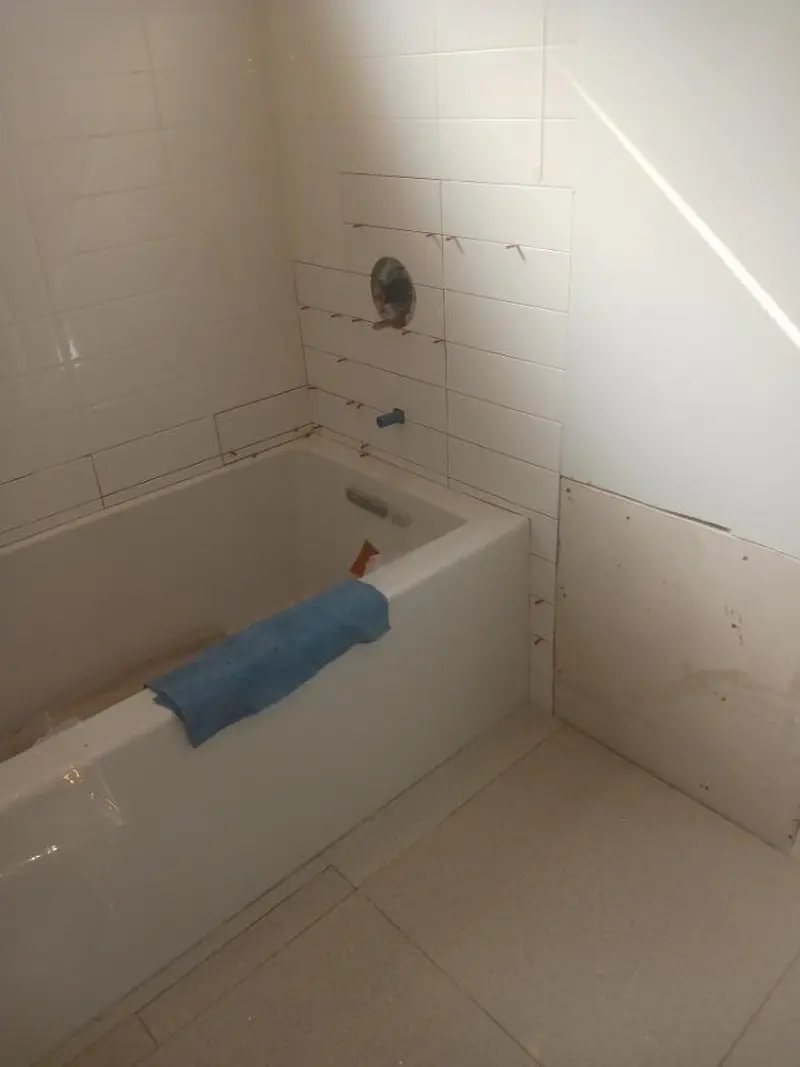
A tub ready for tile and caulk
The first photo shows a tub with new wall tile going in on one of our jobs. The joint between the tub and the first row of tile is the joint that gets caulk, not grout.
That joint moves a little every time the tub is filled, so it needs a flexible seal.
Where caulk belongs
Joints we caulk in a bathroom:
- the line where the tub meets the wall tile
- inside corners of a tiled shower
- the edge of a shower base or curb
- around the tub spout and valve trim and the joint between the tub and the floor
These are places where two surfaces meet and can move apart.
Taking out old caulk
We slice the old caulk free with a blade, peel it out and scrape away what is left. Silicone leaves a thin film behind, so we clean the joint with a remover and wipe it with alcohol.
New caulk will not stick to old silicone, so this step matters most. Even a thin film left behind can stop a bead from bonding.
When the joint opens up
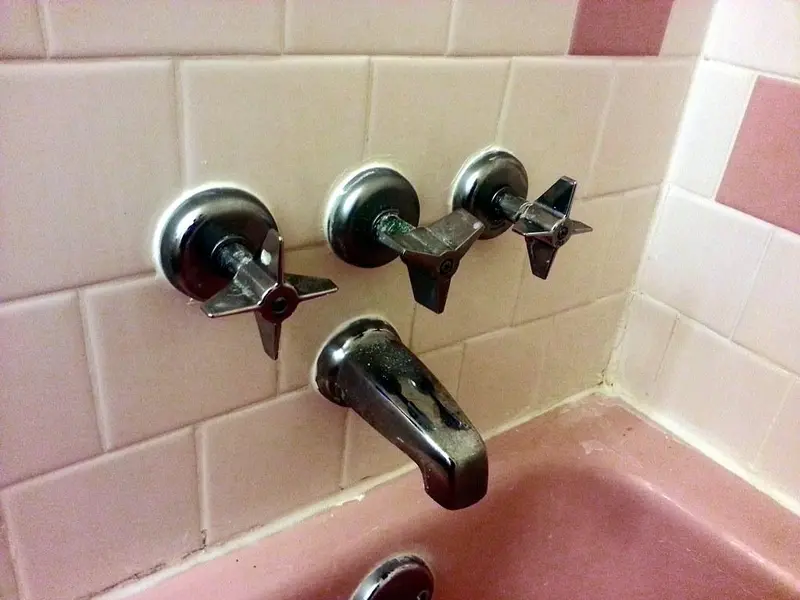
The second photo shows caulk along the joint where a tub meets wall tile, with the faucet handles above. When a joint like this cracks or pulls away, water can run behind the tub and into the wall.
We cut the old bead out, clean the gap and fill it so it seals again.
Drying the joint
Caulk needs a dry joint. If water has soaked in behind the old caulk, we let the joint dry out before sealing it. Sealing in moisture traps it behind the new bead.
We check for soft spots in the wall while the joint is open.
Picking the right caulk
We use a 100 percent silicone caulk made for kitchens and baths in most tubs and showers. It stays flexible and resists mildew. Siliconized acrylic is easier to paint but does not last as long in a wet spot.
We match the color to your tub, tile or grout.
Filling the tub first
A tub sinks a little when it is full of water and a person. We fill the tub before we caulk the tub joint, so the bead is set with the gap at its widest.
When the tub is drained, the bead squeezes slightly instead of tearing.
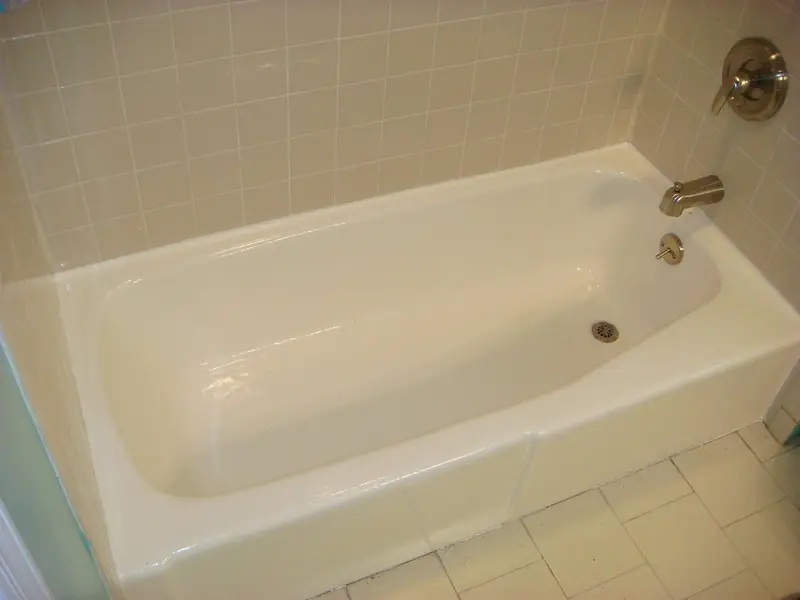
A finished bead
The third photo shows a fresh caulk joint between a tub and wall tile. A good bead is even, smooth and just wide enough to cover the gap.
We tool the bead with a smooth pass so water runs off it.
Recaulking or regrouting
Caulk is for joints that move; grout is for joints between tiles. If the grout between tiles is cracked or missing too, see our grout repair page for Alhambra.
Many bathrooms only need new caulk.
When caulk keeps failing
If caulk fails again and again in one spot, something may be moving or leaking. A loose tub, a soft wall or a leaking shower pan can all break a bead. Our leaking shower pan page covers that.
We tell you what we see so you can decide on next steps.
Using the shower again
Silicone needs to cure before it gets wet. We tell you how long the label says to wait and leave the bathroom with a clear note on when you can use it.
Keeping the room ventilated helps it cure well.
Cost
Cost depends on how many joints need work, how hard the old caulk is to remove and whether there is damage behind it. We give you a written quote.
How long it takes depends on the job.
Related pages
- Bathroom remodel in Alhambra
- Kitchen remodel in Alhambra
- Tub-to-shower conversion in Alhambra
- Shower remodel in Alhambra
- Kitchen cabinet replacement in Alhambra
- Flooring installation in Alhambra
- Countertop replacement in Alhambra
- Backsplash installation in Alhambra
- Interior painting in Alhambra
- Leaking shower pan repair in Alhambra
- Powder room remodel in Alhambra
- Bathtub replacement in Alhambra
- Bathroom tile installation in Alhambra
- Tile floor installation in Alhambra
- Grout repair in Alhambra
- Kitchen sink and faucet replacement in Alhambra
- Drywall patching and repair in Alhambra
- Walk-in shower in Alhambra
- LVP flooring installation in Alhambra
- Toilet replacement in Alhambra
- Baseboard installation and replacement in Alhambra
- Shower and tub recaulking in Monterey Park
- Shower and tub recaulking in Rosemead
- Shower and tub recaulking in San Gabriel
- Shower and tub recaulking in Temple City
- Interior door and trim painting in Alhambra
- Talavera and Spanish tile installation in Alhambra
- Wainscoting and accent walls in Alhambra
- Fireplace surround tile in Alhambra
- Crown molding installation in Alhambra
Materials and styles
- Sage, terracotta and deep blue cabinets
- Granite countertops
- Butcher block countertops
- LVP vs tile flooring
- Victorian tile
- Basketweave tile
- Mosaic tile
- Quarry tile
- Stacked stone
- Hexagon tile
- Terrazzo tile
- Herringbone tile
- Backsplash tile ideas
- Shower tile ideas
- Quartz countertops
- Spanish tile bathroom
- Saltillo tile
- Zellige tile backsplash
- Talavera tile
- Cement tile bathroom floor
- Terracotta tile floors
- Bathroom color trends
- Porcelain wood-look tile
- Subway tile vs handmade tile
- Porcelain vs ceramic tile
- LVP vs laminate flooring
- Semi-gloss vs satin paint
- MDF vs wood trim
- Natural stone and marble bathroom tile
- Grout types: cement, epoxy, urethane