
Bathrooms from the postwar boom
Wikipedia describes rapid growth in Monterey Park in the late 1940s and 1950s. Many homes from those years still have their first tubs and tiled walls, and the caulk around them has been redone many times.
The tub and tile can last for decades; the caulk cannot.
Older tubs and tile
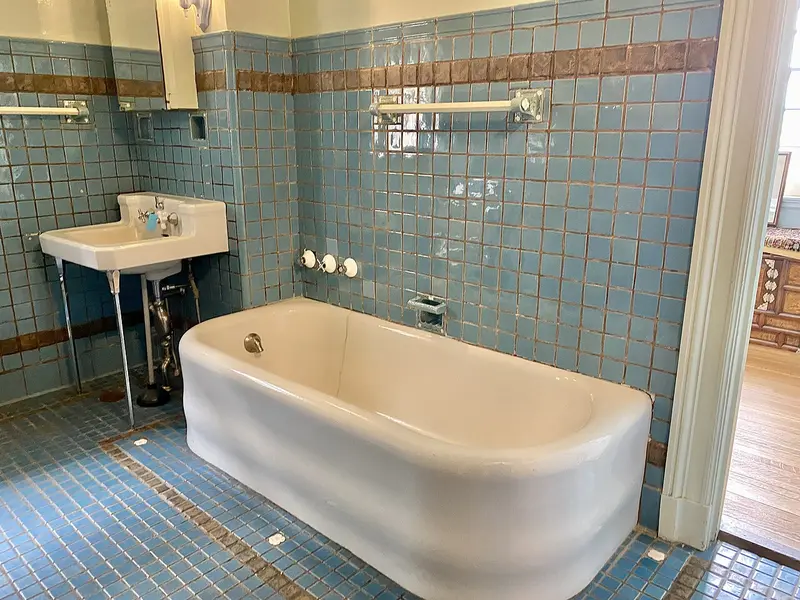
The first photo shows an older bathroom with a built-in tub and blue wall tile. A tub like this needs a tight seal where it meets the tile.
If that seal breaks, splashing water runs behind the tub.
Signs caulk needs replacing
Signs we look for:
- black or pink spots that will not scrub off
- caulk pulling away from the tub
- cracks or gaps in the bead
- caulk that feels hard or crumbly and water stains on the ceiling below an upstairs bathroom
Any one of these means the seal is no longer doing its job.
Mold in caulk
Mold grows into caulk, not just on top of it. Bleach can lighten the spots, but the stain comes back because it is inside the bead.
Replacing the caulk is the fix that lasts.
Cleaning the joint
After the caulk is out, we clean off soap film and silicone residue, then wipe the joint with alcohol so the new bead bonds.
If mold has stained the joint, we treat it before sealing.
Cutting it out
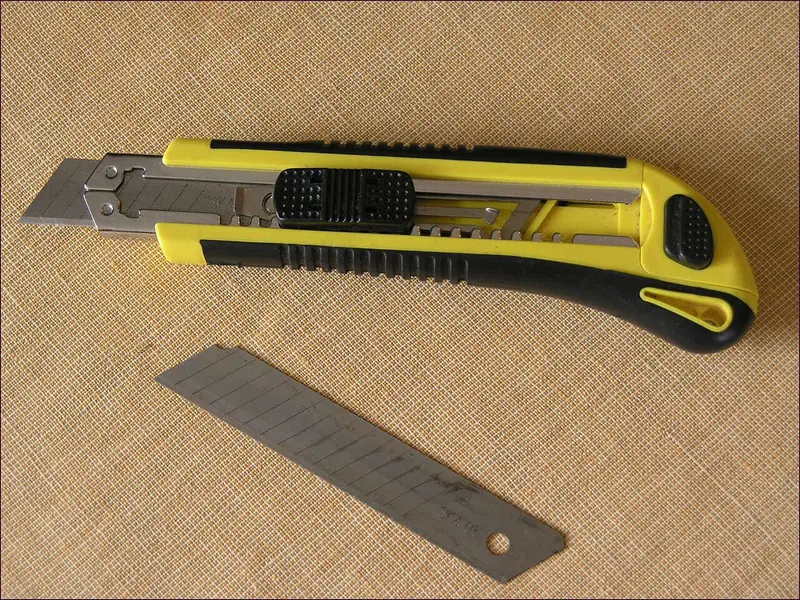
The third photo shows a utility knife and a straight edge. We use a sharp blade to slice old caulk free from the tub and tile without scratching either one.
Then we pull the bead out and scrape the rest. A plastic scraper is gentler than metal on acrylic and fiberglass tubs. New caulk bonds best to a joint that is clean and fully dry, which is why rushing this step tends to cause early failure.
Color and finish
Clear, white, almond and gray are common choices. We match the bead to the tub or the grout, depending on which looks better in your bathroom.
A smooth, slightly concave bead sheds water best. A bead that matches the grout tends to blend into the tile.
Acrylic and fiberglass tubs
Many tubs in remodeled bathrooms are acrylic or fiberglass. These flex more than cast iron, so the caulk needs to stay flexible. We use silicone made for that kind of movement.
We are careful with blades on these softer surfaces.
Caulk is not grout
If the joints between your tiles are cracked or stained, that is a grout problem. See our grout repair page for Monterey Park.
We check both and tell you what each joint needs.
Keeping it clean
A squeegee after each shower and an exhaust fan or open window keep caulk dry and help it stay clean. Mild cleaners are better than harsh scrub pads.
Wipe the bead gently when you clean the tub.
The tools
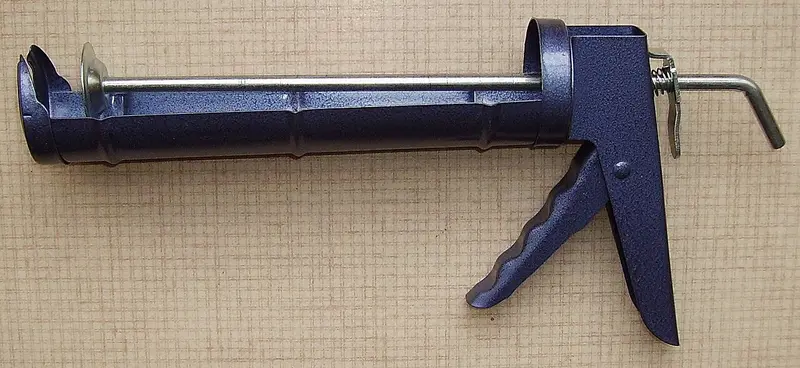
The second photo shows a caulking gun, the tool used to lay a bead from a cartridge. A smooth-pressure gun lets us lay an even bead without blobs.
Good tools make a clean bead much easier.
Bigger problems
If the wall behind the tub is soft or the tile is loose, new caulk is only a patch. Our shower remodel page covers larger work.
We show you what we find before going further.
Rentals and move-outs
Fresh caulk is one of the simplest ways to get a bathroom ready for a new tenant or a sale. Dark, stained caulk makes even a clean tub look old, and buyers and renters notice it right away. A clean white or clear bead makes the whole room look cared for.
We can recaulk tubs, showers and sinks across a unit and leave every joint the same color and width.
Bathrooms upstairs
When an upstairs tub leaks at the caulk line, the first sign is often a stain on the ceiling below. Catching failed caulk early helps keep water out of the ceiling and the framing. If you see a new stain, look at the caulk above it first.
We can check the joint and tell you if the caulk is the likely source.
Cost
Cost depends on the number of joints, the condition of the old caulk and any repairs. We give you a written quote.
How long it takes depends on the job.
Related pages
- Bathroom remodel in Monterey Park
- Kitchen remodel in Monterey Park
- Tub-to-shower conversion in Monterey Park
- Shower remodel in Monterey Park
- Kitchen cabinet replacement in Monterey Park
- Flooring installation in Monterey Park
- Countertop replacement in Monterey Park
- Backsplash installation in Monterey Park
- Interior painting in Monterey Park
- Leaking shower pan repair in Monterey Park
- Powder room remodel in Monterey Park
- Bathtub replacement in Monterey Park
- Bathroom tile installation in Monterey Park
- Tile floor installation in Monterey Park
- Grout repair in Monterey Park
- Kitchen sink and faucet replacement in Monterey Park
- Drywall patching and repair in Monterey Park
- Walk-in shower in Monterey Park
- LVP flooring installation in Monterey Park
- Toilet replacement in Monterey Park
- Baseboard installation and replacement in Monterey Park
- Shower and tub recaulking in Alhambra
- Shower and tub recaulking in Rosemead
- Shower and tub recaulking in San Gabriel
- Shower and tub recaulking in Temple City
- Interior door and trim painting in Monterey Park
- Talavera and Spanish tile installation in Monterey Park
- Wainscoting and accent walls in Monterey Park
- Fireplace surround tile in Monterey Park
- Crown molding installation in Monterey Park
Materials and styles
- Sage, terracotta and deep blue cabinets
- Granite countertops
- Butcher block countertops
- LVP vs tile flooring
- Victorian tile
- Basketweave tile
- Mosaic tile
- Quarry tile
- Stacked stone
- Hexagon tile
- Terrazzo tile
- Herringbone tile
- Backsplash tile ideas
- Shower tile ideas
- Quartz countertops
- Spanish tile bathroom
- Saltillo tile
- Zellige tile backsplash
- Talavera tile
- Cement tile bathroom floor
- Terracotta tile floors
- Bathroom color trends
- Porcelain wood-look tile
- Subway tile vs handmade tile
- Porcelain vs ceramic tile
- LVP vs laminate flooring
- Semi-gloss vs satin paint
- MDF vs wood trim
- Natural stone and marble bathroom tile
- Grout types: cement, epoxy, urethane