
Older walls, mixed materials
Alhambra was incorporated in 1903, and Wikipedia notes it calls itself a "city of homes," with craftsman, bungalow and Spanish colonial revival styles among them. Many of those houses have plaster over wood lath in the original rooms and drywall in later additions, so one repair can involve two different materials.
We check what your wall is made of before we cut anything. Plaster and drywall take different patches, and using the wrong one is why some repairs crack again.
What we patch
Typical calls in town:
- holes from doorknobs and wall anchors
- nail pops along a stud line
- cracked tape at inside corners
- stress cracks over doors and windows
- water stains on a ceiling and openings left after a plumber or electrician worked inside a wall
Small and large repairs get the same care: a solid backing, compound in thin coats and a smooth, even finish.
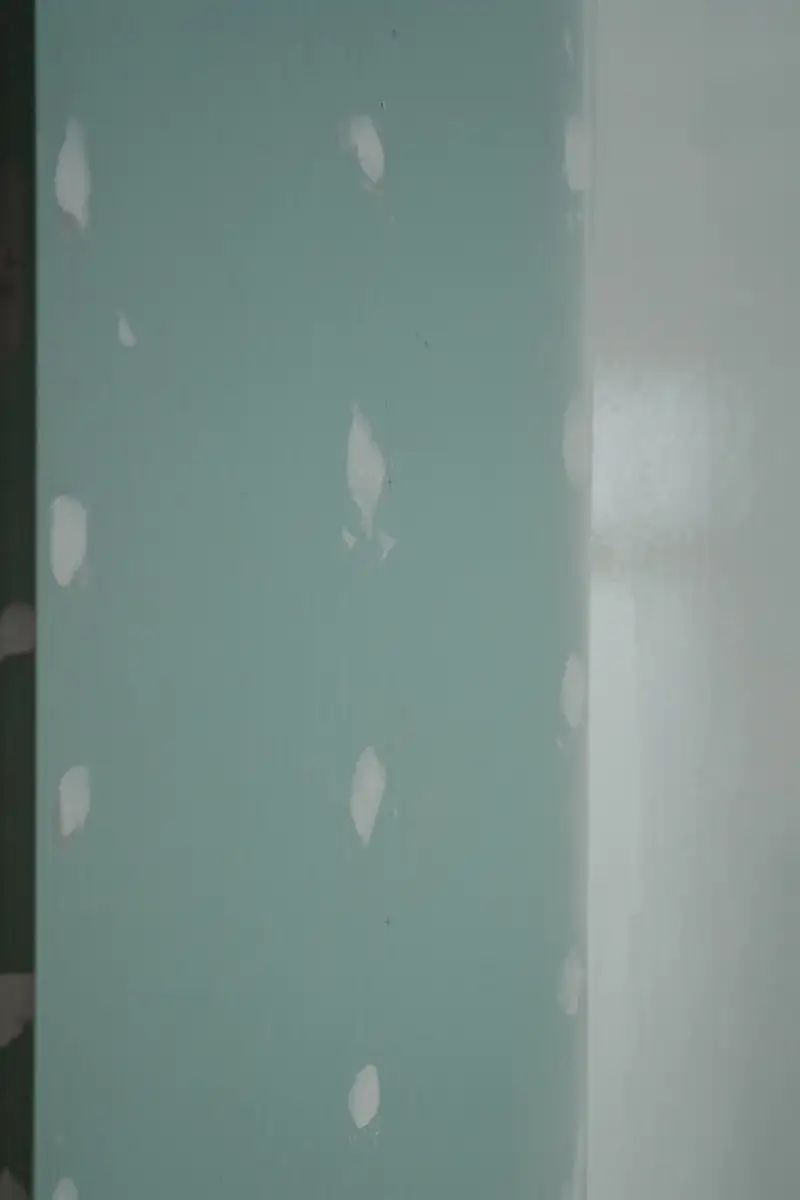
Start with the cause
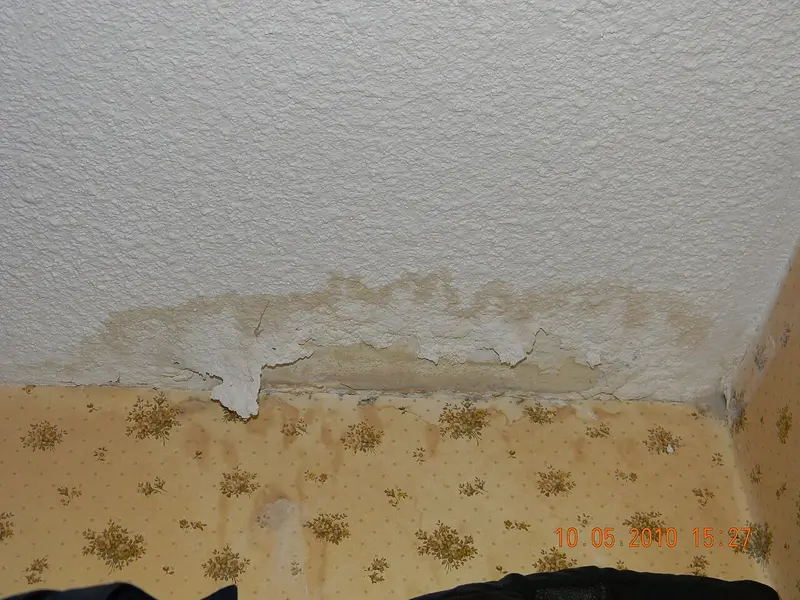
A stain on a ceiling is a symptom. Before we patch it, we look for the leak above: a bath drain, a supply line, a roof spot or an old air conditioning line. If the source is still wet, the patch will stain again.
Our first photo shows what a small leak does to drywall and the finish on it: the paper swells, the paint lifts and the stain spreads. Once the source is fixed and the board is dry, we cut out soft sections and patch with new board.
Small holes
For a hole the size of a coin or a nail, we fill with lightweight compound, let it dry, add a second thin coat and sand smooth. For a doorknob hole we use a patch with a mesh backing or a small piece of board with a backer behind it.
A door stop or a bumper on the wall afterward keeps the same hole from coming back.
Larger openings
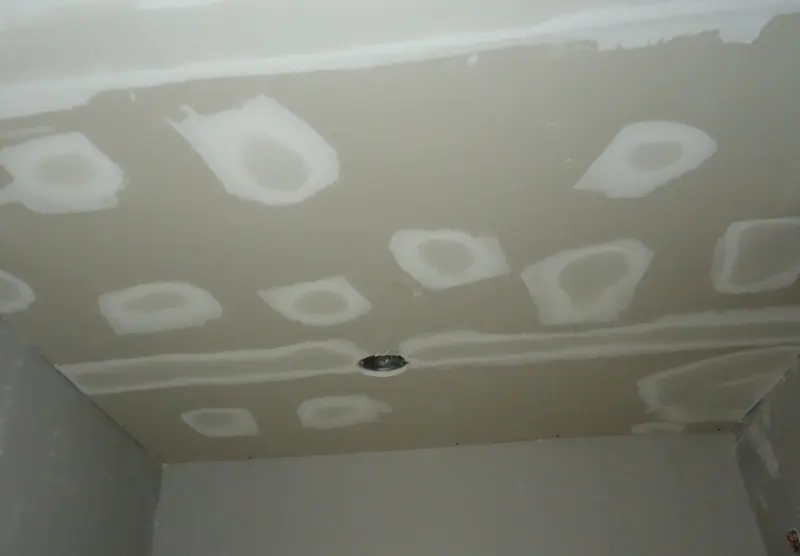
For bigger holes we square the opening, add wood backing at the edges, screw in a new piece of drywall the same thickness and tape the seams. Then we apply three coats of compound, each wider than the last, so the patch blends into the wall instead of forming a bump.
The second photo shows the middle of that process on a ceiling: joint compound over screw heads and tape, before the final sanding.
Cracks that keep coming back
A crack that returns after being filled usually needs tape. We open the crack, embed paper or mesh tape, and feather compound over it. In older plaster we may also add plaster washers to pull loose sections back to the lath before skimming.
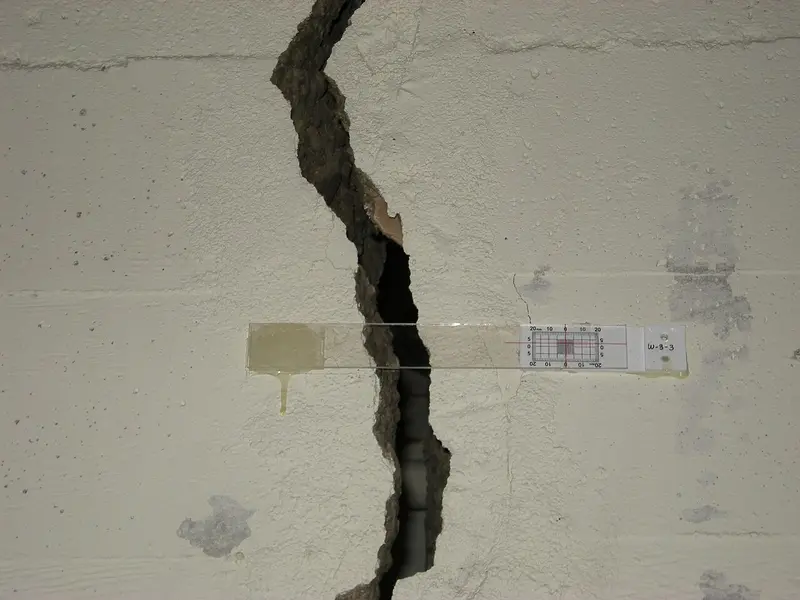
Long diagonal cracks off the corners of doors can come from the house settling. We tell you if a crack looks like more than a surface problem.
Matching texture
Many Alhambra walls are smooth; others have orange peel or a light knockdown texture. We match the texture on the patch with a spray or hand method and check it under the room light before primer.
Texture matching is the step most people notice. A flat patch on a textured wall shows from across the room.
Ready for paint
Every patch is primed before paint. Bare compound absorbs paint differently from the rest of the wall and can show as a dull spot, which painters call flashing.
If you want us to paint, see our interior painting page for Alhambra. We can paint the patched wall corner to corner so the color matches evenly.
Dust and cleanup
Sanding makes fine dust. We cover floors and furniture, close off the room where we can and use a vacuum sander for larger areas. We clean up when we finish.
Let us know about anyone in the house with allergies or asthma so we can plan the setup.
Before and after a remodel
Patching often goes with other work. When a sink or faucet is replaced and the wall behind it is opened, or when an old backsplash comes off, the drywall needs repair before the next finish goes on.
We can handle that patching as part of the same project so nothing is left half done.
Cracks and old houses
The third photo shows a long crack in an interior wall of an older building. Cracks like that are often in plaster and can be repaired, but a crack that keeps widening deserves a closer look at the structure first.
We tell you what we see and what we suggest, and you decide how to proceed.
Cost
Cost depends on the number of patches, their size, the texture, the material behind it and whether you want paint. We give you a written quote after we see the walls.
Bundling several small repairs into one job usually costs less than calling for each one separately.
Getting started
Send a few photos of the damage by text, with a coin or tape measure in the frame for scale. We can usually give a rough idea from photos and confirm at the free estimate.
How long a repair takes depends on the job, mostly on drying time between coats of compound.
Related pages
- Bathroom remodel in Alhambra
- Kitchen remodel in Alhambra
- Tub-to-shower conversion in Alhambra
- Shower remodel in Alhambra
- Kitchen cabinet replacement in Alhambra
- Flooring installation in Alhambra
- Countertop replacement in Alhambra
- Backsplash installation in Alhambra
- Interior painting in Alhambra
- Leaking shower pan repair in Alhambra
- Powder room remodel in Alhambra
- Bathtub replacement in Alhambra
- Bathroom tile installation in Alhambra
- Tile floor installation in Alhambra
- Grout repair in Alhambra
- Kitchen sink and faucet replacement in Alhambra
- Drywall patching and repair in Monterey Park
- Drywall patching and repair in Rosemead
- Drywall patching and repair in San Gabriel
- Drywall patching and repair in Temple City
- Walk-in shower in Alhambra
- LVP flooring installation in Alhambra
- Toilet replacement in Alhambra
- Baseboard installation and replacement in Alhambra
- Shower and tub recaulking in Alhambra
- Interior door and trim painting in Alhambra
- Talavera and Spanish tile installation in Alhambra
- Wainscoting and accent walls in Alhambra
- Fireplace surround tile in Alhambra
- Crown molding installation in Alhambra
Materials and styles
- Sage, terracotta and deep blue cabinets
- Granite countertops
- Butcher block countertops
- LVP vs tile flooring
- Victorian tile
- Basketweave tile
- Mosaic tile
- Quarry tile
- Stacked stone
- Hexagon tile
- Terrazzo tile
- Herringbone tile
- Backsplash tile ideas
- Shower tile ideas
- Quartz countertops
- Spanish tile bathroom
- Saltillo tile
- Zellige tile backsplash
- Talavera tile
- Cement tile bathroom floor
- Terracotta tile floors
- Bathroom color trends
- Porcelain wood-look tile
- Subway tile vs handmade tile
- Porcelain vs ceramic tile
- LVP vs laminate flooring
- Semi-gloss vs satin paint
- MDF vs wood trim
- Natural stone and marble bathroom tile
- Grout types: cement, epoxy, urethane