
Walls with history
Alhambra has twenty-six designated historic single-family neighborhoods, including the Bean Tract and the Midwick Tract, per Wikipedia. Many houses in those tracts were built with plaster walls and wood trim, and a panel treatment fits that kind of room.
In a newer Alhambra house, molding adds character that the builder left out.
Panels in an empty room
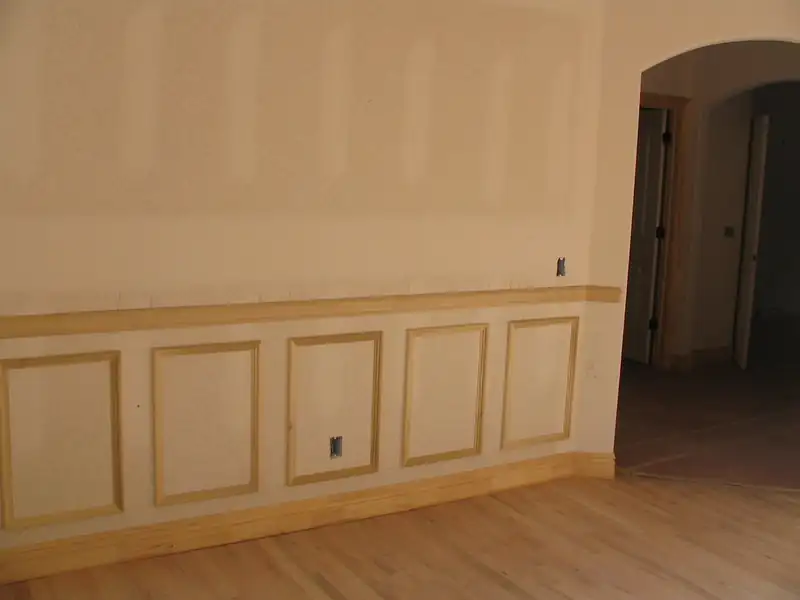
The first photo shows a row of applied panels under a cap rail along a wall, in an empty room with an arched doorway and a wood floor. A simple run like this gives a plain living or dining room a finished base.
We snap level lines, space the panels to the doors and corners, and miter every frame so the boxes read as one design.
Styles we build in Alhambra
Common choices here:
- picture-frame molding
- raised-panel wainscot
- flat-panel shaker wainscot
- beadboard with a cap rail
- board and batten
- a simple chair rail on its own
Each one changes how formal the room feels, so we bring samples to the estimate.
A word with old roots
According to Wikipedia, "wainscot" first meant high-quality oak boards, and wainscoting was the paneling made from them. Softwoods mostly replaced that oak in the 18th century, but the name stayed, and today it usually means a treatment on the lower part of the wall, roughly three to four feet high.
That height is a starting point, not a rule. In rooms with tall ceilings we often go higher.
Dining rooms and entries
Many Alhambra houses have a separate dining room, and that is where wainscoting looks most at home. A chair rail protects the wall from chair backs, and panels below it give the room a finished base.
Entries get scuffed by bags, shoes and strollers. A painted panel wall wipes clean more easily than flat drywall.
Dark wood around a fireplace
The second photo shows dark carved wood paneling around a fireplace with a white marble surround, in an old room with deep red walls. Full paneling like this is a formal, traditional look.
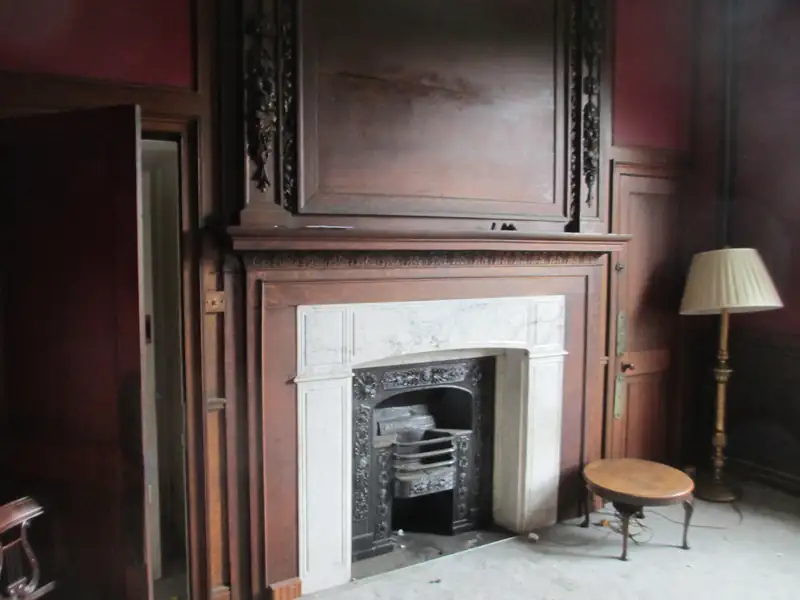
Most homes want a lighter version: painted panels on the fireplace wall, with the rest of the room left plain. We lay out both sides of the firebox so the panels look balanced.
The chair rail itself
Wikipedia says the dado rail is also called a chair rail, that it can protect the wall from furniture, and that modern trends set it around 36 inches high.
We match the profile to the casing and baseboard already in the room, so the new trim looks original.
Accent walls without panels
Not every accent wall needs molding. A deep paint color on one wall, a two-tone wall split by a rail, or a wall of vertical boards can all anchor a room.
We help you pick the wall that matters most: usually the one you see first when you walk in.
Prep matters most
Old plaster walls are rarely flat. We find the high and low spots first, then shim or scribe the trim so it sits tight. On drywall we locate studs and use adhesive where nails alone will not hold.
If a wall has cracks or soft spots, we repair them before trim goes on. See our drywall repair page for that work.
A navy accent wall
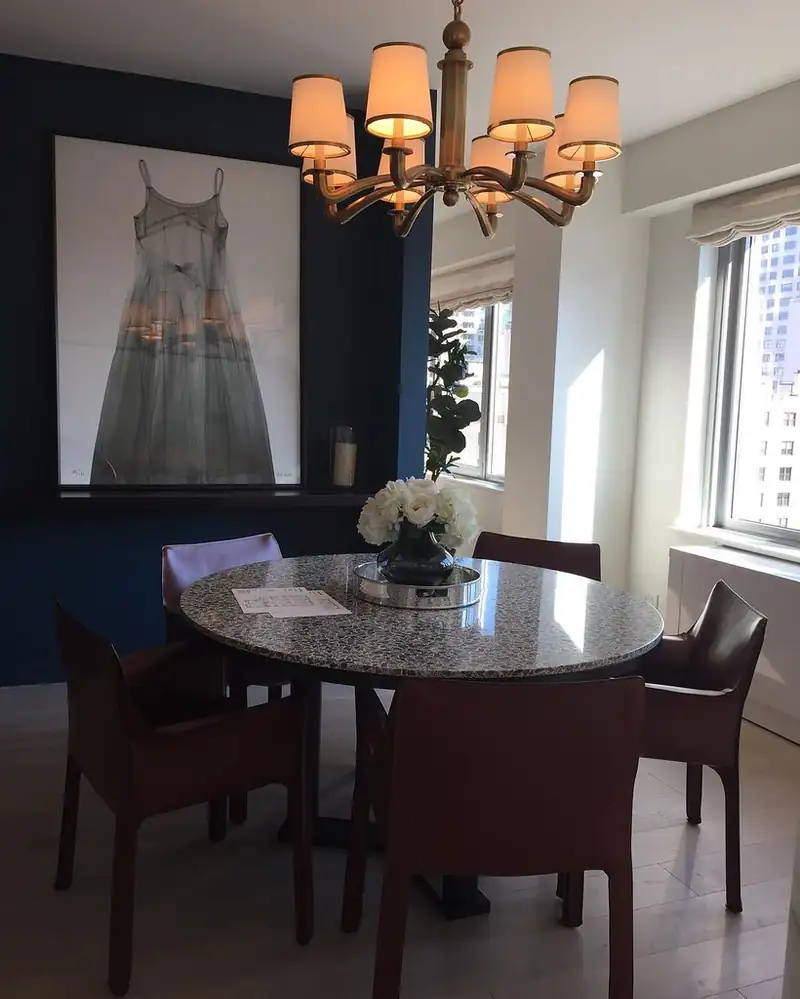
The third photo shows a dining room with one wall painted deep navy behind a round table and a chandelier. A single dark wall gives the room a focal point without any trim at all.
We can add a rail or panels to a wall like that later.
Caulk, fill and paint
Panel work looks finished only after the small steps: filling nail holes, caulking every seam, sanding and priming. We paint trim in a durable enamel that stands up to cleaning.
A satin or semi-gloss on the trim, with a flatter paint above, keeps the wall from looking too shiny.
Matching the rest of the house
If the house has original trim, we copy its proportions. Wide, flat casings call for a simple flat panel; detailed casings can take a raised panel or a molded frame.
For doors and casings that need a refresh at the same time, see door and trim painting in Alhambra. For the base of the wall, see baseboard installation.
Bathrooms and powder rooms
Wainscoting works in a bathroom if the material suits the moisture. We use moisture-resistant boards and keep the panels away from direct shower spray, with tile where water hits.
A beadboard wainscot with a cap rail is a classic look for a small powder room.
Cost
Cost depends on the style, the wall area, the number of corners and openings, and the condition of the wall. We give you a written quote.
How long it takes depends on the job.
Related pages
- Bathroom remodel in Alhambra
- Kitchen remodel in Alhambra
- Tub-to-shower conversion in Alhambra
- Shower remodel in Alhambra
- Kitchen cabinet replacement in Alhambra
- Flooring installation in Alhambra
- Countertop replacement in Alhambra
- Backsplash installation in Alhambra
- Interior painting in Alhambra
- Leaking shower pan repair in Alhambra
- Powder room remodel in Alhambra
- Bathtub replacement in Alhambra
- Bathroom tile installation in Alhambra
- Tile floor installation in Alhambra
- Grout repair in Alhambra
- Kitchen sink and faucet replacement in Alhambra
- Drywall patching and repair in Alhambra
- Walk-in shower in Alhambra
- LVP flooring installation in Alhambra
- Toilet replacement in Alhambra
- Baseboard installation and replacement in Alhambra
- Shower and tub recaulking in Alhambra
- Interior door and trim painting in Alhambra
- Talavera and Spanish tile installation in Alhambra
- Wainscoting and accent walls in Monterey Park
- Wainscoting and accent walls in Rosemead
- Wainscoting and accent walls in San Gabriel
- Wainscoting and accent walls in Temple City
- Fireplace surround tile in Alhambra
- Crown molding installation in Alhambra
Materials and styles
- Sage, terracotta and deep blue cabinets
- Granite countertops
- Butcher block countertops
- LVP vs tile flooring
- Victorian tile
- Basketweave tile
- Mosaic tile
- Quarry tile
- Stacked stone
- Hexagon tile
- Terrazzo tile
- Herringbone tile
- Backsplash tile ideas
- Shower tile ideas
- Quartz countertops
- Spanish tile bathroom
- Saltillo tile
- Zellige tile backsplash
- Talavera tile
- Cement tile bathroom floor
- Terracotta tile floors
- Bathroom color trends
- Porcelain wood-look tile
- Subway tile vs handmade tile
- Porcelain vs ceramic tile
- LVP vs laminate flooring
- Semi-gloss vs satin paint
- MDF vs wood trim
- Natural stone and marble bathroom tile
- Grout types: cement, epoxy, urethane