
Trim with history
Alhambra was incorporated in 1903, and Wikipedia lists home styles here including craftsman, bungalow and Spanish colonial revival. Each style has its own kind of trim, from tall, flat craftsman boards to simpler profiles in Spanish revival rooms.
When we replace baseboard in an older house, we try to match what the house had, or what it would have had.
Hallways and stairs
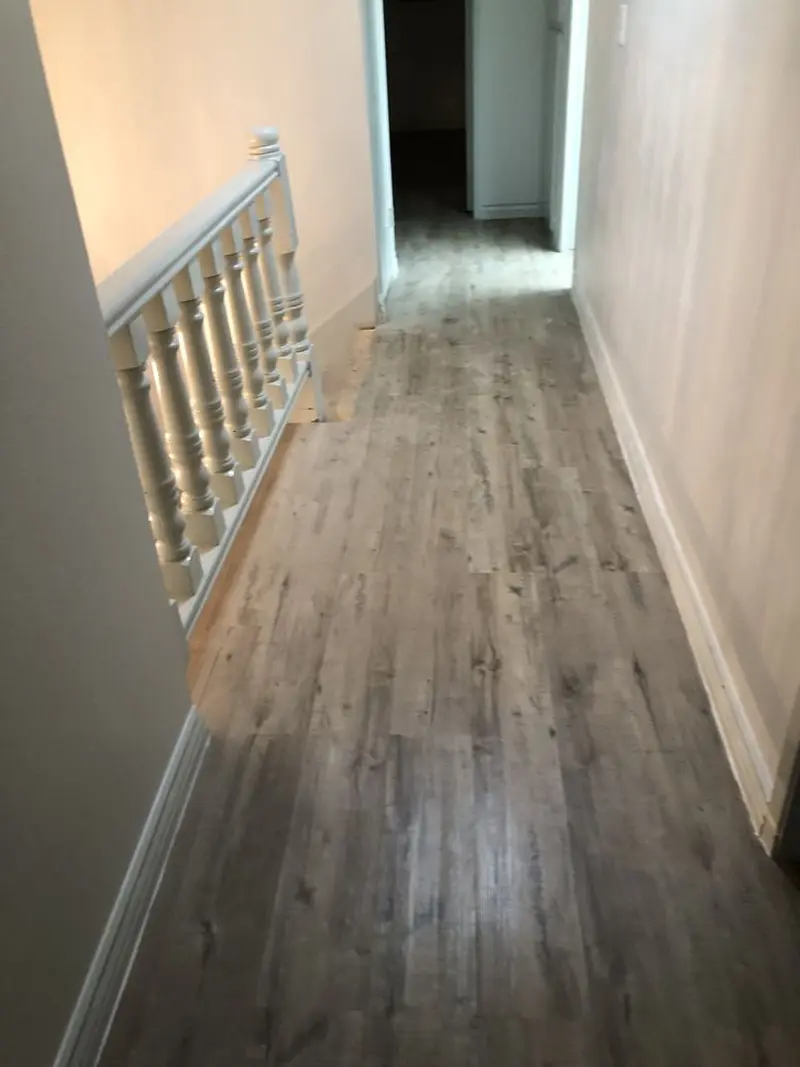
The first photo shows baseboard running along a hallway beside a stair rail on one of our jobs. Halls show trim more than any other room, because you see long runs from end to end.
Long runs need straight boards, joints that line up and nails set into studs so the board does not wave.
Profiles that suit the house
Common choices in Alhambra:
- a tall flat board with a small cap for craftsman and bungalow rooms
- a simple rounded top for Spanish revival interiors
- a colonial profile for later traditional homes and a plain square edge for modern updates
We bring samples so you can hold them against your door casing.
Inside corners
We cope inside corners: one board is cut square, and the other is cut to the shape of its profile so it fits over the first. A coped joint stays tight when the house moves; a simple miter often opens up.
Outside corners are mitered and glued so the edge stays sharp.
Wavy walls and floors
Older plaster walls are rarely flat, and floors can dip. We scribe the bottom of the board to the floor where needed and fasten it into studs so it follows the wall closely.
Small gaps at the top are filled with caulk before paint.
Matching door casing
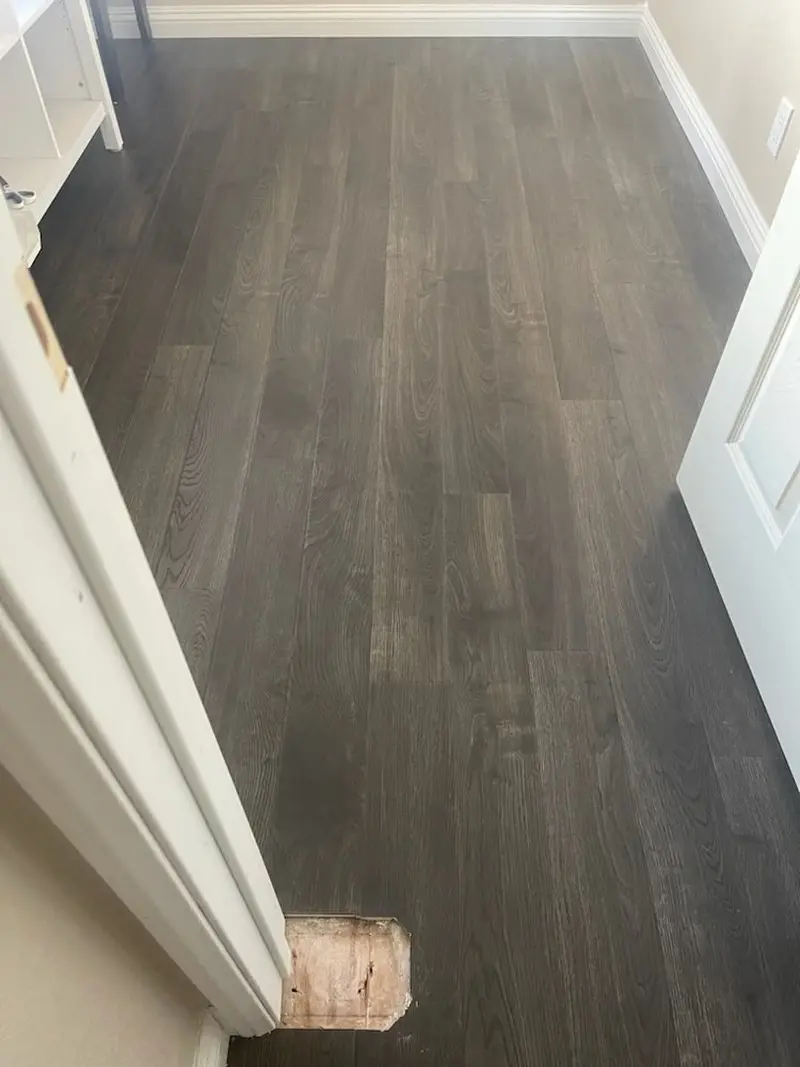
Baseboard should meet door casing cleanly. A plinth block is a small square block at the foot of the casing that both trims can butt into. The second photo shows baseboard meeting door casing in a hallway on one of our jobs. The baseboard should be a little thinner than the casing so it dies into it without sticking out.
If your casing is thin, we pick a baseboard that suits it, or use a plinth block.
Removing old baseboard
We pull old baseboard carefully to protect the plaster or drywall behind it. Where the wall is damaged, we patch it. Our drywall patching page for Alhambra explains how.
If the old baseboard is original and in good shape, we can save it and reinstall it.
With a new floor
Baseboard is often replaced with new flooring. Setting new baseboard after the floor goes in hides the expansion gap and gives the cleanest line. See our flooring page for Alhambra.
Doing both together saves a second round of work at the walls.
Paint-ready finish
We fill nail holes, caulk the top edge and corners and sand where needed. If you want us to paint, our interior painting page covers trim painting.
A semi-gloss on trim cleans easily and shows the profile well.
Materials
Pre-primed MDF is smooth and stable for painted trim in dry rooms. Finger-jointed pine takes nails well and handles small bumps better. Solid wood suits stained trim in older homes.
In bathrooms, a moisture-resistant material holds up better near the floor.
Plinth blocks
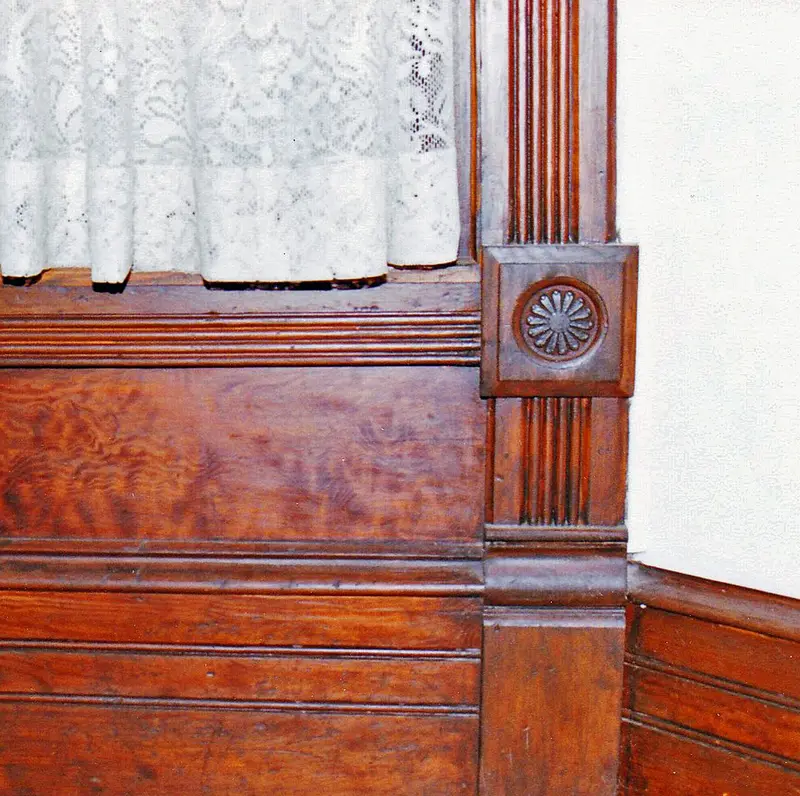
The third photo shows a baseboard with a carved plinth block at the foot of the door trim in a historic house. Plinth blocks give baseboard and casing a solid place to meet, and they were common in older homes.
We can add simple plinth blocks to doorways when baseboard and casing do not line up well.
Window stools and aprons
Many older Alhambra rooms have window trim with a stool and apron below the sill. When we change baseboard, we look at the window trim too, so the profiles and paint sheen match across the room. Sometimes a small change to the apron ties the two together.
If your windows were updated and lost their trim, we can talk about adding simple casing so the room feels finished again from floor to ceiling.
Keeping what is original
Original trim in older homes has value, and many owners want to keep it. Where boards are split or missing, we can piece in matching sections and fill the joints so the repair blends in after paint. Where trim is stained, we try to match the wood and finish.
We point out which pieces are worth saving and which are too far gone, so you can decide room by room.
Cost
Cost depends on the length of trim, the profile, the material, the number of corners and doors and whether old baseboard comes off. We give you a written quote.
How long it takes depends on the job.
Related pages
- Bathroom remodel in Alhambra
- Kitchen remodel in Alhambra
- Tub-to-shower conversion in Alhambra
- Shower remodel in Alhambra
- Kitchen cabinet replacement in Alhambra
- Flooring installation in Alhambra
- Countertop replacement in Alhambra
- Backsplash installation in Alhambra
- Interior painting in Alhambra
- Leaking shower pan repair in Alhambra
- Powder room remodel in Alhambra
- Bathtub replacement in Alhambra
- Bathroom tile installation in Alhambra
- Tile floor installation in Alhambra
- Grout repair in Alhambra
- Kitchen sink and faucet replacement in Alhambra
- Drywall patching and repair in Alhambra
- Walk-in shower in Alhambra
- LVP flooring installation in Alhambra
- Toilet replacement in Alhambra
- Baseboard installation and replacement in Monterey Park
- Baseboard installation and replacement in Rosemead
- Baseboard installation and replacement in San Gabriel
- Baseboard installation and replacement in Temple City
- Shower and tub recaulking in Alhambra
- Interior door and trim painting in Alhambra
- Talavera and Spanish tile installation in Alhambra
- Wainscoting and accent walls in Alhambra
- Fireplace surround tile in Alhambra
- Crown molding installation in Alhambra
Materials and styles
- Sage, terracotta and deep blue cabinets
- Granite countertops
- Butcher block countertops
- LVP vs tile flooring
- Victorian tile
- Basketweave tile
- Mosaic tile
- Quarry tile
- Stacked stone
- Hexagon tile
- Terrazzo tile
- Herringbone tile
- Backsplash tile ideas
- Shower tile ideas
- Quartz countertops
- Spanish tile bathroom
- Saltillo tile
- Zellige tile backsplash
- Talavera tile
- Cement tile bathroom floor
- Terracotta tile floors
- Bathroom color trends
- Porcelain wood-look tile
- Subway tile vs handmade tile
- Porcelain vs ceramic tile
- LVP vs laminate flooring
- Semi-gloss vs satin paint
- MDF vs wood trim
- Natural stone and marble bathroom tile
- Grout types: cement, epoxy, urethane