
Floors in postwar homes
Wikipedia describes explosive population growth in Monterey Park in the late 1940s and 1950s. Some homes from that era sit on concrete slabs, others on raised foundations with wood subfloors, and the right flooring prep depends on which you have.
Slabs can carry moisture up from the ground and may have cracks or dips. Wood subfloors can squeak and flex. Both are fixable before the new floor goes down.
Moisture and the slab
Before installing on concrete, we check for signs of moisture:
- dark patches
- efflorescence (white powder)
- old flooring adhesive that has turned soft
A simple moisture test confirms it.
LVP is tolerant of moisture at the surface but still needs a vapor barrier or the right underlayment on many slabs. Laminate needs a vapor barrier on concrete. Tile bonds directly to a clean, sound slab, with a crack-isolation membrane over any cracks.
Dips are filled with self-leveling compound so planks lock together without gaps and tile sits flat.
Which floor for which room
LVP is the all-rounder: waterproof surface, quiet and warm enough underfoot, and easy to clean. It is a common pick for kitchens, halls and family rooms.
Laminate gives a very hard, scratch-resistant surface with a realistic look, and suits bedrooms and living rooms where spills are rare.
Tile is best for bathrooms, laundry rooms and entries. Porcelain tile is dense and stain resistant; natural stone needs sealing. It lasts for decades but is harder underfoot.
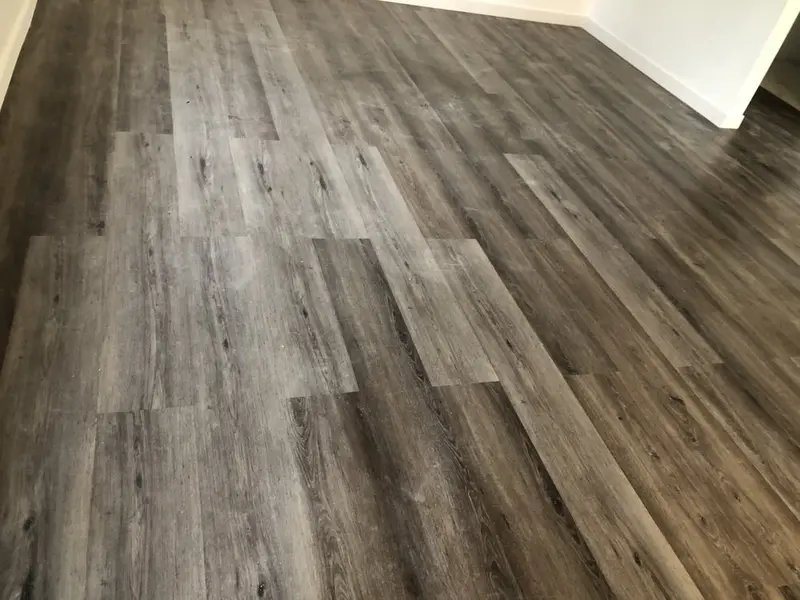
Stairs and split levels
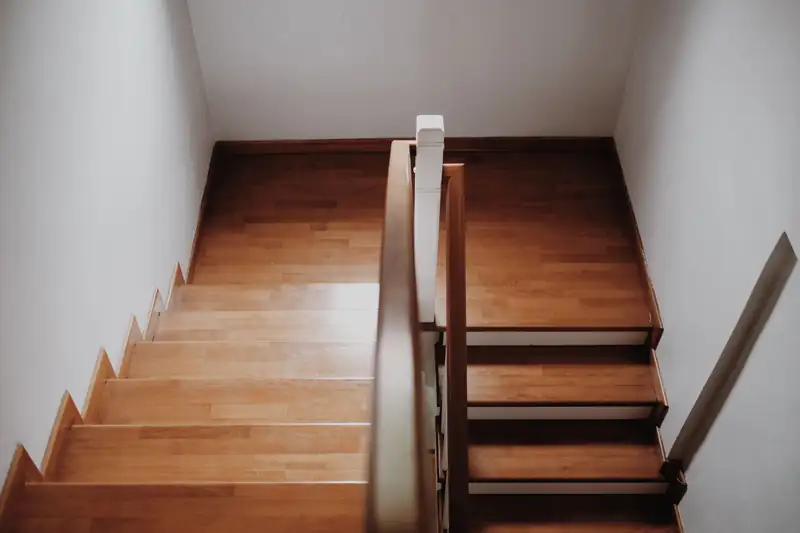
Many homes in the Monterey Highlands and on the hills around Garvey Ranch Park have stairs or split levels. Stairs are the most detailed part of a floor job: each tread and riser is fitted, and a matching stair nose finishes the edge.
LVP and laminate both have matching stair nose pieces. Tile on stairs is possible but needs a bullnose edge and careful layout for safety.
At landings and level changes, transitions are planned so floors line up and nothing catches a toe.
Spanish landmarks vs modern floors
Monterey Park has Spanish-style landmarks from the 1920s, such as El Encanto, built in 1929 (Wikipedia). Some nearby houses share those details, and terracotta-toned square tile in an entry or kitchen can echo them.
For a postwar house, a simpler approach often fits: a mid-tone plank through living areas, and a matte gray or warm white porcelain tile in baths. Our terracotta page and color trends page offer more combinations. These are ideas to test with samples.
Getting materials up the hill
Boxes of tile and planks are heavy. On steep driveways and long stairways, we plan where to stage materials and how to carry old flooring out. We check access at the estimate.
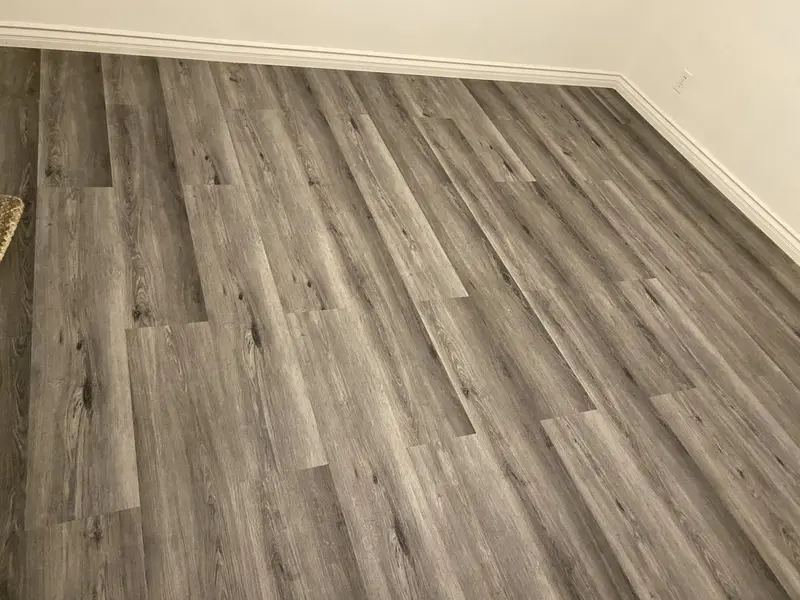
Flooring also needs to acclimate. Many products should sit in the home to acclimate before install, which we schedule around.
The process
During a no-cost visit we measure up, test the slab or subfloor and talk materials. The written, line-by-line price that follows includes whatever parts your floor calls for.
Questions go to one person the whole way through. You hear from us by text before we arrive, we ask first if a dip or damp spot needs added work, and we return if a seam or stair nose needs a fix. We take most forms of payment.
Related pages: kitchen remodeling, bathroom remodeling and shower remodeling in Monterey Park. For small rooms, the small bathroom guide has layout tips.
Where we work
We install floors from the Monterey Highlands down to homes near Atlantic Boulevard and Garvey Avenue (per Wikipedia), and around Barnes Park.
Common search: why is my floor buckling?
Floating floors buckle when they cannot expand. That usually means the expansion gap at the walls was too small, or cabinets or heavy items pinned the floor down. Moisture from below can also cause swelling, especially with laminate on a slab without a vapor barrier. Fixing it means finding the cause first, then relaying or replacing the affected area.
Wear layers and plank specs, decoded
LVP product sheets list a wear layer in mils. A thicker wear layer stands up better to grit, chair legs and pets; thinner ones suit bedrooms with light traffic. A rigid core (often labeled SPC) resists dents and telegraphs fewer slab imperfections than a flexible one.
Laminate is rated by an AC number for abrasion resistance. Higher ratings suit busy halls and family rooms.
For tile, look at the slip rating for wet areas and whether the tile is rectified (precisely cut edges), which allows thinner grout joints.
Bring the specs of anything you have seen online to the estimate and we will tell you how it fits your rooms. Samples viewed in your own light, on your own slab, tell you more than a showroom display.
Laying out planks in a long house
Many single-story postwar homes are long and narrow. Running planks along the longest wall, usually down the main hallway, makes rooms feel longer and keeps the pattern continuous from front to back. Very long runs of floating floor may need a hidden expansion break at a doorway, which the product instructions specify.
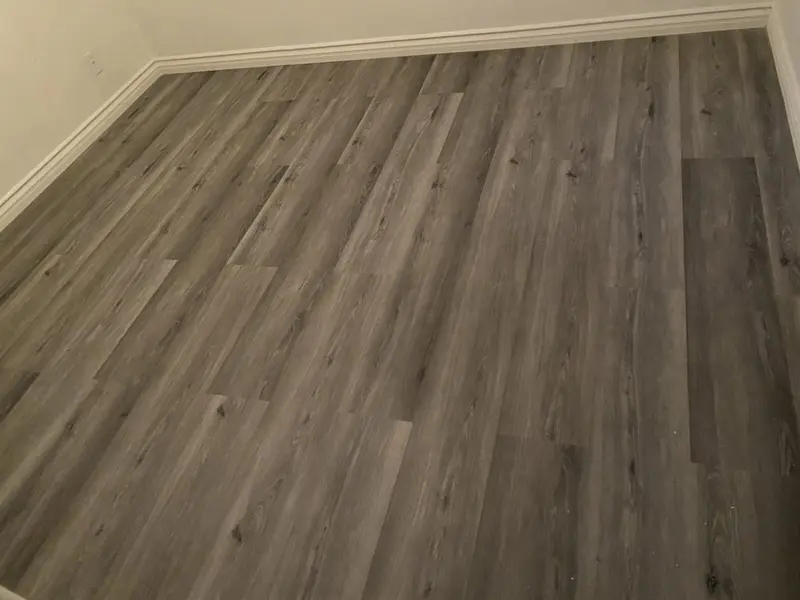
Staggering plank ends randomly, rather than in a repeating step, looks more natural. We open several boxes at once and mix them so color variation is spread evenly.
Related pages
- Bathroom remodel in Monterey Park
- Kitchen remodel in Monterey Park
- Tub-to-shower conversion in Monterey Park
- Shower remodel in Monterey Park
- Kitchen cabinet replacement in Monterey Park
- Flooring installation in Alhambra
- Flooring installation in Rosemead
- Flooring installation in San Gabriel
- Flooring installation in Temple City
- Countertop replacement in Monterey Park
- Backsplash installation in Monterey Park
- Interior painting in Monterey Park
- Leaking shower pan repair in Monterey Park
- Powder room remodel in Monterey Park
- Bathtub replacement in Monterey Park
- Bathroom tile installation in Monterey Park
- Tile floor installation in Monterey Park
- Grout repair in Monterey Park
- Kitchen sink and faucet replacement in Monterey Park
- Drywall patching and repair in Monterey Park
- Walk-in shower in Monterey Park
- LVP flooring installation in Monterey Park
- Toilet replacement in Monterey Park
- Baseboard installation and replacement in Monterey Park
- Shower and tub recaulking in Monterey Park
- Interior door and trim painting in Monterey Park
- Talavera and Spanish tile installation in Monterey Park
- Wainscoting and accent walls in Monterey Park
- Fireplace surround tile in Monterey Park
- Crown molding installation in Monterey Park
Materials and styles
- Sage, terracotta and deep blue cabinets
- Granite countertops
- Butcher block countertops
- LVP vs tile flooring
- Victorian tile
- Basketweave tile
- Mosaic tile
- Quarry tile
- Stacked stone
- Hexagon tile
- Terrazzo tile
- Herringbone tile
- Backsplash tile ideas
- Shower tile ideas
- Quartz countertops
- Spanish tile bathroom
- Saltillo tile
- Zellige tile backsplash
- Talavera tile
- Cement tile bathroom floor
- Terracotta tile floors
- Bathroom color trends
- Porcelain wood-look tile
- Subway tile vs handmade tile
- Porcelain vs ceramic tile
- LVP vs laminate flooring
- Semi-gloss vs satin paint
- MDF vs wood trim
- Natural stone and marble bathroom tile
- Grout types: cement, epoxy, urethane