
Postwar walls
Wikipedia describes explosive growth in Monterey Park in the late 1940s and 1950s, with many new subdivisions. Houses from those years were some of the first in the area to use drywall, and decades of moving furniture, earthquakes and remodels show up on it.
Many homes here also house several generations, which means walls in busy hallways and kitchens see a lot of bumps.
Termite damage
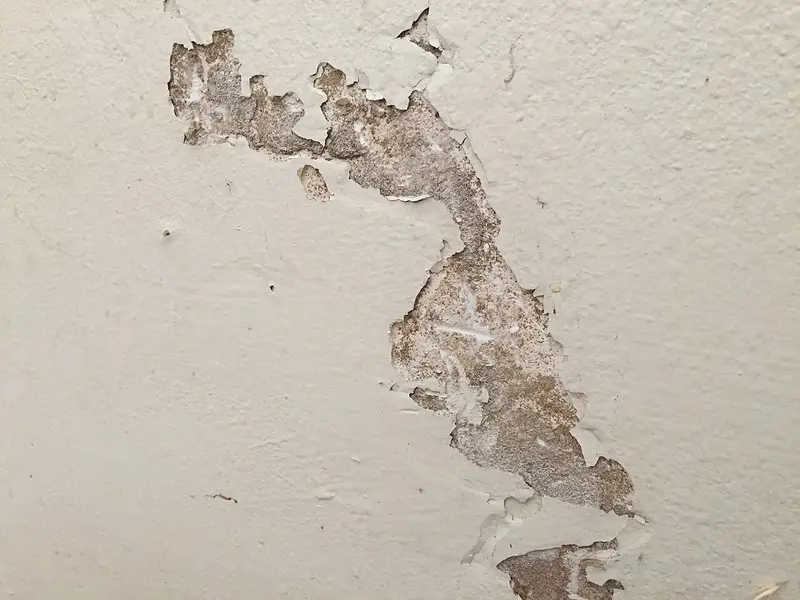
Our first photo shows drywall where termites ate the paper face, leaving the board soft and crumbly. Drywall paper is cellulose, so it is a food source.
Before we repair termite damage, the colony needs to be treated by a pest control company. Then we cut out the damaged board, check the framing behind it and patch with new drywall. If framing is damaged, we show you and discuss the repair.
Common repairs
What we fix most often:
- dents and holes from furniture and doorknobs
- popped screws and nails
- cracked seams in hallways
- loose corner bead at outside corners
- damage from termites or water and holes left after old fixtures or TV mounts come down
We look at each one, explain the repair and give you a single quote for the lot.
Nail and screw pops
Small round bumps in a line along a wall are usually fasteners working loose as framing dries or shifts. We drive a new screw next to each pop, set the old fastener below the surface and cover both with compound.
Just filling over a pop rarely lasts. The new screw is what holds the board tight.
Seams and tape
Drywall sheets have tapered long edges so the tape and compound at a seam sit flush. The second photo shows that taper: the slight dip near the edge of each board.
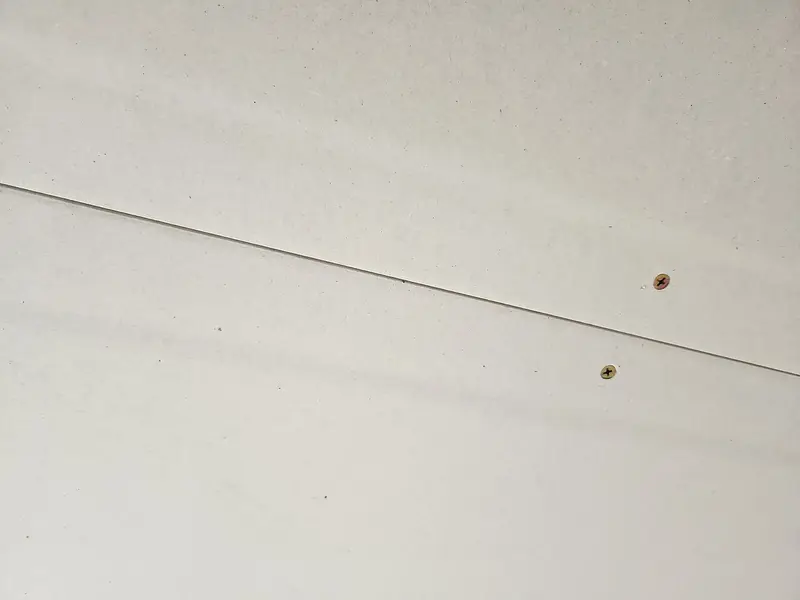
When a seam cracks or the tape bubbles, we cut out the loose tape, re-tape and feather new compound wide enough that the seam disappears. Butt joints, where the short ends meet without a taper, need an even wider feather.
Corners
Outside corners have metal or paper-faced bead under the compound. When the bead is dented or loose, the corner looks wavy or cracks along its length. We replace the damaged run of bead and float it in.
Inside corners crack when the tape lets go. We re-tape them and feather both sides.
Water damage
If a leak has soaked the board, the paper loses strength and the gypsum turns soft. Damaged sections get cut out and replaced. Board that is only stained and still firm can be sealed with a stain-blocking primer.
Fix the leak first. We can point you to likely sources, and for shower leaks our shower pan page explains what we look for.
Cracks in older walls
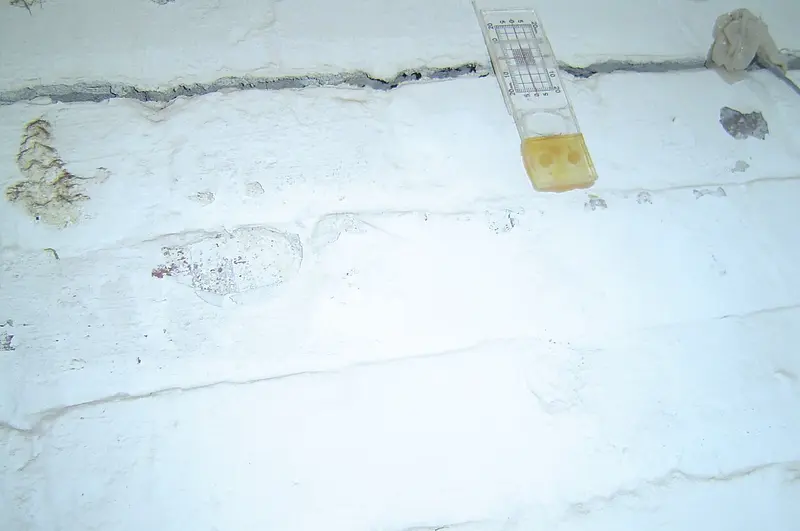
The third photo shows interior wall cracks being measured and tracked. Most cracks in a house are cosmetic, from settling, temperature swings or small earthquakes. A crack that is wide, growing or paired with sticking doors may point to something structural.
If we see signs like that, we tell you before patching so you can have it checked.
Texture and finish
We match smooth walls, orange peel and knockdown. For a larger area we may skim the whole wall so the patch and the old surface have the same look.
Every patch is primed before paint so the sheen stays even.
Paint after repair
If the room needs paint, we can do both. Our interior painting page for Monterey Park covers prep, colors and finishes.
Painting the whole wall, not just the patch, is the best way to hide a repair.
A tidy job
We cover floors and furniture, use a vacuum sander where possible and clean up when we leave. Move fragile items off the wall and out of the work area if you can.
We work around your schedule, and a relative or tenant can let us in.
Cost
Cost depends on the number and size of repairs, any framing or water damage, texture and paint. We give you a written quote.
How long it takes depends on the job, mostly on how many coats of compound and drying time.
Related pages
- Bathroom remodel in Monterey Park
- Kitchen remodel in Monterey Park
- Tub-to-shower conversion in Monterey Park
- Shower remodel in Monterey Park
- Kitchen cabinet replacement in Monterey Park
- Flooring installation in Monterey Park
- Countertop replacement in Monterey Park
- Backsplash installation in Monterey Park
- Interior painting in Monterey Park
- Leaking shower pan repair in Monterey Park
- Powder room remodel in Monterey Park
- Bathtub replacement in Monterey Park
- Bathroom tile installation in Monterey Park
- Tile floor installation in Monterey Park
- Grout repair in Monterey Park
- Kitchen sink and faucet replacement in Monterey Park
- Drywall patching and repair in Alhambra
- Drywall patching and repair in Rosemead
- Drywall patching and repair in San Gabriel
- Drywall patching and repair in Temple City
- Walk-in shower in Monterey Park
- LVP flooring installation in Monterey Park
- Toilet replacement in Monterey Park
- Baseboard installation and replacement in Monterey Park
- Shower and tub recaulking in Monterey Park
- Interior door and trim painting in Monterey Park
- Talavera and Spanish tile installation in Monterey Park
- Wainscoting and accent walls in Monterey Park
- Fireplace surround tile in Monterey Park
- Crown molding installation in Monterey Park
Materials and styles
- Sage, terracotta and deep blue cabinets
- Granite countertops
- Butcher block countertops
- LVP vs tile flooring
- Victorian tile
- Basketweave tile
- Mosaic tile
- Quarry tile
- Stacked stone
- Hexagon tile
- Terrazzo tile
- Herringbone tile
- Backsplash tile ideas
- Shower tile ideas
- Quartz countertops
- Spanish tile bathroom
- Saltillo tile
- Zellige tile backsplash
- Talavera tile
- Cement tile bathroom floor
- Terracotta tile floors
- Bathroom color trends
- Porcelain wood-look tile
- Subway tile vs handmade tile
- Porcelain vs ceramic tile
- LVP vs laminate flooring
- Semi-gloss vs satin paint
- MDF vs wood trim
- Natural stone and marble bathroom tile
- Grout types: cement, epoxy, urethane