
Postwar rooms
Wikipedia describes explosive growth in Monterey Park in the late 1940s and 1950s, with many new subdivisions. Many homes from those years have short, simple baseboard that has been painted many times.
A taller, crisp new baseboard is one of the quickest ways to make a room look updated.
Three ways to finish a new floor
When a new floor goes in, there are three choices at the wall. First, leave the old baseboard and add quarter round or shoe molding at the floor to cover the gap. Second, remove the baseboard, install the floor and reinstall the old baseboard. Third, replace it with new baseboard.
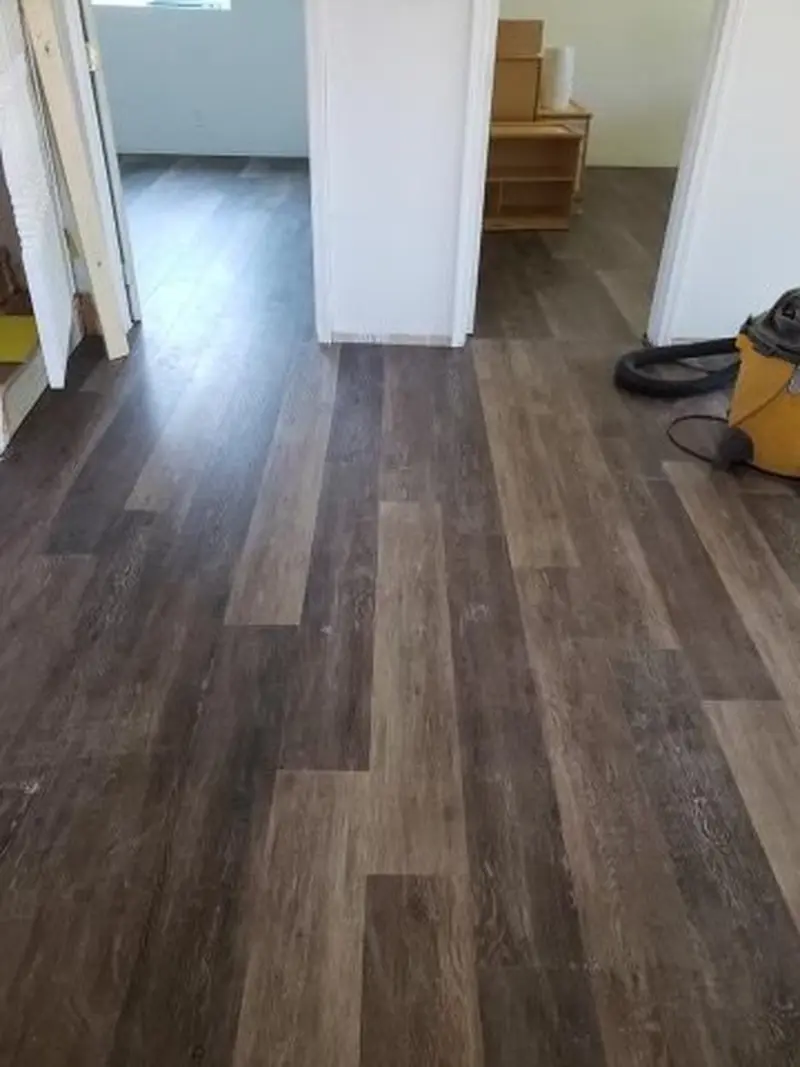
The first photo shows white baseboard around a room with a new floor on one of our jobs.
When baseboard should change
Reasons to replace:
- dents and chips from vacuums and furniture
- gaps after a new floor
- water damage near kitchens and baths
- old caulk that keeps cracking and short trim that looks out of scale next to new flooring
We look at each room and tell you where new baseboard makes sense.
Height
Taller baseboard looks better with higher ceilings and larger rooms. Shorter baseboard suits small rooms and low ceilings. A common rule is to keep the baseboard in proportion to the door casing width.
We bring samples in a few heights so you can see them against your walls.
Quarter round
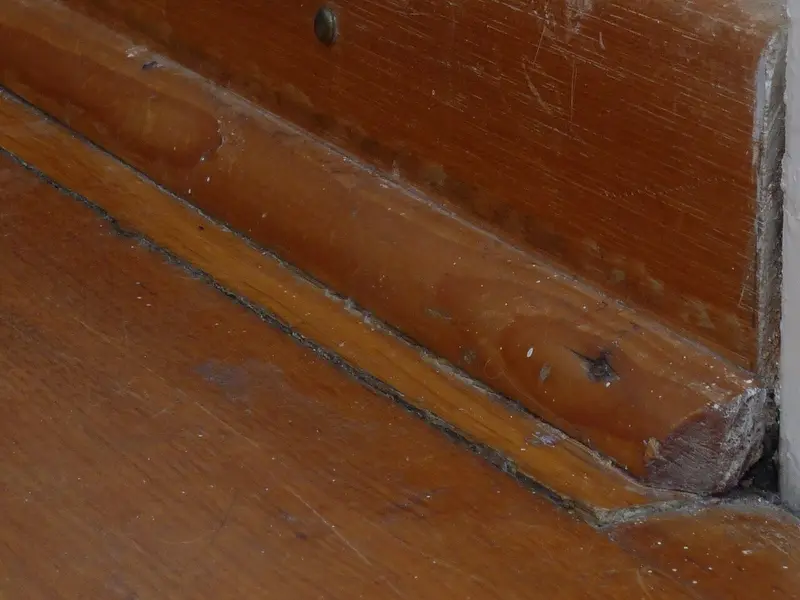
Quarter round or shoe molding is a small strip that covers the gap between floor and baseboard. The third photo shows a quarter round molding at the edge of a parquet floor.
It is a quick fix, but it adds a second line at the floor. Many owners prefer new baseboard set right on the new floor for a cleaner look. Shoe molding can still help where a floor is uneven, since it bends more easily than a tall board.
Kitchens and baths
Near sinks, dishwashers, tubs and toilets, baseboard can get wet. We use a moisture-resistant material there and seal the bottom edge with caulk.
Behind the toilet and around the tub, we fit the trim tight to fixtures.
Fastening
We nail baseboard into studs and the bottom plate so it stays tight to the wall. Outside corners get glue as well as nails. A small bead of glue keeps a mitered corner from opening as the wood moves with the seasons.
Loose baseboard is usually trim that was nailed only into drywall.
Caulk and paint
We fill nail holes, caulk the top edge and corners and sand smooth. The result is ready for paint, or we can paint it as part of the job. Our interior painting page has more.
Paint the baseboard before the walls if you are doing both, then cut in the wall color.
With new flooring
If you are also installing new floors, see our LVP page for Monterey Park. We plan the floor and the baseboard together.
That way the trim covers the expansion gap without a second strip.
Hallways
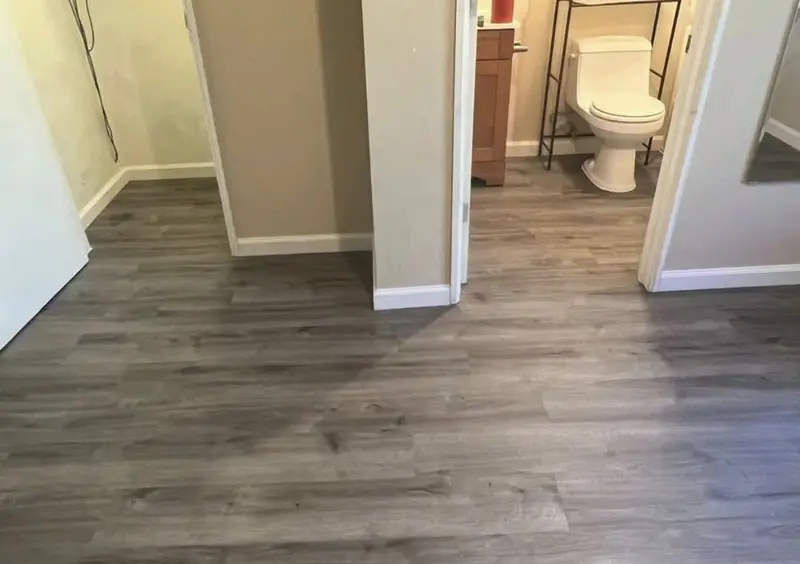
The second photo shows baseboard along a hall with doorways on each side on one of our jobs. Every door means two more ends to fit against casing, so halls take careful measuring.
We line up joints so they fall where they are least visible.
Planning around furniture
Built-in cabinets, bookcases and kitchen islands change where baseboard runs. We trim to the sides of built-ins, add toe kicks where cabinets meet the floor and keep the same profile running around islands so the room reads as one design. Behind large furniture that never moves, we still finish the trim, because it will show the day you rearrange.
We note each built-in on the quote so nothing is missed.
Closets
Closets are easy to skip, but a closet with old baseboard next to a room with new trim stands out when the door is open. We include closets in the plan unless you tell us to leave them out. Inside closets, we use the same profile and finish, with the same filled and caulked joints.
Walk-in closets get the same care as any other room.
Pets and kids
Baseboard takes a beating from vacuums, toys, chairs and pets. A harder material such as finger-jointed pine resists dents better than soft MDF, and a semi-gloss paint wipes clean. We can suggest a sturdier option for busy rooms like family rooms, halls and entries.
Small dings in painted trim are easy to touch up later.
Cost
Cost depends on the length, the profile, the material and whether old trim comes off. We give you a written quote.
How long it takes depends on the job.
Related pages
- Bathroom remodel in Monterey Park
- Kitchen remodel in Monterey Park
- Tub-to-shower conversion in Monterey Park
- Shower remodel in Monterey Park
- Kitchen cabinet replacement in Monterey Park
- Flooring installation in Monterey Park
- Countertop replacement in Monterey Park
- Backsplash installation in Monterey Park
- Interior painting in Monterey Park
- Leaking shower pan repair in Monterey Park
- Powder room remodel in Monterey Park
- Bathtub replacement in Monterey Park
- Bathroom tile installation in Monterey Park
- Tile floor installation in Monterey Park
- Grout repair in Monterey Park
- Kitchen sink and faucet replacement in Monterey Park
- Drywall patching and repair in Monterey Park
- Walk-in shower in Monterey Park
- LVP flooring installation in Monterey Park
- Toilet replacement in Monterey Park
- Baseboard installation and replacement in Alhambra
- Baseboard installation and replacement in Rosemead
- Baseboard installation and replacement in San Gabriel
- Baseboard installation and replacement in Temple City
- Shower and tub recaulking in Monterey Park
- Interior door and trim painting in Monterey Park
- Talavera and Spanish tile installation in Monterey Park
- Wainscoting and accent walls in Monterey Park
- Fireplace surround tile in Monterey Park
- Crown molding installation in Monterey Park
Materials and styles
- Sage, terracotta and deep blue cabinets
- Granite countertops
- Butcher block countertops
- LVP vs tile flooring
- Victorian tile
- Basketweave tile
- Mosaic tile
- Quarry tile
- Stacked stone
- Hexagon tile
- Terrazzo tile
- Herringbone tile
- Backsplash tile ideas
- Shower tile ideas
- Quartz countertops
- Spanish tile bathroom
- Saltillo tile
- Zellige tile backsplash
- Talavera tile
- Cement tile bathroom floor
- Terracotta tile floors
- Bathroom color trends
- Porcelain wood-look tile
- Subway tile vs handmade tile
- Porcelain vs ceramic tile
- LVP vs laminate flooring
- Semi-gloss vs satin paint
- MDF vs wood trim
- Natural stone and marble bathroom tile
- Grout types: cement, epoxy, urethane