
An old city with many layers of homes
San Gabriel grew up around the mission founded in 1771, as Wikipedia describes, and the city has houses from many decades. A shower in one house may be original tile over a mortar bed; next door it may be a newer molded base.
We look at what you have before suggesting what to do.
A drip inside the valve
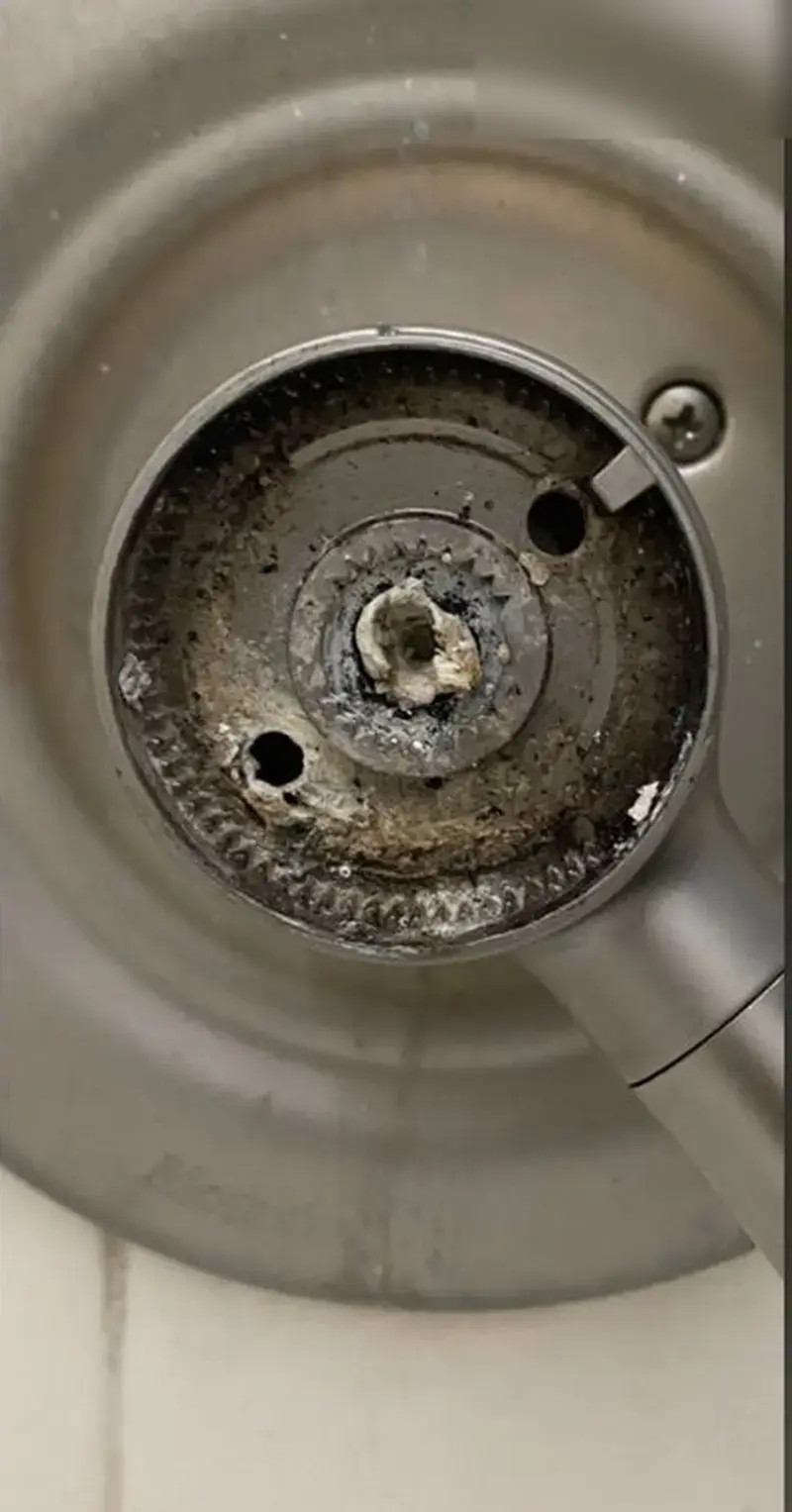
A photo lower on this page shows a shower valve with the handle and trim removed on one of our jobs. Mineral buildup and worn parts inside the valve can let water drip behind the wall.
That kind of drip can stain drywall near the floor and look a lot like a pan leak. Replacing a cartridge is a quick fix, so we check it first.
Second-floor showers
In two-story homes, a pan leak often shows on the ceiling below. A small stain that grows after each shower is a strong hint. We check the ceiling and the shower together so the source is clear before anything is opened.
What fails in a shower pan
The waterproof layer under a tiled floor is meant to catch water that seeps through grout and send it to the drain. It can fail at a corner, at a nail through the curb, or where it clamps to the drain.
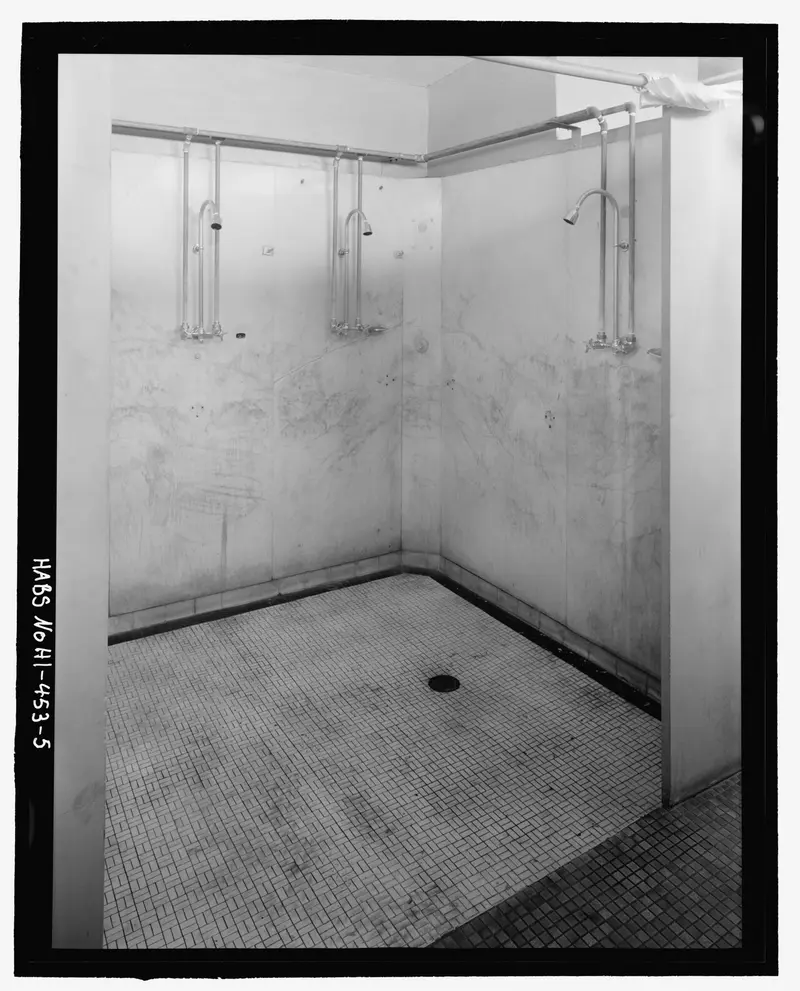
Our second photo shows an older tiled stall with a mosaic floor, the kind where the waterproof layer sits under a thick mortar bed.
Replacement, step by step
Here is how a typical replacement goes:
- Remove the floor tile and curb.
- Take out the old base and liner.
- Repair the subfloor and set the drain.
- Build a sloped base.
- Add the waterproof layer up the walls.
- Set and grout the new tile.
- Let it cure before the first shower.
Choices for the new pan
The common choices are a liner under a mortar bed, a membrane bonded over a sloped base, and a solid one-piece base. Our shower pan guide compares them.
Signs of hidden damage
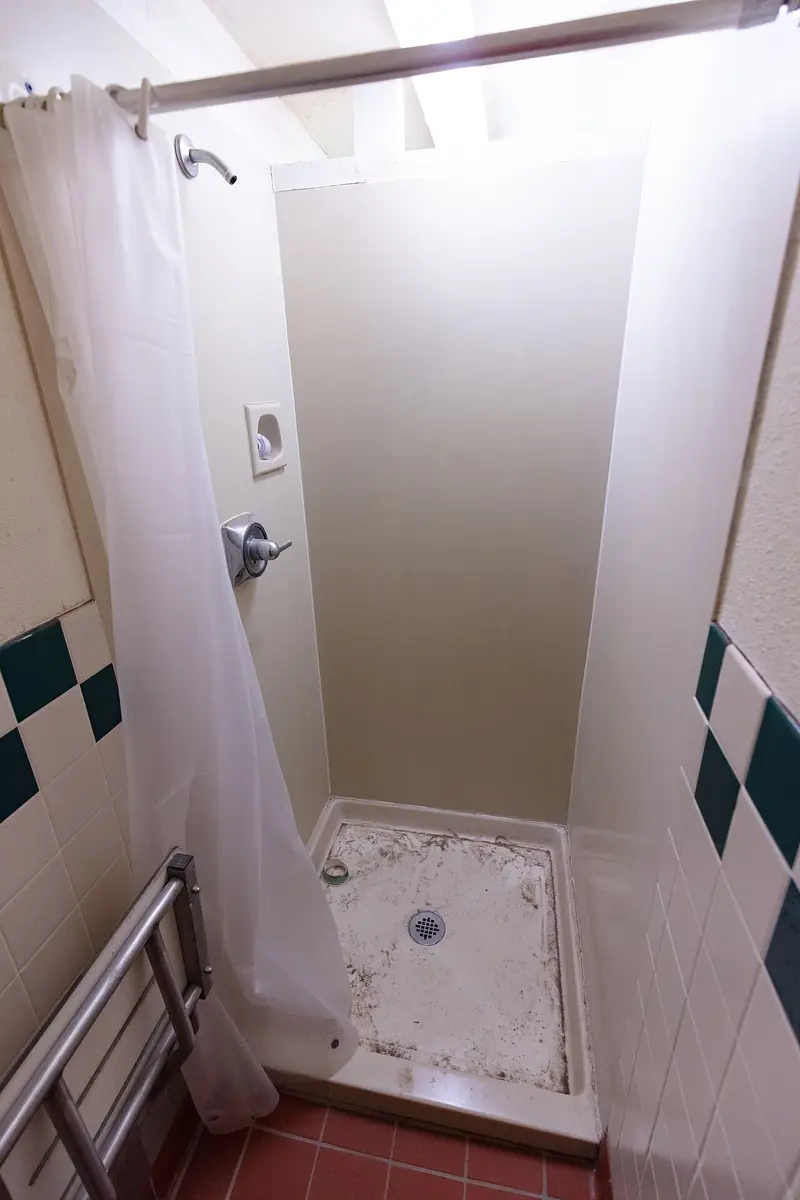
Water that has been getting out for a long time can soften the subfloor or the bottom plate of the wall. Our third photo shows a small shower with tile around the base and a curtain, the kind of room where damage hides behind the walls.
We price repairs to hidden damage only after we have seen it, and we ask before doing extra work.
Living with the work
We protect the floor from the bathroom door to the shower, keep dust down and clean up at the end of each day. The rest of the house stays usable.
After the new pan is in
We recommend letting the grout cure fully before regular use, and sealing the grout if the tile calls for it. A quick look at the caulk once a year helps keep water where it belongs.
Updating while it is open
If you would also like new wall tile, a niche or glass, it can be simpler to do it now. Our San Gabriel shower remodel page has more.
Hard water and buildup
Mineral buildup is common on shower heads and valves in many Southern California homes. Over time it can wear seals inside the valve and leave crusty deposits on the drain. We clean or replace the parts that are affected.
Wiping down the glass and fixtures after showers slows the buildup.
What drives the cost
Every pan job is a little different. The price changes with the shower size, the amount of tile removed, the pan system, the new tile and any hidden damage. Your quote is written and itemized, and we stop and ask before any extra work.
Questions to think about
Before the visit, it helps to consider a few things: do you want the same look or something new, does anyone need a lower curb or a seat, and how long can the household go without this shower? Your answers shape the plan.
Second opinions
If you already have a quote from someone else, we are glad to take a look. We will tell you honestly if we see the problem differently or if we agree with what you were told.
Curbs and thresholds
The curb is the low wall you step over to get into the shower. It is a common leak point because it is often nailed through, and because water from the door sits on top of it. When we rebuild, the waterproof layer wraps over the curb without fasteners through the top.
If you would like a lower step, we can talk about it at the visit.
Grout that crumbles
Grout that powders or falls out of the floor joints is another sign the base below has been wet for a long time. Regrouting may hold for a short while, but we check the base before suggesting it.
Around San Gabriel
We work in homes near the Mission District, along San Gabriel Boulevard and in the neighborhoods close to Vincent Lugo Park.
Related pages
- Bathroom remodel in San Gabriel
- Kitchen remodel in San Gabriel
- Tub-to-shower conversion in San Gabriel
- Shower remodel in San Gabriel
- Kitchen cabinet replacement in San Gabriel
- Flooring installation in San Gabriel
- Countertop replacement in San Gabriel
- Backsplash installation in San Gabriel
- Interior painting in San Gabriel
- Leaking shower pan repair in Alhambra
- Leaking shower pan repair in Monterey Park
- Leaking shower pan repair in Rosemead
- Leaking shower pan repair in Temple City
- Powder room remodel in San Gabriel
- Bathtub replacement in San Gabriel
- Bathroom tile installation in San Gabriel
- Tile floor installation in San Gabriel
- Grout repair in San Gabriel
- Kitchen sink and faucet replacement in San Gabriel
- Drywall patching and repair in San Gabriel
- Walk-in shower in San Gabriel
- LVP flooring installation in San Gabriel
- Toilet replacement in San Gabriel
- Baseboard installation and replacement in San Gabriel
- Shower and tub recaulking in San Gabriel
- Interior door and trim painting in San Gabriel
- Talavera and Spanish tile installation in San Gabriel
- Wainscoting and accent walls in San Gabriel
- Fireplace surround tile in San Gabriel
- Crown molding installation in San Gabriel
Materials and styles
- Sage, terracotta and deep blue cabinets
- Granite countertops
- Butcher block countertops
- LVP vs tile flooring
- Victorian tile
- Basketweave tile
- Mosaic tile
- Quarry tile
- Stacked stone
- Hexagon tile
- Terrazzo tile
- Herringbone tile
- Backsplash tile ideas
- Shower tile ideas
- Quartz countertops
- Spanish tile bathroom
- Saltillo tile
- Zellige tile backsplash
- Talavera tile
- Cement tile bathroom floor
- Terracotta tile floors
- Bathroom color trends
- Porcelain wood-look tile
- Subway tile vs handmade tile
- Porcelain vs ceramic tile
- LVP vs laminate flooring
- Semi-gloss vs satin paint
- MDF vs wood trim
- Natural stone and marble bathroom tile
- Grout types: cement, epoxy, urethane