
Homes near the Mission
Mission San Gabriel Arcángel was founded in 1771 and the city incorporated in 1913, per Wikipedia. Housing here ranges from early bungalows to postwar homes and newer builds, so the walls range from thick plaster to modern drywall.
We look at what your walls are made of before we suggest a repair.
Ceiling repairs
Ceilings get less attention until something goes wrong. Signs to watch for:
- a sag between joists
- cracks along seams
- nail pops in rows
- stains from a leak above and loose sections near a light fixture or attic hatch
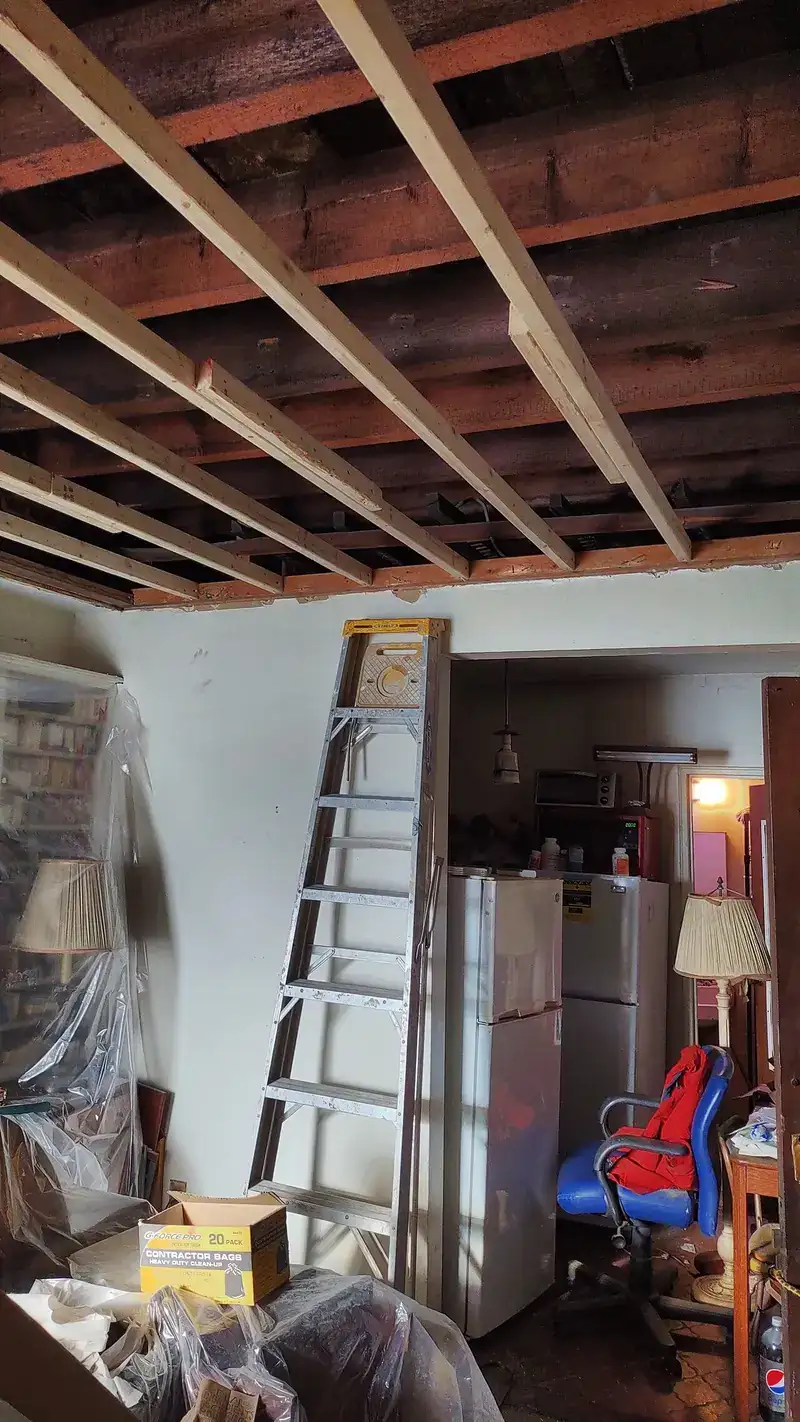
Our first photo shows a ceiling opened up after a section came down. Once the old board is out, the framing can be checked and new board hung, taped and finished.
Why ceilings sag
Ceiling drywall can sag from moisture, from fasteners spaced too far apart or from heavy insulation pushing on thin board. Old plaster ceilings sag when the keys that hold it to the lath break.
Depending on the cause, we may add screws, add new framing, re-attach plaster or replace a section.
Wall holes
For a small hole, a mesh patch and a few thin coats of compound work well. Thin coats dry faster and crack less than one thick coat. For a bigger hole, we cut a clean opening, add backing and screw in new board.
Each coat gets wider than the last so the patch blends in and does not form a bump.
Texture
We match smooth, orange peel and knockdown finishes, and we check the result under the room light before primer.
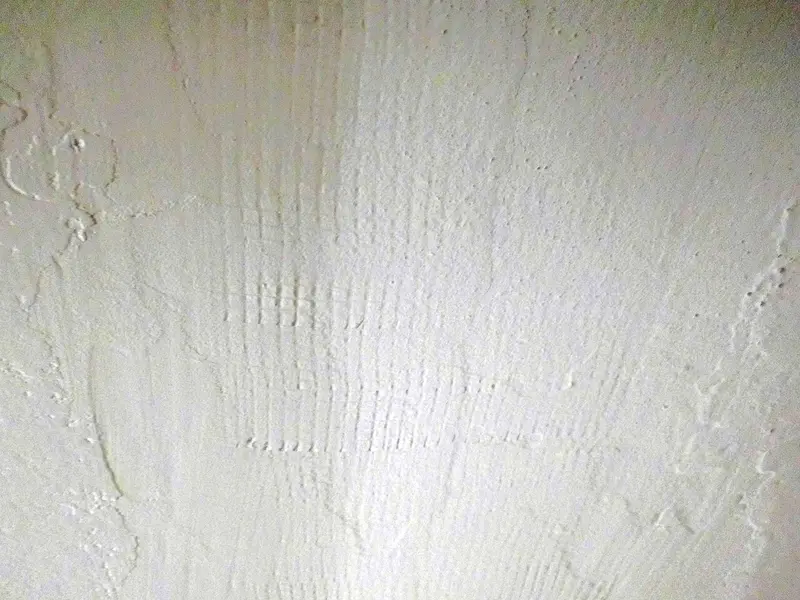
For ceilings with a texture, we match the existing surface on the patch.
Mesh and tape
The second photo shows self-adhesive mesh tape that has been covered in compound. Mesh is quick to apply over cracks and small patches; paper tape is stronger in corners and long seams. Self-adhesive mesh needs no bed of compound underneath, which makes it quick for small repairs. We choose based on where the repair sits.
With either one, the tape has to be fully covered and feathered so it does not show through paint.
Prime and paint
Every patch is primed. If you want the room painted, our interior painting page for San Gabriel explains how we prep and finish.
Paint the full wall or ceiling, not just the patch, for the best result.
Repair with other projects
When we replace a kitchen sink or faucet or open a wall for any reason, we patch the drywall afterward as part of the same job.
That way the finish goes on over a solid, smooth wall.
Protecting the house
Ceiling work drops dust and bits of compound. We cover floors and furniture, mask the room and clean up when we finish.
Clear small items from the room if you can, and let us know about pets.
Cracks
Hairline cracks from settling are common. We open them, tape and float them flat. For plaster, we may anchor loose areas first.
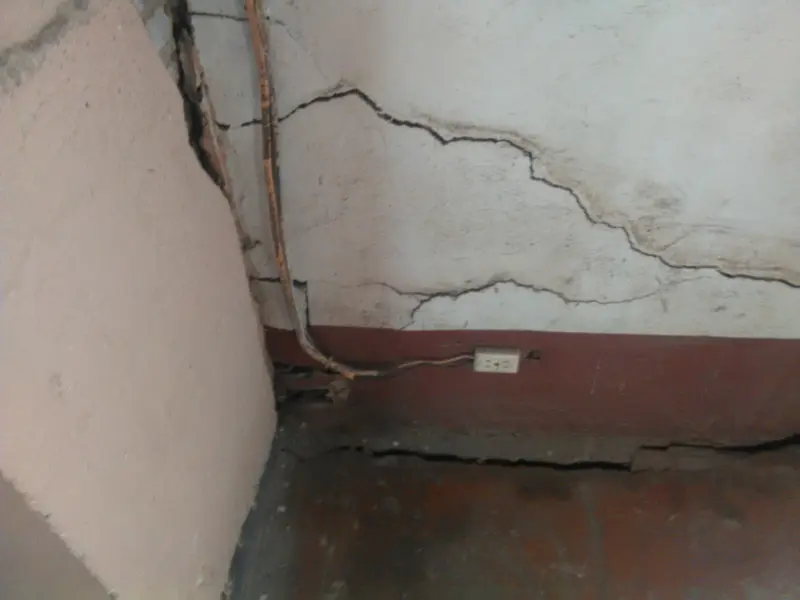
The third photo shows serious cracks in the walls of an old masonry church in the Philippines. Cracks that size are a structural issue, not a drywall one. If we see a crack that is wide or growing, we tell you before patching.
Before we arrive
Walk the rooms and put a small piece of painter's tape next to every spot you want repaired, including closets and the inside of doors. Take down pictures and shelves near the patches, and move furniture a few feet away from the wall if you can.
For ceiling work, clear the floor under the repair so we can set up a ladder and drop cloths.
Attic and roof leaks
Many ceiling stains in San Gabriel homes trace back to a roof leak, a bath fan duct with no seal or condensation from an old air conditioning line in the attic. A patch only lasts once that source is fixed.
We can look at the area above the stain when there is attic access and tell you what we find before we price the repair.
Cost
Cost depends on the size and number of repairs, wall or ceiling, plaster or drywall, texture and paint. We give you a written quote.
How long it takes depends on the job.
Related pages
- Bathroom remodel in San Gabriel
- Kitchen remodel in San Gabriel
- Tub-to-shower conversion in San Gabriel
- Shower remodel in San Gabriel
- Kitchen cabinet replacement in San Gabriel
- Flooring installation in San Gabriel
- Countertop replacement in San Gabriel
- Backsplash installation in San Gabriel
- Interior painting in San Gabriel
- Leaking shower pan repair in San Gabriel
- Powder room remodel in San Gabriel
- Bathtub replacement in San Gabriel
- Bathroom tile installation in San Gabriel
- Tile floor installation in San Gabriel
- Grout repair in San Gabriel
- Kitchen sink and faucet replacement in San Gabriel
- Drywall patching and repair in Alhambra
- Drywall patching and repair in Monterey Park
- Drywall patching and repair in Rosemead
- Drywall patching and repair in Temple City
- Walk-in shower in San Gabriel
- LVP flooring installation in San Gabriel
- Toilet replacement in San Gabriel
- Baseboard installation and replacement in San Gabriel
- Shower and tub recaulking in San Gabriel
- Interior door and trim painting in San Gabriel
- Talavera and Spanish tile installation in San Gabriel
- Wainscoting and accent walls in San Gabriel
- Fireplace surround tile in San Gabriel
- Crown molding installation in San Gabriel
Materials and styles
- Sage, terracotta and deep blue cabinets
- Granite countertops
- Butcher block countertops
- LVP vs tile flooring
- Victorian tile
- Basketweave tile
- Mosaic tile
- Quarry tile
- Stacked stone
- Hexagon tile
- Terrazzo tile
- Herringbone tile
- Backsplash tile ideas
- Shower tile ideas
- Quartz countertops
- Spanish tile bathroom
- Saltillo tile
- Zellige tile backsplash
- Talavera tile
- Cement tile bathroom floor
- Terracotta tile floors
- Bathroom color trends
- Porcelain wood-look tile
- Subway tile vs handmade tile
- Porcelain vs ceramic tile
- LVP vs laminate flooring
- Semi-gloss vs satin paint
- MDF vs wood trim
- Natural stone and marble bathroom tile
- Grout types: cement, epoxy, urethane