
Houses of many eras
Mission San Gabriel Arcángel was founded in 1771 and the city incorporated in 1913, per Wikipedia. Homes here range from early bungalows to newer builds, so baseboard styles vary from street to street.
We look at your doors, windows and ceilings before suggesting a profile.
Hallways
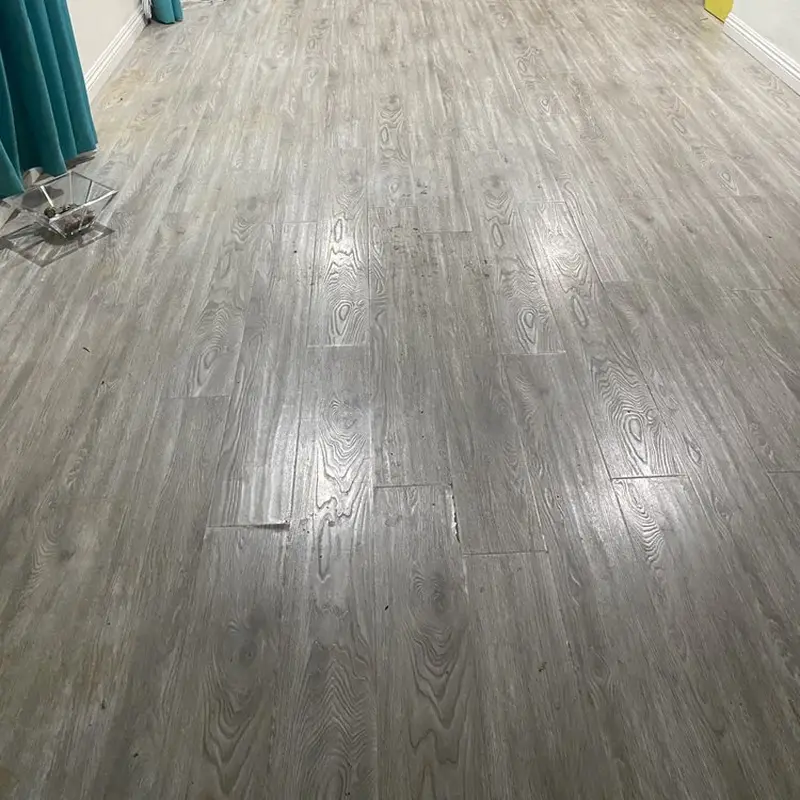
The first photo shows baseboard along a long hallway on one of our jobs. Long runs need careful layout so joints fall in places you will not notice.
We plan the run and cut long boards so there are as few joints as possible.
Materials
Options we install:
- pre-primed MDF
- which is smooth and stable for painted trim; finger-jointed pine
- which handles dents and nails well; solid wood
- for stained trim; and PVC
- which will not swell in wet areas
For most painted baseboard in dry rooms, MDF or finger-jointed pine works well.
Two-piece trim
Some older homes have two-piece baseboard: a flat board with a separate cap on top. It hides small wall waves well, since the cap can flex.
We can build two-piece trim if you want that look.
Before trim goes on
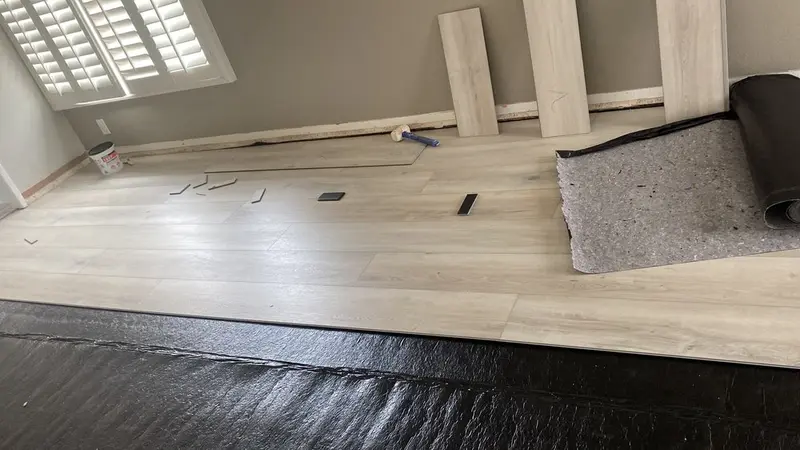
The second photo shows a floor edge before trim goes on, on one of our jobs. The floor needs a gap at the wall to move, and the baseboard covers it.
We install baseboard after the floor so it sits right on the new surface.
Height and scale
Taller baseboard suits rooms with high ceilings. In smaller rooms, a medium height keeps the trim from overpowering the space.
Keep the baseboard a little thinner than your door casing so it meets it cleanly. If the casing is thinner than the baseboard you like, a plinth block at the foot of the casing solves it. Measuring both at a door before you shop takes only a minute.
Installing
We fasten into studs, cope inside corners, glue and miter outside corners and use scarf joints on long walls. Where floors dip, we scribe the trim so it sits tight.
Then we fill holes and caulk.
Paint and finish
Trim is ready for paint when we leave, or we can paint it. See our interior painting page for San Gabriel.
Semi-gloss or gloss on baseboard resists scuffs better than flat paint. Baseboard takes kicks from shoes, vacuums and mops, so a finish that wipes clean is worth it. A slightly lower sheen hides small dents better than high gloss.
Wet areas
In bathrooms and laundry areas, PVC or a sealed, moisture-resistant baseboard holds up best. We seal the bottom edge with caulk.
This keeps mop water and splashes from soaking into the trim.
Profiles
A simple square edge looks modern. A small bevel or rounded top looks traditional. A taller board with a cap molding gives the look of older, heavier trim.
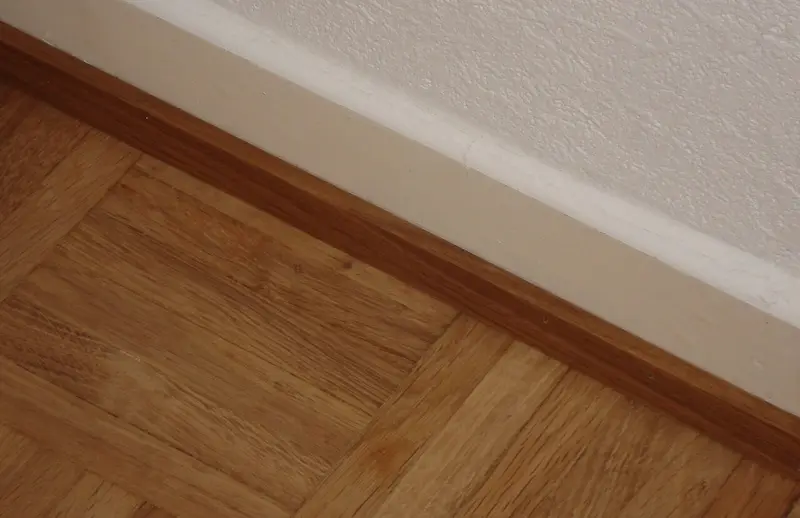
The third photo shows a painted wood baseboard with a natural wood base on a parquet floor, a two-tone style seen in European homes.
With floors
If you are getting new floors, we plan baseboard as part of the job. See our LVP page for San Gabriel.
Changing both at once gives the cleanest result.
Samples and mockups
Profiles look different on a wall than they do in a store. We bring short sample pieces and hold them against your floor and casing, in daylight and lamp light, so you can see how the shadow lines read. For a whole house, we sometimes set a sample piece in one room first so you can live with it before we cut the rest.
Choosing well up front saves changes later.
Matching through the house
When only some rooms change, the new baseboard should still look like it belongs. We try to keep the same height and style in rooms that open into each other, and we make the change at a doorway where a new profile meets an old one. That way no single wall shows two styles.
We point out those transitions before work starts.
Shoe molding
Shoe molding is a small, slim strip that sits at the foot of the baseboard. It covers small gaps at uneven floors and protects the baseboard edge from mops and vacuums. It is narrower and more upright than quarter round, so it looks lighter.
We can add it where the floor needs it.
Cost
Cost depends on the length, profile, material and the number of doors and corners. We give you a written quote.
How long it takes depends on the job.
Related pages
- Bathroom remodel in San Gabriel
- Kitchen remodel in San Gabriel
- Tub-to-shower conversion in San Gabriel
- Shower remodel in San Gabriel
- Kitchen cabinet replacement in San Gabriel
- Flooring installation in San Gabriel
- Countertop replacement in San Gabriel
- Backsplash installation in San Gabriel
- Interior painting in San Gabriel
- Leaking shower pan repair in San Gabriel
- Powder room remodel in San Gabriel
- Bathtub replacement in San Gabriel
- Bathroom tile installation in San Gabriel
- Tile floor installation in San Gabriel
- Grout repair in San Gabriel
- Kitchen sink and faucet replacement in San Gabriel
- Drywall patching and repair in San Gabriel
- Walk-in shower in San Gabriel
- LVP flooring installation in San Gabriel
- Toilet replacement in San Gabriel
- Baseboard installation and replacement in Alhambra
- Baseboard installation and replacement in Monterey Park
- Baseboard installation and replacement in Rosemead
- Baseboard installation and replacement in Temple City
- Shower and tub recaulking in San Gabriel
- Interior door and trim painting in San Gabriel
- Talavera and Spanish tile installation in San Gabriel
- Wainscoting and accent walls in San Gabriel
- Fireplace surround tile in San Gabriel
- Crown molding installation in San Gabriel
Materials and styles
- Sage, terracotta and deep blue cabinets
- Granite countertops
- Butcher block countertops
- LVP vs tile flooring
- Victorian tile
- Basketweave tile
- Mosaic tile
- Quarry tile
- Stacked stone
- Hexagon tile
- Terrazzo tile
- Herringbone tile
- Backsplash tile ideas
- Shower tile ideas
- Quartz countertops
- Spanish tile bathroom
- Saltillo tile
- Zellige tile backsplash
- Talavera tile
- Cement tile bathroom floor
- Terracotta tile floors
- Bathroom color trends
- Porcelain wood-look tile
- Subway tile vs handmade tile
- Porcelain vs ceramic tile
- LVP vs laminate flooring
- Semi-gloss vs satin paint
- MDF vs wood trim
- Natural stone and marble bathroom tile
- Grout types: cement, epoxy, urethane